Alberobello Travel Guide: The Complete, Already-Booked Visitor’s Guide to the Trulli Capital of Puglia
Alberobello is one of those rare places that looks impossible even when you are standing inside it. You arrive expecting a pretty Puglian town, and instead you find an entire urban landscape of whitewashed stone houses capped with grey conical roofs: trulli, the dry-stone dwellings that have made Alberobello famous around the world. The town is small, compact, and easy to explore on foot, but it is also layered with history, architecture, folklore, local devotion, tourist crowds, quiet residential corners, panoramic terraces, food traditions, and practical realities that are worth understanding before you go.
This guide is written for travelers who have already booked their trip to Alberobello and are now preparing for the experience itself. It is not a quick inspiration piece. It is designed as a detailed, on-the-ground companion: what to see, what the places mean, how they feel, when to go, what to watch out for, where the crowds gather, what is free, what may require a small ticket, and how to make the most of a town that is both genuinely magical and undeniably touristic.
At its best, Alberobello feels like a fairy-tale village built from limestone: white walls blazing in the Puglian sun, cones stacked in rhythmic rows, swallows circling at dusk, bells ringing over stone lanes, and the smell of bread, figs, espresso, laundry soap, basil, and grilled food drifting through narrow alleys. At its busiest, especially in the main trulli district of Rione Monti, it can feel like a heritage theme park: souvenir shops, rooftop photo terraces, day-trippers, guided groups, and café menus angled toward visitors.
Both impressions are true. Alberobello is theatrical and domestic, curated and lived-in, globally famous and locally rooted. The key to enjoying it is to understand its contrasts: Rione Monti versus Rione Aia Piccola, postcard viewpoints versus quiet residential streets, trullo restaurants versus ordinary town cafés, UNESCO grandeur versus the cramped lives of the peasants who once built and inhabited these structures.
Quick Orientation: What Alberobello Is Known For
Alberobello is a small town in central Puglia, in the Itria Valley, with a population of around 10,000 inhabitants. It is internationally famous for its concentration of trulli, traditional limestone houses built with thick whitewashed walls and dry-stone conical roofs. The trulli of Alberobello were inscribed as a UNESCO World Heritage Site in 1996 under the name “The Trulli of Alberobello.”
The main historic trulli areas are:
- Rione Monti: the largest, most famous, most photogenic, and most commercial trulli district, with over 1,000 trulli.
- Rione Aia Piccola: the quieter, older, more residential district, with around 400 trulli spread over eight narrow streets.
- The wider historic center, which includes civic monuments, churches, museums, viewpoints, shops, restaurants, and ordinary town life beyond the trulli lanes.
Alberobello is often described as a place you can “see” in a few hours, and many travelers do visit as a half-day stop. But if you are staying overnight or have more time, the town changes dramatically at dawn, sunset, and after the day-trippers leave. The same alley can feel like a crowded stage set at midday and a silent, lantern-lit village at night.
Essential Alberobello Map of Places Mentioned
The following attractions and points of interest appear throughout this guide. Some are major monuments; others are viewpoints, museums, shops, parks, churches, or experience-based stops.
| Place | What It Is | Notes |
|---|---|---|
| Rione Monti | Main trulli district | Over 1,000 trulli; lively, commercial, iconic |
| Rione Aia Piccola | Residential trulli district | Around 400 trulli; quieter and more authentic |
| Trullo Sovrano | Largest and only two-storey trullo | House-museum; one of the key interior visits |
| Casa D’Amore | Historic masonry house | Built in 1797; symbol of liberation from feudal rule |
| Basilica dei Santi Medici Cosma e Damiano | Main basilica | Spiritual heart of town; open daily, free |
| Church of Saint Anthony of Padua | Trullo-style church | Built in 1927 at top of Rione Monti |
| Museo del Territorio Casa Pezzolla | Museum in 15 connected trulli | Local history, rural culture, trullo architecture |
| Trullo Siamese | Double-cone trullo | One of the oldest, linked to legend of two brothers |
| Belvedere Santa Lucia | Main public viewpoint | Free terrace with classic panorama over Rione Monti |
| Trulli Panoramic View / Piazza Plebiscito viewpoint | Panoramic view | Highly rated viewpoint over the trulli |
| Alberobello Painted Rooftops Photo Spot | Photo spot | Popular place for roof-symbol photos |
| Rooftop / vista panoramica terraces | Private or shop terraces | Often require a drink, purchase, or small fee |
| Villa Comunale “Franco Maria Luberto” | Public park | Green space and possible quiet break |
| Parco del Trullo / Parco dei Trulli | Park/viewpoint area | Useful respite from crowds |
| Cantina Museo Albea | Historic winery and wine museum | Founded 1905; tastings likely by arrangement |
| Antica Bottega del Falegname | Traditional carpenter’s workshop-trullo | Craft-oriented heritage stop; details limited |
| Casa Rossa / Masseria Gigante | Former WWII internment site | Outside town; place of memory, access uncertain |
| VisitAlberobello guided tours | Local guide service | Starting point listed on Via M. Viterbo |
| Piazza Sacramento | Square by Trullo Sovrano | Functional and atmospheric stop |
| Piazza del Popolo area | Main town center | Everyday Alberobello beyond the trulli districts |
Highly Rated Places and Practical Geo Details
Several specific points of interest in Alberobello are especially visible in online maps and visitor review ecosystems. These are useful if you are saving locations before your trip.
| Name | Rating / Reviews | Address / Location |
|---|---|---|
| Trulli, Rione Monti | 4.8 / 2,188 reviews | Via Monte S. Michele, 37, 70011 Alberobello BA |
| Alberobello Painted Rooftops Photo Spot | 4.8 / 206 reviews | Via Monte Pertica, 2, 70011 Alberobello BA |
| Trullo Sovrano | 4.6 / 12,983 reviews | Piazza Sacramento, 10, 70011 Alberobello BA |
| Roof top souvenirs | 3.8 / 9 reviews | Via Monte S. Michele, 87, 70011 Alberobello BA |
| Trullo Siamese | 4.6 / 641 reviews | Via Monte Pasubio, 6, 70011 Alberobello BA |
| Casa D’Amore | 4.5 / 479 reviews | Piazza Re Ferdinando IV di Borbone, 3, 70011 Alberobello BA |
| Villa Comunale “Franco Maria Luberto” | 4.6 / 49 reviews | Via Indipendenza, 70011 Alberobello BA |
| Territory Museum House Pezzolla | 4.0 / 594 reviews | Piazza XXVII Maggio, 70011 Alberobello BA |
| VisitAlberobello guided tours | 4.7 / 113 reviews | Departure point: Via M. Viterbo, 70011 Alberobello BA |
| Trulli Panoramic View | 4.8 / 565 reviews | Piazza Plebiscito, 70011 Alberobello BA |
These ratings are useful for orientation, but remember that Alberobello is best understood as a whole townscape. Many of its best moments are not a single ticketed attraction but a lane, a roofline, a threshold, a quiet hour, or a conversation.
The Story of Alberobello
A Young Town with an Ancient Building Technique
Alberobello feels ancient, but as Italian towns go, it is relatively young. The wider Itria Valley has been inhabited since antiquity, but Alberobello itself emerged much later as a rural settlement under the Counts of Conversano. Its fame comes not from Roman ruins or medieval fortresses, but from its dense concentration of trulli, a building type rooted in ancient dry-stone techniques and adapted to very specific local conditions.
The trullo is often described as a prehistoric construction form that survived in this area: a limestone dwelling built without mortar, with a corbelled conical roof made from overlapping stone slabs. In Alberobello, that ancient technique became the basis for an entire townscape.
The story of Alberobello is therefore not primarily a story of emperors and battles. It is a story of:
- forest clearance,
- feudal control,
- peasant settlement,
- tax avoidance,
- local limestone,
- dry-stone ingenuity,
- civic liberation,
- poverty and adaptation,
- modern heritage recognition,
- tourism and preservation.
Before Alberobello: The Selva di Alberobello
The area where Alberobello now stands was once part of a wooded landscape known as the Selva di Alberobello, within the interior plateau of central Puglia. The name “Alberobello” is often interpreted as “albero bello”, meaning “beautiful tree,” recalling the forested character of the place. Local lore also mentions a tree called Arbor Belli, sometimes translated as “tree of war,” whose wood was supposedly used for weapons. This etymology is more legendary than firmly documented, but it reflects how deeply the idea of the forest is tied to the town’s identity.
In antiquity, Apulia was firmly within the Roman world, but there is no evidence of an organized Roman town at Alberobello itself. Nearby coastal cities such as Bari, Brindisi, and Taranto were much more important in Roman times. Alberobello’s plateau remained marginal, wooded, and sparsely settled.
Likewise, while Puglia experienced Byzantine, Lombard, Arab/Saracen, Norman, and other political influences in the early Middle Ages, Alberobello itself did not yet exist as a town. There is no specific “Moorish” or Islamic phase in Alberobello’s local history, even though the broader region of southern Italy was shaped by Mediterranean power struggles.
The Feudal Framework: Counts of Conversano
The decisive historical framework begins in the mid-14th century, when the territory including modern Alberobello was granted as a fief to the first Count of Conversano by Robert d’Anjou, Prince of Taranto, in recognition of military service. This placed the area under the authority of a powerful feudal family.
Alberobello as a recognizable settlement began to form later, especially from the early 16th century. Count Andrea Matteo III Acquaviva d’Aragona, Count of Conversano, authorized around forty peasant families from nearby Noci to settle in the wooded area, clear the forest, cultivate the land, and pay him a tithe, or one-tenth of their crops.
This was not a free town. It was a rural colony under tight feudal control. Its people worked the land, paid obligations, and lived in humble stone dwellings.
Why Trulli? The Tax-Avoidance Origin Story
The most famous explanation for Alberobello’s trulli is the so-called tax-avoidance story.
Under the Kingdom of Naples, creating a permanent settlement could trigger royal taxes or tributes. Feudal lords who wanted to avoid paying these taxes allegedly encouraged or required peasants to build dwellings without mortar, so they could be quickly dismantled before royal inspections. In theory, the settlement could then be presented as a cluster of temporary rural shelters rather than a true taxable town.
This is why trulli are sometimes described as a “legal loophole in stone.”
Whether entire roofs were routinely dismantled is debated. Some commentators emphasize that:
- mortar restrictions and feudal controls were real,
- local limestone was abundant,
- dry-stone building was practical and cheap,
- trulli were well suited to agricultural life.
So the origin story is likely a combination of fiscal pressure, feudal law, local materials, and peasant pragmatism. But the result is undeniable: Alberobello developed an extraordinary concentration of dry-stone conical houses.
Growth of the Settlement
By the mid-16th century, the Monti district already contained about 40 trulli. A significant growth phase occurred around 1620, when the Count of Conversano promoted further settlement and construction. The trulli were built by small landowners, agricultural laborers, and local stoneworkers. They served as field shelters, storehouses, and modest dwellings.
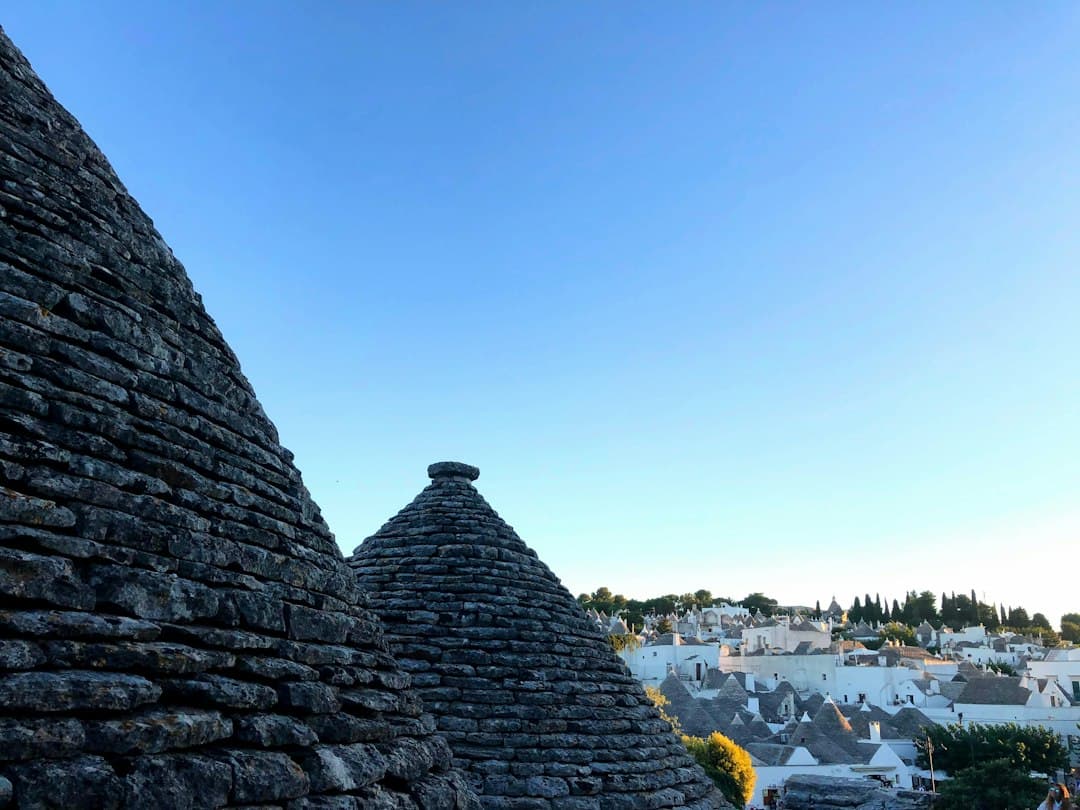
The trulli were constructed from local limestone, often gathered from nearby fields. Their walls were thick and whitewashed. Their roofs were built of overlapping stone slabs, often called chiancarelle, arranged in a corbelled cone or dome. Interiors were small, cool, and functional, and many trulli expanded over time by connecting multiple cones.
The two main historic districts, Rione Monti and Rione Aia Piccola, grew out of this rural settlement pattern.
1797: Liberation from Feudal Rule
The turning point came on 27 May 1797. The inhabitants of Alberobello petitioned King Ferdinand IV of Bourbon, ruler of the Kingdom of Naples, to free them from the feudal authority of the Counts of Conversano.
Ferdinand accepted their request and elevated Alberobello to the status of a royal city or royal town. This act:
- ended feudal subordination to the Acquaviva counts,
- abolished feudal servitude and obligations,
- legitimized Alberobello as a real town,
- allowed permanent buildings to be constructed openly.
This moment is central to Alberobello’s civic identity. It is commemorated architecturally by Casa D’Amore, built in 1797 as the first “normal” house constructed with mortar after liberation.
19th and 20th Centuries: From Poor Housing to Heritage Icon
After 1797, new trullo construction gradually declined, and masonry houses became more common. Alberobello followed the broader trajectory of southern Italy through the Napoleonic period, Bourbon restoration, and eventual incorporation into the Kingdom of Italy in the 1860s.
In the 20th century, the trulli began to be recognized not merely as poor rural dwellings but as an exceptional architectural heritage. Parts of Alberobello were protected as heritage monuments between 1909 and 1936. Several individual buildings and districts were declared national monuments, including:
- Rione Monti, declared a national monument in the early 20th century,
- Trullo Sovrano, recognized as a National Monument in 1923,
- Casa D’Amore, declared a National Monument in 1930,
- Rione Aia Piccola, protected as a national monument since 1930.
In 1996, the Trulli of Alberobello were inscribed on the UNESCO World Heritage List as outstanding examples of corbelled dry-stone construction, a prehistoric technique still visible in a living urban landscape.
Today, Alberobello is also counted among “I Borghi più belli d’Italia”, the most beautiful villages of Italy. It is both a functioning town and a major heritage tourism destination.
Understanding Trulli Architecture
What Is a Trullo?
A trullo is a traditional Apulian limestone dwelling with:
- thick whitewashed walls,
- a dry-stone base,
- a conical, domed, or pyramidal corbelled roof,
- no mortar in its older traditional form,
- local limestone slabs laid in overlapping rings,
- a small interior often expanded by adding more cones.
The plural is trulli.
Traditional trulli are sometimes described as huts, but that word can understate their complexity. Their construction is highly adapted to local climate and available materials.
Key Architectural Features
Whitewashed Walls
The walls are typically rectangular or roughly square at the base, made from local limestone, and whitewashed. The bright white surfaces reflect heat and create the dazzling visual effect that defines Alberobello.
Thick Stone Construction
Walls can be very thick, sometimes over one meter in major examples such as Trullo Sovrano. This thickness provides thermal insulation, keeping interiors cooler in summer and warmer in winter.
Corbelled Conical Roofs
The roof is built from horizontally laid limestone slabs, each course slightly projecting inward until the cone closes. The outer surface is covered in flat stone tiles.
Pinnacles
Many trulli have decorative stone pinnacles at the top. These may be purely ornamental, symbolic, or linked to family identity or local tradition.
Painted Symbols
Some roofs bear white painted symbols: crosses, suns, moons, hearts, primitive marks, Christian signs, pagan or protective motifs, and other glyph-like forms. Guides often explain these as expressions of faith, protection, identity, or folk belief.
Small Interiors
Older trulli often had very small interiors, sometimes with few or no windows. A hearth near the door could provide cooking and heat. Larger family homes were formed by joining multiple trulli together.
The Emotional Effect of Trulli
Trulli are human-scale structures. They are low, thick-walled, rounded, and protective. When you stand inside one, the cone draws your eye upward, while the thick walls create a sense of enclosure. Many travelers describe feeling cocooned, sheltered, or embraced by the architecture.
At street level, the repetition of cone after cone creates a visual rhythm unlike anywhere else in Italy. From a viewpoint, Alberobello looks like a stone beehive, a white-and-grey village of hats, domes, and symbols.
Main Districts of Alberobello
Rione Monti: The Iconic Trulli District
Rione Monti is the largest and most famous trulli district in Alberobello. It contains over 1,000 trulli, often given as around 1,030, and forms a key part of the UNESCO World Heritage Site.
It lies on a hill south of the historic center and is the district most visitors picture when they think of Alberobello: sloping lanes, stairways, souvenir shops, wine bars, rooftop terraces, and rows of whitewashed trulli.
Why Rione Monti Matters
Rione Monti is the showpiece. It is the densest, most scenic, and most photographed part of town. By the mid-16th century, it already contained about 40 trulli, and it expanded especially from around 1620 under the feudal control of the Counts of Conversano.
Today, it is considered a symbol of Apulian identity and popular architecture. It is lively, commercial, and at times crowded, but it is also visually extraordinary.
The Vibe of Rione Monti
Rione Monti is immediately cinematic. Whitewashed walls blaze in the sun. Grey cones cast triangular shadows across cobbles. Via Monte San Michele, Via Monte Nero, Via Monte Pasubio, and nearby lanes rise and bend through a compact labyrinth of stone.
During the day, you smell:
- waffle cones,
- gelato,
- espresso,
- sunscreen,
- basil in pots,
- hot stone,
- damp limestone in shaded corners.
You hear:
- camera shutters,
- guides explaining trulli history,
- shopkeepers saying “prego, prego,”
- multiple languages,
- cups clinking in trulli cafés,
- the occasional scooter echoing between stone walls.
At night, the same streets soften. Warm yellow light glows from trulli windows and doorways. The district feels lantern-lit and almost theatrical.
What to See in Rione Monti
1. The Streets Themselves
Rione Monti is not one monument; it is a district to wander. The best experience is on foot, slowly climbing and descending lanes, noticing:
- roof symbols,
- pinnacles,
- flowerpots,
- small stairways,
- shop interiors,
- stone textures,
- views between cones.
2. Church of Saint Anthony of Padua
At the top of the Monti hill stands the Church of Saint Anthony of Padua, the town’s famous trullo church. It was built and opened on 13 June 1927.
Because Rione Monti had been declared a national monument, new construction in the area had to preserve the trullo character. The result was a church fully built in trullo style, with a Greek-cross plan and cone-roofed forms.
3. Trullo Siamese
One of the oldest and most distinctive trulli, with two fused cones and two entrances connected to a local legend about two brothers and one woman.
4. Rooftop and Shop Terraces
Many trulli in Monti now operate as shops, cafés, or small museums, and some allow access to terraces or upper platforms. Some are free if you browse or buy something; others require a drink or small payment. Always check before climbing.
5. Trulli, Rione Monti Location
A highly rated mapped point is Trulli, Rione Monti, rated 4.8 with over 2,188 reviews, at Via Monte S. Michele, 37.
6. Roof Top Souvenirs
A mapped point called Roof top souvenirs appears at Via Monte S. Michele, 87, with a lower rating of 3.8 from a small number of reviews. This fits the broader pattern in Monti: some rooftop/shop experiences are charming, others feel more commercial or inconsistent.
Practical Information for Rione Monti
- Entry fee: Free. Rione Monti is a public district.
- Opening hours: Streets are accessible 24/7.
- Shops/restaurants: Often open roughly 10:00–13:00 and 15:30/16:00–20:00/21:00, later in high season.
- Best time: Early morning, late afternoon, evening, or night.
- Avoid if possible: Peak tour group hours, roughly 10:30–16:00 in high season.
- Footwear: Wear comfortable shoes; lanes are sloped and cobbled.
- Accessibility: Some streets are steep or uneven, though the district is compact.
Review Verdict on Rione Monti
Most travelers agree Rione Monti is worth seeing, but many also describe it as touristy and commercialized. Some call it a “trulli theme park.” The key is to accept it for what it is: spectacular, historic, photogenic, and heavily adapted to tourism. For a quieter experience, pair it with Aia Piccola.
Rione Aia Piccola: The Quiet Residential Heart
If Rione Monti is the showpiece, Rione Aia Piccola is the quieter, more authentic-feeling trulli district. It contains about 400 trulli spread over eight narrow streets and is widely described as the oldest, most enchanting, least commercialized, and most residential part of Alberobello.
Name and Origin
“Aia Piccola” means “small threshing floor.” The name recalls a small open space where grain was once threshed and where tithes were collected. The original threshing area has been absorbed into the urban fabric, but the name preserves the district’s agricultural past.
Why Aia Piccola Matters
Unlike Rione Monti, Aia Piccola has retained much of its residential character. There are very few shops compared with Monti. Many buildings are private homes or small B&Bs. This makes Aia Piccola one of the best places to sense that trulli were not built as tourist curiosities; they were lived-in homes.
Rione Aia Piccola has been protected as a national monument since 1930 and forms part of the UNESCO World Heritage Site.
The Vibe of Aia Piccola
The shift from Monti to Aia Piccola can be immediate. Voices soften. Shop signs disappear. The streets become quieter and more domestic.
You may hear:
- cutlery from open windows,
- a TV murmuring behind lace curtains,
- a chair scraping on stone,
- residents speaking in dialect,
- dogs barking lazily,
- your own footsteps.
You may smell:
- olive oil warming in a pan,
- tomato sauce,
- detergent from laundry,
- figs or grapes,
- rosemary, sage, wild fennel.
Visually, Aia Piccola is less staged. Doors are plainer. Plaster may be chipped. Cones may be patched or irregular. The slight wornness gives the area a living, archaeological intimacy.
Travelers often instinctively lower their voices here. It feels less like a destination and more like a neighborhood.
What to See in Aia Piccola
1. The Eight Streets of Trulli
The district’s main attraction is its intact residential fabric. Walk slowly and respectfully.
2. The Former Threshing Space
Even if the exact original floor is no longer obvious, the district’s layout and name preserve its agrarian memory.
3. Residential Details
Look for:
- modest single-storey trulli,
- connected family homes,
- tiny courtyards,
- laundry,
- potted herbs,
- doors without tourist signage.
4. Nearby Museum Connections
A local history museum with about 15 trulli grouped together is often associated with this part of the townscape; this corresponds to Casa Pezzolla / Museo del Territorio, located nearby at Piazza XXVII Maggio.
Practical Information for Aia Piccola
- Entry fee: Free.
- Opening hours: No official hours; public streets are always accessible.
- Best time: Daylight, especially morning or late afternoon.
- Behavior: Remember this is residential. Avoid photographing residents directly without permission.
- Best for: Quiet atmosphere, authenticity, photography, reflection.
Review Verdict on Aia Piccola
Many travelers say Aia Piccola is where Alberobello feels most real. It is strongly recommended for anyone who finds Monti too commercial. If you want the “true” Alberobello, make time here.
Top Attractions and Experiences in Detail
Trullo Sovrano
Trullo Sovrano is one of Alberobello’s most important individual buildings. It is the largest trullo in town and the only two-storey trullo in Alberobello. It is now a house-museum showing how people lived inside a historic trullo.
Location
- Address: Piazza Sacramento, 10, 70011 Alberobello BA
- Located in the northern part of town, just behind or near the Basilica dei Santi Medici Cosma e Damiano.
- Mapped rating: 4.6 with 12,983 reviews.
History
The structure has an older nucleus on the left side dating to the early 1600s. The main building was constructed in the first half of the 18th century for the wealthy Perta family, associated especially with priest Cataldo Perta.
It became a National Monument on 19 September 1923 and was included in the UNESCO listing of the Trulli of Alberobello on 7 December 1996. In 2015, it was further recognized as a site of particular historical and artistic interest by the Italian Ministry of Culture.
Why It Is Important
Trullo Sovrano marks a transition in trullo architecture:
- It is the only trullo with a true internal upper floor.
- It uses an internal masonry staircase.
- It was among the first trulli to use mortar.
- It has a monumental form, with a main cone about 14 meters high.
- It is surrounded by a cluster of twelve cones.
Its name, “Sovrano,” means “sovereign,” reflecting its unusually grand appearance.
What to See Inside
The museum reconstructs historic domestic life with period furnishings and objects. Look for:
- the central high-domed room,
- thick local limestone walls,
- kitchen and hearth areas,
- storage jars and niches,
- sleeping spaces,
- religious images,
- textiles,
- everyday utensils,
- furniture from Alberobello families,
- the internal staircase to the upper floor.
The visit helps you understand that trulli were not just photogenic shells; they were complex domestic spaces.
The Vibe
Inside, the temperature drops. The thick stone walls create a cool, quiet atmosphere. The air may smell faintly of dust, old wood, and stone. Voices naturally become hushed. Looking up into the cone, you see the interlocking stone courses and feel the engineering intelligence behind the form.
The second floor can feel like a secret nest inside the cone. Many travelers leave with greater empathy for the families who lived in these compact, stone-built spaces.
Ticket Prices
Reported figures vary slightly across sources, and you should confirm locally. Preserved estimates include:
- older/current listings around €1.50,
- widely cited recent prices around €2,
- practical 2024/2025 expectation around €2–€3,
- some broader planning estimates mention €3–€5 as a cautious upper range for small museum entries.
A realistic expectation is a few euros per adult, most likely €2–€3. Carry small cash.
Opening Hours
Reported schedules include:
- Monday: 10:00–12:45, 15:30–18:00
- Tuesday: 10:00–12:45, 15:30–18:00
- Wednesday: 10:00–12:45, 15:30–18:00
- Thursday: 10:00–12:45, 15:30–18:30
- Friday: 10:00–12:45, 15:30–18:30
- Saturday: 10:00–12:45, 15:30–18:30
- Sunday: 10:00–12:45, 15:30–18:30
Other seasonal references give:
- November–March: 10:00–13:15 and 15:30–18:00
- April–October: 10:00–13:15 and 15:30–19:00
Treat hours as seasonal and subject to change. Confirm shortly before visiting.
How Long to Spend
Most visitors spend 15–30 minutes, though historically minded travelers may spend up to an hour.
Review Verdict
Trullo Sovrano is widely considered worth the small fee. It is one of the best places to understand trulli as homes rather than just exteriors. The main criticism is that it is small and can feel crowded.
Casa D’Amore
Casa D’Amore is one of the most symbolically important buildings in Alberobello. It was built in 1797, the year Alberobello was freed from feudal rule, and is considered the first “normal” house in town built with mortar rather than dry stone.
Location
- Address: Piazza Re Ferdinando IV di Borbone, 3, 70011 Alberobello BA
- Mapped rating: 4.5 with 479 reviews.
History and Significance
Casa D’Amore was commissioned by Francesco D’Amore, who is remembered as Alberobello’s first mayor and a participant in the town’s uprising against feudal rule.
Before 1797, the Counts of Conversano restricted permanent construction. After King Ferdinand IV’s decree freed the town, Casa D’Amore became the first house built under the new civic freedom.
Its façade bears the Latin inscription:
“EX AUCTORITATE REGIA – HOC PRIMUM ERECTUM – AD 1797”
This means, in essence, that the building was the first erected by royal authority in 1797.
It was declared a National Monument in 1930.
Architecture
Casa D’Amore is a transition piece between trullo architecture and later masonry townhouses.
Look for:
- two storeys,
- terracotta and mortar construction,
- raised upper floor,
- external staircase,
- balcony or terrace,
- masonry façade contrasting with nearby trulli,
- star-shaped vaulted ceiling in the entrance room if accessible,
- three narrow conical rooms on different levels in the raised floor.
Its design may have involved a local caseddaro, a builder specialized in trulli, since there were reportedly no formally trained architects in Alberobello even by 1843.
Current Use
Casa D’Amore is reported to house or serve as a local tourist information office. It is therefore a practical stop as well as a historic one.
Ticket and Access
- Exterior: free to view at all times.
- Interior/tourist office: most likely free when open.
- No specific admission fee is listed in available sources.
If a guided tour includes Casa D’Amore, the tour fee is for the guide, not a dedicated Casa D’Amore ticket.
Opening Hours
No precise official schedule is consistently available. As a tourist office/civic building, a realistic estimate is:
- Weekdays: roughly 09:00–13:00 and 15:30/16:00–19:00
- Saturday: often similar
- Sunday: possibly reduced or seasonal
Check locally.
Review Verdict
Even if closed, Casa D’Amore is worth a short exterior stop. Its meaning is greater than its size: it marks the moment Alberobello became free to build permanently.
Basilica dei Santi Medici Cosma e Damiano
The Basilica dei Santi Medici Cosma e Damiano is Alberobello’s main parish church, spiritual heart, and major sanctuary dedicated to the twin healer saints Cosmas and Damian.
History
The earliest church on this site dates to 1609, originally a tiny chapel of about 32 square meters dedicated to the Madonna delle Grazie in the ancient Selva of Alberobello.
The cult of Saints Cosma and Damiano was introduced and promoted by the Counts Acquaviva d’Aragona in the 17th century. As devotion grew, especially with pilgrimages and reported healings, a larger sanctuary was needed.
Key dates:
- 1882: first stone of the new sanctuary laid.
- 20 September 1885: monumental façade inaugurated.
- Promoted by parish priest Mons. Domenico Morea and mayor Nicola Agrusti.
- Façade designed by local architect Antonio Curri, associated with projects in Naples such as the Galleria and Caffè Gambrinus.
- 12 September 1938: declared a sanctuary.
- 18 February 2000: elevated to Basilica Minore.
Architecture
The basilica is primarily a 19th-century neoclassical building, with vertical façade elements that recall Northern Gothic.
Exterior features:
- monumental façade about 36 meters high,
- two tall façade towers,
- strong contrast with the low trulli roofs nearby.
Interior features:
- statues of San Cosma from 1782,
- statue of San Damiano from 1784,
- relics venerated by pilgrims,
- main altarpiece dedicated to the Madonna and saints,
- apse frescoes by Francesco De Biase showing martyrdom and ascension of the twin saints,
- new marble altar installed in 1966.
Tradition links the arrival of the statue of San Cosma in 1782 with long-awaited rainfall, considered miraculous by locals.
Religious Life
The basilica is especially important during the late-September feast of Saints Cosma and Damiano. The feast draws pilgrims from the Itria Valley and beyond, blending devotion, healing traditions, processions, music, formal dress, and local identity.
The Vibe
The basilica feels dramatically different from the trulli districts. It is vertical rather than low, formal rather than domestic, solemn rather than whimsical.
Inside you may smell:
- wax,
- incense,
- polished wood.
You may hear:
- feet on marble,
- quiet prayer,
- the buzz of votive lights,
- the organ during services.
It offers a contemplative break after the visual intensity of the trulli.
Ticket and Hours
- Entry: free for normal visits.
- Donations may be welcome.
Indicative opening hours:
- Monday: 07:00–21:00
- Tuesday: 07:00–21:00
- Wednesday: 07:00–21:00
- Thursday: 07:00–21:00
- Friday: 07:00–21:00
- Saturday: 07:00–21:00
- Sunday: 06:30–21:00
Visit outside Mass times if you want to focus on art and architecture.
Review Verdict
Pleasant, meaningful, and locally important, but not as unique to foreign visitors as the trulli. Worth visiting if you like churches, are staying overnight, or want to understand local devotion.
Church of Saint Anthony of Padua: The Trullo Church
The Church of Saint Anthony of Padua, or Parrocchia Sant’Antonio da Padova, is Alberobello’s famous trullo-style church. It stands at the top of Rione Monti and is one of the most emblematic landmarks in the district.
History
The church was built and opened on 13 June 1927. Because the Monti district had heritage protections, new construction had to adopt the trullo style. The result is a rare church built fully in the idiom of local trulli architecture.
Architecture
The church has:
- a Greek-cross plan,
- a trullo-style central dome,
- four smaller domes around the larger central dome,
- conical corbelled roofs,
- a flanking tower,
- Romanesque-Pugliese façade features,
- round-arched portal,
- rounded arch windows,
- rose window above the entrance,
- whitewashed interior walls.
The main artistic highlight inside is a 20th-century fresco of the Tree of Life and Crucifix, signed by Adolfo Rollo, above the high altar.
Some descriptions mention ornate frescoes and a striking altar, though compared with Baroque churches the interior is generally simple and restrained.
The Vibe
From outside, it appears like a giant trullo dominating the upper Monti skyline. Inside, it is calmer and plainer than many visitors expect. It provides a quiet pause from crowds and commerce.
Ticket and Hours
- Entry: most likely free.
- Donations may be possible.
- Exterior accessible at all times.
Precise interior hours are not consistently published. Likely patterns:
- open around Mass times,
- morning access,
- afternoon/evening access,
- possible midday closure.
Ask locally or check signage.
Review Verdict
A worthwhile quick stop while exploring Rione Monti. Most people spend only a few minutes inside, but its architecture is unique.
Museo del Territorio Casa Pezzolla
Museo del Territorio Casa Pezzolla is Alberobello’s main civic museum of local history, rural life, and trullo architecture. It occupies a rare complex of 15 communicating trulli.
Location
- Address: Piazza XXVII Maggio, 70011 Alberobello BA
- Mapped as Territory Museum House Pezzolla, rated 4.0 with 594 reviews.
History
The complex is associated with Dr. Giacomo Pezzolla, a late-18th-century physician who served as personal doctor to the Acquaviva of Aragon counts.
The complex:
- consists of 15 connected trulli,
- was acquired by the Municipality of Alberobello in 1986,
- was restored between 1993 and 1997,
- interprets the history, architecture, folklore, and peasant culture of Alberobello.
It is sometimes described as the only trullo complex protected by UNESCO, though the broader UNESCO site includes the historic districts.
Architecture
The museum allows you to experience a connected cluster of trulli from inside. Some parts show older single-room forms with irregular stones; others reflect architectural evolution, including more recent two-storey elements with narrow façade and triangular tympanum.
Exhibits
Expect displays related to:
- trullo construction,
- dry-stone techniques,
- local geology,
- rural tools,
- domestic objects,
- farming life,
- folk traditions,
- social history,
- architectural evolution,
- the transformation of Alberobello from rural town to UNESCO destination.
Some descriptions mention weekend “living museum” elements with actors, workshops, lacemaking, music, or folk dancing, though this may not be regular.
The Vibe
Casa Pezzolla is quieter and more scholarly than the streets. It smells of stone, paper, and museum air. It slows you down and shifts the tone from fairy-tale spectacle to historical understanding.
Travelers interested in context often appreciate it. Families with children may find it less engaging if exhibits are text-heavy.
Ticket Prices
Information is inconsistent and should be confirmed locally. Preserved reports include:
- one official tourism-style source saying the visit is free of charge,
- other estimates placing municipal museum tickets around €3–€5,
- broader review sentiment that entry is low-cost or modest.
Most likely possibilities:
- free,
- or low-cost, probably under €5.
Opening Hours
A recent visitor listing gives:
- Monday–Sunday: 10:00–13:00 and 15:30–19:00
Other estimates align with small museum patterns:
- morning around 10:00–13:00,
- afternoon around 15:30–18:00/19:00,
- possible seasonal changes.
Review Verdict
Worth 45–60 minutes for historically inclined visitors. Less essential if you only want photos, but very helpful for understanding the UNESCO context.
Trullo Siamese
Trullo Siamese is one of the oldest and most distinctive trulli in Alberobello. It is famous for its unusual double-cone structure and a local legend about two brothers in love with the same woman.
Location
- Address: Via Monte Pasubio, 6, 70011 Alberobello BA
- One side faces Via Monte Pasubio, another faces Via Monte Nero.
- Mapped rating: 4.6 with 641 reviews.
Age and History
An inscription on the portal dates the structure to around 1400, making it one of the oldest trulli in Alberobello. Other sources describe it as early 15th century or broadly 15th century.
It was historically a dwelling. Later, according to tradition, it was split into two independent units.
The Legend
The story goes that two brothers shared the trullo and both fell in love with the same woman. Tradition expected her to marry the elder brother, but she loved the younger. The resulting conflict led to the dwelling being divided in half, each brother having an independent entrance.
Whether literally true or not, the legend gives the building a human and memorable character.
Architecture
Look for:
- two conical roofs joined centrally,
- almost elliptical plan,
- protruding rock base,
- buttress of large boulders,
- compact, powerful masonry,
- small dormer on one cone,
- sun symbol painted in lime on the other,
- two elevations facing different streets,
- two independent entrances,
- simple interior layout,
- hearth near the door,
- traditionally no window.
The trullo was restored in 1997.
Current Use
One part houses a souvenir shop; the other is a private residence.
Ticket and Hours
- Exterior: free.
- Interior shop area: usually free to enter if open.
- No formal museum ticket.
- Shop hours likely follow Monti tourist-shop patterns:
- roughly 10:00–13:00 and 16:00–19:00,
- longer or continuous in high season,
- variable in low season.
Review Verdict
Best treated as a quick landmark and photo stop. Without the story, some visitors find it underwhelming. With the legend and architectural details, it becomes one of the most memorable individual trulli.
Belvedere Santa Lucia
Belvedere Santa Lucia is the classic public panoramic viewpoint over Alberobello’s trulli. It is one of the essential stops in town.
Location
- Address: Piazza Gian Gerolamo / near Church of Santa Lucia
- It sits on the opposite side from Rione Monti, near the Aia Piccola side, facing the trulli hill.
What You See
From the terrace, you see:
- the dense cluster of Rione Monti,
- hundreds of whitewashed houses,
- grey conical roofs,
- roof symbols,
- white pinnacles,
- winding lanes,
- the contrast between historic trulli and modern elements.
It is the classic postcard view.
The Vibe
The viewpoint gives you distance and pattern. Instead of being inside the lanes, you see Alberobello as an urban composition: cones overlapping like a stone beehive.
At sunset, the roofs warm into gold and apricot tones. At night, the trulli glow softly.
Ticket and Hours
- Free.
- Public terrace.
- Effectively accessible 24/7 unless temporary closures occur.
Best Time
- Early morning for fewer people.
- Late afternoon/golden hour for light.
- Blue hour/night for atmosphere.
Review Verdict
Almost universally considered a must-see. The main downside is crowding at the railing.
Trulli Panoramic View / Piazza Plebiscito Viewpoint
Another highly rated viewpoint is mapped as Trulli Panoramic View, rated 4.8 with 565 reviews, at Piazza Plebiscito.
Like Belvedere Santa Lucia, it offers a strong overview of the trulli and is useful for photography and orientation. If you care about photos, save both this and Belvedere Santa Lucia and compare light conditions.
Alberobello Painted Rooftops Photo Spot
The Alberobello Painted Rooftops Photo Spot is mapped at Via Monte Pertica, 2, rated 4.8 with 206 reviews.
This is a useful location if you want to photograph the roof symbols and conical patterns that make Alberobello distinctive. The painted signs on trulli roofs can include crosses, suns, moons, hearts, Christian symbols, primitive signs, protective motifs, or family-linked marks. Guides often interpret these symbols as connected to faith, superstition, protection, and identity.
Villa Comunale “Franco Maria Luberto”
Villa Comunale “Franco Maria Luberto” is a public green space at Via Indipendenza, rated 4.6 with 49 reviews.
It can function as a quiet break from the dense trulli streets. Public parks in Alberobello are useful because the historic core can feel hot, crowded, and visually intense, especially in summer.
Parco del Trullo / Parco dei Trulli
The Parco del Trullo or Parco dei Trulli is mentioned by visitors as a small park and viewpoint area near the historic center.
Pros
- peaceful respite,
- benches and open space,
- good for children,
- different perspective over the town,
- less commercial pressure.
Cons
- not a must-see,
- maintenance can vary,
- grass may be dry in summer,
- occasional litter has been noted.
Verdict
Worth a stop if you are staying longer than a few hours, traveling with children, or need shade and calm.
Piazza Sacramento and the Trullo Sovrano Area
Piazza Sacramento is the square in front of Trullo Sovrano and a natural stop on many walking routes.
Pros
- atmospheric,
- less intense than lower Monti,
- useful base for visiting Trullo Sovrano,
- nearby cafés and shops.
Cons
- tourist-oriented,
- can be hot with limited shade,
- café prices may be higher than in less central areas.
Verdict
Pleasant and functional rather than a destination in itself.
Piazza del Popolo and Main Town Center
Beyond the trulli districts, Piazza del Popolo and the surrounding main streets show Alberobello as an ordinary small Puglian town.
Here you will find:
- cafés,
- bars,
- shops,
- traffic,
- locals on errands,
- espresso counters,
- families,
- teenagers,
- benches,
- everyday life.
This area is valuable because it grounds the trulli spectacle in reality. Alberobello is not only an open-air museum; people live, shop, work, worship, and socialize here.
Food, Wine, and Local Experiences
Dining in a Trullo
Eating inside a trullo restaurant is one of the most atmospheric experiences in Alberobello. The curved stone walls, warm lighting, and compact rooms make meals feel intimate and grounded in place.
What It Feels Like
Inside a trullo trattoria, the air may be rich with:
- garlic in olive oil,
- tomato sauce,
- focaccia,
- grilled meats,
- sausage,
- lamb,
- melted caciocavallo or pecorino,
- local wine,
- wood smoke.
The thick walls mute outside noise. Conversations bounce softly off the conical ceiling. Tables are often close together, creating a blend of intimacy and conviviality.
What to Eat
Look for classic Apulian dishes such as:
- orecchiette,
- burrata,
- grilled vegetables,
- local olive oil,
- focaccia,
- bombette meat rolls,
- lamb or sausage,
- caciocavallo,
- seasonal vegetables,
- local wines.
Review Advice
Dining in Alberobello can be excellent, but the central tourist zones are inconsistent. Some restaurants prioritize atmosphere over culinary quality.
Common warnings:
- photo menus in many languages may indicate tourist-trap tendencies,
- central trulli restaurants can be pricier,
- standard Italian coperto may surprise visitors,
- bread, water, or extras may appear on the bill,
- food quality improves if you walk a few streets beyond the busiest lanes.
Verdict
Choose trullo dining for ambience; research carefully if food quality is your top priority.
Wine and Local Product Tastings in Trulli
Alberobello has tasting rooms and enoteche offering Puglian wines, olive oils, preserves, and local specialties, often inside trulli.
What You May Taste
- Primitivo,
- Negroamaro,
- regional white wines,
- olive oils,
- preserves,
- local snacks,
- cheeses,
- taralli,
- cured products.
Pros
- atmospheric setting,
- introduction to local flavors,
- chance to buy from small producers,
- enjoyable for wine lovers.
Cons and Warnings
- tastings may lead to sales pitches,
- prices vary,
- some pours may feel small for the cost,
- shipping wine abroad can be expensive,
- pre-packaged gift sets may be overpriced.
Advice
Ask prices upfront and decide in advance whether you actually want to buy bottles.
Cantina Museo Albea
Cantina Museo Albea is a historic winery and wine museum in Alberobello.
Address
- Via Due Macelli, 8, 70011 Alberobello
History
Founded in 1905, it is among the older wine-producing facilities in the area. The building is made largely of local stone and is deeply rooted in Puglia’s agricultural and winemaking culture.
What Makes It Interesting
The cellar includes:
- stone-built interiors,
- storage tanks or vats carved into rock,
- star-vaulted ceilings in some sections,
- an upper-floor wine museum,
- old agricultural tools,
- historic photographs,
- vintage bottles,
- winemaking artifacts.
The winery focuses on native Puglian grapes such as:
- Primitivo,
- Verdeca,
- Bianco d’Alessano,
- Uva di Troia.
It also emphasizes eco-sustainable production and contemporary wine culture.
Ticket and Hours
No reliable current 2024/2025 price list or confirmed daily hours were available in the research. A reasonable estimate for a winery-museum visit or tasting is €10–€25 per person, with guided tastings possibly more.
Visits may require an appointment or have limited seasonal hours. Confirm directly before going.
Chiancole Trulli Experience
The Chiancole Trulli Experience is a curated cultural/food experience praised in travel blogs. It typically combines:
- a guided explanation of trulli,
- local history,
- hospitality,
- tasting or meal,
- interaction with hosts.
Pros
- more personal than mass tours,
- strong antidote to superficial tourism,
- immersive,
- memorable,
- often highly praised.
Cons
- booking required,
- more expensive than simple museum visits,
- may not operate every day.
Verdict
One of the more worthwhile paid experiences if you want depth, hospitality, and food culture.
Food Tours and Cooking Classes
Cooking classes and food tours in or near Alberobello may include:
- market visits,
- orecchiette making,
- home-style meals,
- local wine,
- trullo-based hospitality.
Pros
- immersive,
- memorable,
- practical skill takeaway,
- strong cultural connection.
Cons
- time-intensive,
- more expensive than a restaurant meal,
- quality varies between intimate family-run and larger commercial operators.
Verdict
Excellent if food is a priority and you have more than a brief day-trip schedule.
Small Artisan and Souvenir Trulli Shops
Many trulli in Rione Monti now operate as souvenir stores or artisan boutiques.
What You’ll Find
- ceramics,
- miniature trulli,
- magnets,
- textiles,
- leather goods,
- olive oil,
- wine,
- local pastries,
- prints,
- woodwork,
- decorative objects.
The Vibe
Inside, a trullo shop feels like a small stone treasure chest. You may smell leather, wood shavings, paper, almond pastries, candles, or incense. The low light and curved walls make objects stand out.
Pros
- fun to browse,
- some shops show trullo interiors,
- possible direct artisan interaction,
- small purchases support local businesses.
Cons
- many goods are generic or mass-produced,
- prices can be higher than elsewhere,
- repetition can feel like a tourist mall,
- some vendors may be pushy.
Advice
Buy selectively. If authenticity matters, ask about where items are made.
Antica Bottega del Falegname
The Antica Bottega del Falegname is presented as a traditional carpenter’s workshop inside a trullo.
What Is Known
Reliable detailed information is limited, but it appears to be an experience-oriented heritage site highlighting:
- traditional carpentry,
- old tools,
- workbenches,
- woodcraft,
- artisan atmosphere,
- the relationship between trades and trullo spaces.
Practical Information
No dependable current ticket prices or opening hours were available. Verify locally with tourist information or directly before seeking it out.
Guided Tours and Tuk-Tuks
Guided Walking Tours
Guided walking tours are common in Alberobello and often cover:
- Rione Monti,
- Rione Aia Piccola,
- Trullo Siamese,
- Casa D’Amore,
- viewpoints,
- construction techniques,
- roof symbols,
- tax history,
- UNESCO context.
Pros
- deeper understanding,
- explanations you might miss alone,
- access to lesser-known corners,
- better photo suggestions,
- social and historical context.
Cons
- quality varies,
- cost may feel unnecessary in a compact town,
- bilingual tours can sometimes be rushed,
- freelance guides may approach visitors aggressively.
Recommended Approach
Pre-book a well-reviewed guide if history matters to you. If you prefer independence, read background in advance and self-guide.
VisitAlberobello Guided Tours
A mapped guide service appears as:
Guida Turistica Alberobello VisitAlberobello guide turistiche di Valle d’Itria, Puglia e Matera
- Rating: 4.7
- Reviews: 113
- Departure point: Via M. Viterbo, 70011 Alberobello BA
This may be useful if you want a local guide for Alberobello or wider Valle d’Itria / Puglia / Matera excursions.
Tuk-Tuk Tours
Tuk-tuk tours offer short motorized circuits through Alberobello.
Pros
- fun,
- breezy in hot weather,
- good for tired travelers,
- useful for elderly visitors or families,
- quick overview in 30–60 minutes,
- photo stops and commentary.
Cons
- limited historical depth,
- variable guide quality,
- can add noise and congestion,
- not necessary if you like walking.
Warnings
- Ask price, duration, and stops before boarding.
- Some operators approach tourists near parking areas.
- Compare offers if possible.
Verdict
Optional but enjoyable for some travelers. Not essential.
Casa Rossa / Masseria Gigante: Alberobello’s WWII Memory Site
Most visitors know Alberobello for trulli, but the outskirts hold a much darker and less-known historical site: Casa Rossa, also called La Casa Rossa or Masseria Gigante.
What It Is
Casa Rossa is a 19th-century masseria outside Alberobello that became a Fascist internment and concentration camp during and after World War II.
Origins
It was built at the end of the 19th century as an agricultural school, commissioned by a local priest.
Wartime Use
During World War II, Fascist authorities requisitioned it and turned it into a detention site for:
- foreign civilians,
- political prisoners,
- Jews,
- European and non-European detainees.
It was used from around 1940 to 1949, spanning Fascist rule, wartime occupation, and the early post-war period.
Some imprisoned artists, notably German artists, left drawings, paintings, and musical scores, now considered rare testimonies.
Cultural Significance
Casa Rossa is now framed as a place of memory, especially in relation to internment, Jewish history in Puglia, political repression, and wartime civil detention in southern Italy.
Its story is connected to the 1949 film “Donne senza nome – Le Indesiderabili” by Hungarian director Géza von Radványi.
Architecture
The building is a masseria, likely with:
- rural institutional layout,
- large stone structures,
- agricultural setting,
- reddish exterior color,
- utilitarian rooms adapted for detention.
Detailed public architectural information is limited.
Practical Access
No regular tourist opening hours or ticket prices are reliably published. It may be accessible only:
- by prior arrangement,
- during commemorative events,
- through local associations,
- for school/research visits,
- on special guided tours.
Possible costs, if organized, might be:
- free,
- a modest contribution,
- perhaps €5–€10 for a guided visit,
- event-based costs depending on organizers.
Do not assume walk-in access. Ask the Alberobello tourist office or Comune di Alberobello about:
“Casa Rossa / Masseria Gigante – ex campo d’internamento.”
Why Consider It
If you are interested in history beyond the postcard image, Casa Rossa adds a sobering and important layer to Alberobello’s story.
Atmosphere by Time of Day
Early Morning
This is one of the best times in Alberobello.
The streets are quiet. Shop shutters are still down or just opening. Bakeries send out smells of bread, cornetti, and coffee. The stone is cool underfoot. Light is soft and blue-gold.
You may see:
- residents sweeping,
- delivery people,
- cats in doorways,
- laundry,
- empty viewpoints,
- trulli before the tourist rush.
Early morning feels like privileged access.
Midday
Midday is the most intense time.
Expect:
- bright sun reflecting off white walls,
- heat,
- crowds,
- tour groups,
- selfie congestion,
- busy shops,
- multilingual chatter,
- sunscreen and hot-stone smells.
This is when Rione Monti most feels like a tourist stage set.
Late Afternoon and Golden Hour
The light warms. Shadows lengthen. Day-trippers begin to thin. Bells may ring. Swallows swoop. The stone releases heat.
This is one of the most romantic and photogenic times.
Night
At night, the trulli glow from within. Streets quiet down. Restaurants and bars create pockets of sound while side alleys become nearly silent.
The town feels smaller, secretive, and enchanted. If you are staying overnight, do not miss a post-dinner walk.
Seasons in Alberobello
Spring
Spring is one of the best times:
- milder weather,
- flowers,
- fewer crowds than summer,
- good walking conditions,
- fresh rural smells.
Summer
Summer brings:
- intense heat,
- bright light,
- long evenings,
- crowds,
- tour buses,
- busy restaurants,
- lively nightlife.
Plan early and late activities, with a midday rest.
Autumn
Autumn is another excellent season:
- milder temperatures,
- softer light,
- fewer visitors,
- harvest atmosphere,
- good food and wine focus.
Winter
Winter is quieter and can be atmospheric. Grey skies or rare snow make the trulli feel austere and storybook-like. Some shops and museums may have reduced hours.
Practical Tips and Warnings
How Long to Spend
Common visitor patterns:
- 2–3 hours: enough for quick walk, viewpoint, Monti, maybe Aia Piccola.
- Half day: good for Monti, Aia Piccola, Belvedere, Trullo Sovrano, lunch or café.
- Full day: add museums, churches, shopping, food/wine experience.
- Overnight: best for dawn, night atmosphere, crowd avoidance, trullo stay.
Many reviewers say half a day is enough unless you are interested in photography, history, food experiences, or slow travel.
Best Overall Strategy
If you can, structure your visit like this:
- Start early at Belvedere Santa Lucia.
- Walk Aia Piccola while quiet.
- Visit Casa Pezzolla or Trullo Sovrano for context.
- Explore Rione Monti before or after peak crowds.
- See Trullo Siamese and Church of Saint Anthony.
- Have a trullo lunch or coffee.
- Rest during peak heat/crowds.
- Return for sunset and night lights.
Crowds
Biggest crowd issues:
- summer,
- weekends,
- public holidays,
- midday,
- bus tour hours,
- main viewpoints,
- lower Rione Monti streets,
- photo spots.
To avoid crowds:
- go early,
- stay late,
- visit Aia Piccola,
- wander side alleys,
- stay overnight.
Commercialization
Rione Monti is heavily commercial. Expect:
- souvenir shops,
- rooftop signs,
- tourist menus,
- tastings with sales pitches,
- photo terraces,
- crowds.
This does not mean it is not worth visiting, but expectations matter.
Parking Warnings
Reviews mention:
- paid lots around town,
- aggressive or semi-official parking attendants,
- variable pricing,
- confusion about official versus private lots.
Advice:
- use clearly marked municipal lots when possible,
- read signage carefully,
- confirm price before leaving your car,
- do not hand over money without understanding the arrangement,
- do not leave valuables visible.
Restaurant Warnings
Watch for:
- coperto charges,
- bread/water extras,
- tourist menus,
- large photo menus in many languages,
- prime-location pricing,
- average food at high prices.
Ask for the menu, check prices, and review the bill.
Rooftop Terrace Warnings
Private “vista panoramica” terraces may:
- require a drink,
- charge a small fee,
- have higher drink prices,
- offer views similar to free viewpoints,
- have simple safety railings.
Check before committing.
Shopping Warnings
Common issues:
- generic souvenirs,
- inflated prices,
- repetition,
- pushy vendors in some shops.
Buy what you genuinely like, but do not assume every item is artisan-made.
Safety
Alberobello is generally considered safe. Serious crime is rarely highlighted. Use normal precautions:
- watch bags in crowds,
- keep valuables secure,
- avoid leaving items in cars,
- be careful on slick cobbles after rain,
- respect residential privacy.
Footwear
Wear comfortable shoes. Many lanes are:
- cobbled,
- sloped,
- uneven,
- slippery after rain.
Respectful Behavior
Especially in Aia Piccola:
- lower your voice,
- avoid photographing residents directly,
- do not enter private courtyards,
- remember many trulli are homes.
Suggested Itineraries
If You Have 2–3 Hours
- Belvedere Santa Lucia for the classic view.
- Walk into Rione Monti.
- See Trullo Siamese.
- Continue up to Church of Saint Anthony.
- Return through side lanes.
- Quick look at Aia Piccola if time allows.
Optional: coffee or gelato.
If You Have Half a Day
- Start at Aia Piccola early.
- Belvedere Santa Lucia.
- Casa D’Amore exterior.
- Rione Monti walk.
- Trullo Siamese.
- Church of Saint Anthony.
- Lunch in or near a trullo.
- Trullo Sovrano or Casa Pezzolla.
If You Have a Full Day
Add:
- Basilica dei Santi Medici Cosma e Damiano,
- Museo del Territorio Casa Pezzolla,
- Trullo Sovrano,
- Villa Comunale or Parco del Trullo,
- wine/local product tasting,
- sunset viewpoint,
- dinner in a trullo restaurant.
If You Stay Overnight
Do everything above, but prioritize:
- dawn photography,
- evening walk after day-trippers leave,
- rooftop aperitivo,
- sleeping in a trullo,
- slow breakfast in the main town,
- Aia Piccola at quiet hours.
Sleeping in a Trullo
Many travelers describe sleeping inside a trullo as one of the most atmospheric experiences in Alberobello.
At night, thick stone walls mute sound. The room feels cool, enclosed, and protective. The conical ceiling creates a cocoon-like effect. You may smell stone, linen, cleaning products, or a scented diffuser. In cooler months, heating or a fireplace adds warmth.
Modern trullo stays typically have comforts that historic residents lacked: bathrooms, heating, air conditioning, proper beds, and lighting. This contrast can deepen your appreciation of the building type.
Staying overnight also lets you see Alberobello before and after the day-trip crowds.
Final Verdict: Is Alberobello Worth It?
Yes, Alberobello is worth seeing, especially if this is your first trip to Puglia. There is no other town quite like it. The concentration of trulli, the UNESCO status, the panoramic views, the strange beauty of the conical roofs, and the mixture of domestic intimacy and architectural fantasy make it unforgettable.
But the most accurate verdict is nuanced:
- Worth it for uniqueness: absolutely.
- Worth it for photography: yes, especially early and late.
- Worth it for history: yes, if you visit museums or take a good tour.
- Worth it for authenticity: yes in Aia Piccola and quieter hours; less so in lower Monti at midday.
- Worth it for food: potentially, but choose carefully.
- Overhyped? Some travelers think so if they only experience the crowded souvenir zone.
- Best experienced: early morning, evening, overnight, and with context.
Alberobello is both magical and managed, beautiful and busy, ancient in technique and modern in tourism. Its trulli began as pragmatic shelters shaped by poverty, feudal pressure, local stone, and rural ingenuity. Today they are global icons, restaurants, shops, museums, guesthouses, and homes.
If you walk slowly, look beyond the postcard, respect the residential areas, and give the town more than its busiest hour, Alberobello can be more than a photo stop. It can become a layered encounter with Puglia’s history, craft, resilience, and capacity for reinvention.