# Alicante: The Massive, Already-Booked Travel Guide (Everything You Need for the Coming Weeks/Months)

You’ve already booked Alicante—perfect. This guide is designed for the *“I’m going soon, tell me exactly how to do it right”* moment: what to prioritize, how the city *feels* in different areas and times of day, what’s worth the hype, what’s quietly excellent, what to watch out for, and how to stitch it all into a trip that feels effortless.

Alicante is a compact Mediterranean city where **sea breeze, sun‑bleached stone, palm promenades, and fiesta culture** overlap within walking distance. Its atmosphere shifts quickly: from a hilltop fortress where the air turns thin and resin-scented, to hushed basilicas with candlewax and cool stone, to noisy tapas alleys that run late, to an urban beach that functions like the city’s seaside living room.

This article **preserves every detail** from four research angles:

- **Geo Agent**: 20 specific attractions with names, types, ratings, review counts, addresses, and coordinates.
- **Historian Agent**: deep history, timelines, architectural details, museum layouts, and practical info (including where practical info is missing or estimated).
- **Vibe Agent**: sensory portraits—smells, sounds, light, emotional tone, local rituals.
- **Critic Agent**: real-world reviews, pros/cons, tourist-trap warnings, safety notes, and what actually lives up to the hype.

---

## Table of Contents

1. [Introduction: Alicante at a Glance (for people traveling soon)](#introduction-alicante-at-a-glance-for-people-traveling-soon)
2. [The Story of Alicante (7,000+ years in one coastal city)](#the-story-of-alicante-7000-years-in-one-coastal-city)
3. [Top Experiences (the “do not miss” Alicante, with real-world context)](#top-experiences-the-do-not-miss-alicante-with-real-world-context)
4. [Hidden Gems & Under-the-Radar Stops (small places that hit hard)](#hidden-gems--under-the-radar-stops-small-places-that-hit-hard)
5. [Culture & Atmosphere (how Alicante feels, hour by hour)](#culture--atmosphere-how-alicante-feels-hour-by-hour)
6. [Food & Local Experiences (markets, tapas alleys, sea rituals, festivals)](#food--local-experiences-markets-tapas-alleys-sea-rituals-festivals)
7. [Practical Tips & Warnings (tickets, hours, mobility, scams, safety)](#practical-tips--warnings-tickets-hours-mobility-scams-safety)
8. [Conclusion (how to leave Alicante feeling like you lived it)](#conclusion-how-to-leave-alicante-feeling-like-you-lived-it)

---

## Introduction: Alicante at a Glance (for people traveling soon)

Alicante today is:

- Capital of the **province of Alicante** and a key city in the **Valencian Community**.
- A major **Mediterranean port** (cargo + passengers).
- A significant **tourist destination** anchored by **Santa Bárbara Castle**, the **Explanada de España**, and beaches like **Postiguet** and **San Juan**.
- A city where tourism and local life are **interwoven**, not separated: the market is still a market, the promenade is still a local evening ritual, and the old town is both neighborhood and nightlife.

### Alicante’s “three constants”
From the vibe research, Alicante’s atmosphere is shaped by three presences that you’ll feel almost everywhere:

1. **The sea**: scent of salt, gull cries, blue glimpses at the end of streets, rice-and-fish menus, sunset strolls.
2. **The sun**: strong, clear light; whitewashed walls glowing; rhythms that avoid harsh midday heat; terraces as essential living space; late dinners and unhurried coffees.
3. **The stone hill of Benacantil**: the castle above; old streets below; a sense of memory and continuity without the heaviness of a monumental capital.

### What travelers consistently love (and what they don’t)
From the critic research and reviews:

- Alicante is widely praised as a **sunny, walkable city** blending beaches, history, and affordability—often described as a “perfect Spanish beach city” that surprises people with culture rather than pure party vibes.
- **Santa Bárbara Castle** is the unmissable icon: free entry, epic views, huge scale, but can be crowded and is steep if you skip the elevator.
- **Explanada de España** is the postcard spine: gorgeous mosaic, easy joy, but can feel commercial in parts and tiles can be slippery when wet.
- **Postiguet Beach** is convenient and lively but not pristine: crowded in summer, some urban noise/pollution, water quality varies, and petty theft is a real risk.
- **Barrio de Santa Cruz** is beloved for charm and authenticity, but it’s steep and uneven.

---

## The Story of Alicante (7,000 years in one coastal city)

Alicante’s history stretches from prehistoric settlement to modern port city, shaped by **Iberian, Greek, Carthaginian, Roman, Moorish, and Christian** powers. The layers aren’t abstract: you can feel them in the archaeology (MARQ and Lucentum), the street plan of the old town, and the way the castle still “orients” the city.

### Prehistory: 7,000+ years around Benacantil
Human presence in the Alicante area goes back more than **7,000 years**, with early hunter‑gatherer groups settling on and around **Mount Benacantil**—the rocky hill that now carries Santa Bárbara Castle. These early communities used the elevation for defense and the proximity to the sea for food and trade.

By the first millennium BC, **Iberian peoples** were established. Archaeological evidence from **Tossal de Manises** and the **Albufereta** area shows organized settlements and early fortifications—likely also connected to Benacantil’s strategic prominence.

### Akra Leuké: the “White Summit” of the classical world
Around the mid‑3rd century BC, the area enters the classical Mediterranean narrative. Ancient sources and modern historians identify the origin of the city with **Akra Leuké** (Greek: “White Summit/White Point”), a fortified settlement attributed to the Carthaginian general **Hamilcar Barca** in the **230s BC**, probably on or near modern Alicante.

The name points to the bright promontory above the bay—again, the “white” presence of the hill.

### Rome: Lucentum, the “place of light”
Rome took control during the **Second Punic War**. By **201 BC**, Akra Leuké had been captured and renamed **Lucentum**—often interpreted as “place of light” or “shining city.”

Under Roman rule:

- Lucentum became a **key port** linking inland territories to the Mediterranean.
- Roman urban features developed: baths, street grids, public buildings—traces survive at **Tossal de Manises**.
- Agriculture and maritime trade integrated the area into imperial networks.

As the Roman Empire declined, invasions by **Vandals, Alans, and Visigoths** followed. Lucentum gradually lost importance, and population shifted toward the more defensible slopes of Benacantil—foreshadowing the medieval city.

### Islamic Alicante: Medina Laqant / Al‑Laqant
Arab and Berber forces conquered the region in the early **8th century**, with little effective resistance from Visigothic authorities. Under Islamic rule, the settlement was known as **Medina Laqant** or **Al‑Laqant**, preserving the “light/white” meaning of earlier names.

Key features of this era:

- The urban core shifted decisively to Benacantil’s slopes and summit, where a fortified enclosure evolved into **Castillo de Santa Bárbara**.
- The city benefited from **advanced irrigation systems**, terraced agriculture, and intensified use of the fertile coastal plain.
- The port became part of a trading network linking al‑Andalus with North Africa and the eastern Mediterranean, bringing prosperity and cultural exchange.

This period laid much of the urban and agricultural framework inherited by Christian rulers.

### Christian conquest and medieval growth
During the **Reconquista**, **Alfonso X of Castile** conquered Alicante in **1246–1247**. The Arabic name adapted into Romance forms: **Alacant** (Valencian) and **Alicante** (Castilian).

On **December 4, 1248**—Saint Barbara’s feast day—Infante Alfonso captured the fortress, and it was renamed in her honor.

Political allegiance shifted again:

- **1296–1308**: **James II of Aragon** incorporated Alicante into the **Crown of Aragon** and the Kingdom of Valencia.
- Alicante became a **Royal Village (Vila Reial)** with representation in the **Valencian Corts**, gaining privileges that encouraged trade and growth.

### Early modern Alicante: “natural port of Castile”
In **1490**, **Ferdinand II** granted Alicante a **City Charter**. In the 16th century, it developed into the **“natural port of Castile”**—the primary maritime outlet for the Castilian interior despite being within the Crown of Aragon.

This stimulated maritime commerce and shipbuilding, bringing merchants and migrants. By the 17th century, Alicante was one of Spain’s leading trading ports.

Its strategic value made it a military target. During the **War of the Spanish Succession** (early 18th century), Alicante and its castle saw sieges and bombardments.

### 1691 bombardment: destruction and rebuilding in the old town
A major historical trauma: the **French Armada’s seven-day bombardment in 1691** severely damaged the coastal old town, including early town hall structures. Surviving and rebuilt elements reflect cycles of destruction and rebirth—one reason Alicante’s old town feels layered rather than uniformly “medieval.”

### 19th–20th centuries: modernization, trade, and war
The 19th century brought liberal reforms and new export sectors (wine, raisins, later early tourism). Alicante consolidated as a commercial and transport hub.

In the early 20th century, Alicante benefited economically from Spain’s neutrality in **World War I**, boosting shipping and industry.

During the **Spanish Civil War (1936–1939)**, Alicante—firmly Republican—suffered heavy bombing, including devastating raids on the port and **the Central Market**. Alicante was one of the last Republican cities to fall in 1939, and many refugees attempted to flee from its harbor.

### Contemporary Alicante
Post-war reconstruction under Franco shifted the economy toward services and tourism. The late 20th century saw rapid urban expansion, modernization of port and airport, and integration into national and European transport networks.

Today, Alicante’s identity is still visible in its enduring dual name: **Alacant / Alicante**.

---

## Top Experiences (the “do not miss” Alicante, with real-world context)

This section blends: the most-reviewed experiences (critic), the most atmospheric places (vibe), and the concrete attraction list (geo), plus historical depth (historian). Use it like a menu: pick what matches your trip style and energy.

---

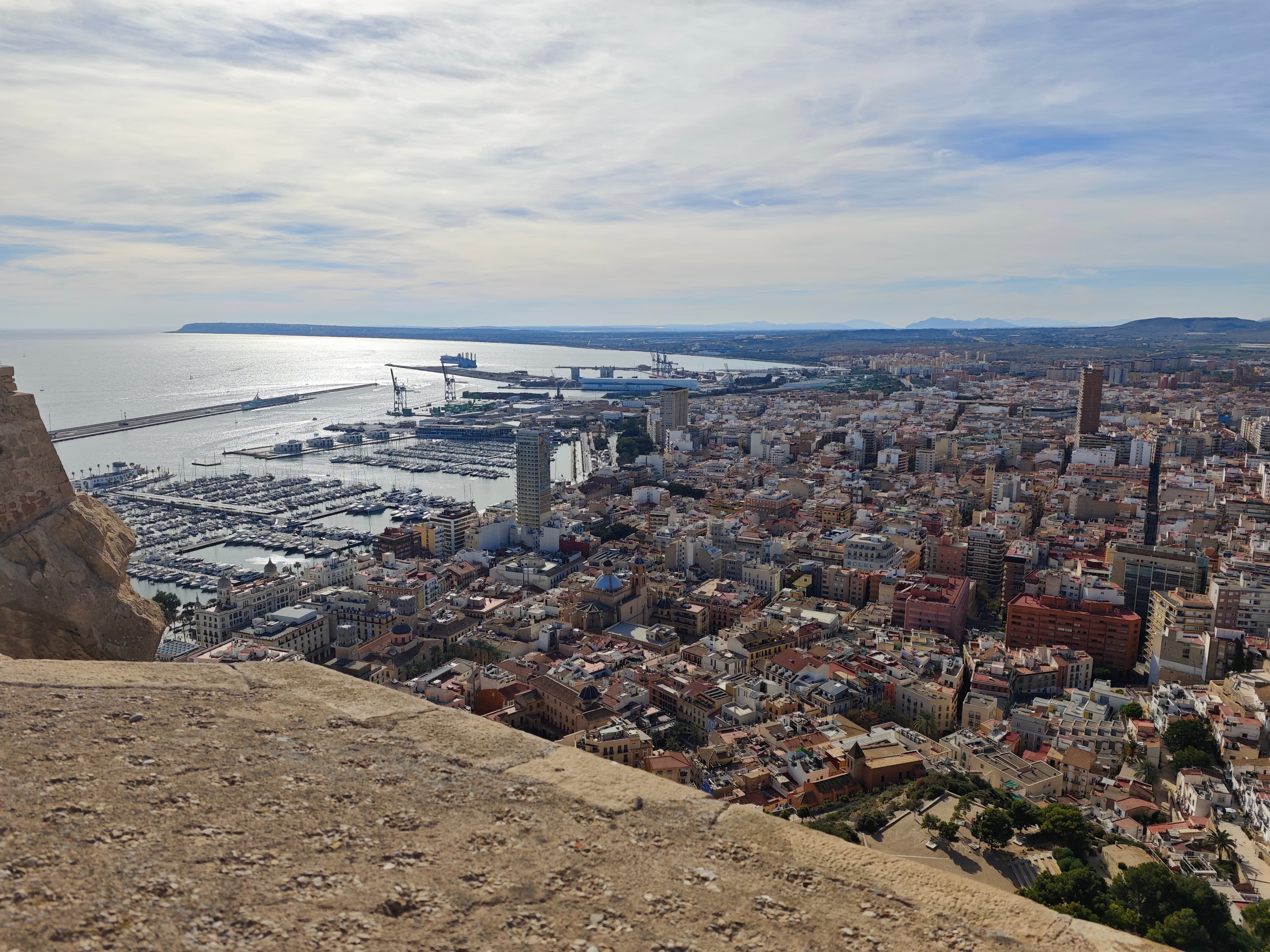
## 1) Castillo de Santa Bárbara (and Mount Benacantil): the city’s stone crown

**Geo facts (preserved):**
- **Name:** Castillo de Santa Bárbara
- **Type:** tourist_attraction
- **Rating:** 4.7
- **User ratings total:** 48,631
- **Coordinates:** 38.3489718, -0.478029
- **Address:** Castillo de Santa Bárbara, 03002 Alicante, Hiszpania
- **Place ID:** ChIJ57iIa6U3Yg0RCD4iSor1MEM

**Critic reality check (reviews):**
- Over **9,000 TripAdvisor reviews**, ~4.5/5 average.
- Pros: **360° views** from **Macho del Castell** tower; sunset is especially praised; huge scale; free entry; elevator access helps families.
- Cons: steep hike if you skip the elevator; crowds at peak times; some visitors feel it’s more “ruins with views” than intact Arab history because minimal original Arab features remain after rebuilds.
- Tourist-trap warning: watch for **unofficial guides** pushing paid tours near entrances—stick to official signage/apps. Pickpocketing risk at the base in high-traffic areas.

**Historian depth (what you’re actually standing on):**
- The hilltop position (about **166 meters above sea level**) attracted early fortifications; Bronze Age, Iberian, and Roman artifacts found on slopes.
- Moors built the initial fortress in the **9th century** as an alcazar guarding the port.
- Captured on **Dec 4, 1248** (Saint Barbara’s feast day) by Infante Alfonso (later Alfonso X).
- Ownership shifted in 1296 under James II of Aragon; rebuilds under Peter IV; major artillery fortifications under **Charles I** (early 16th c.) and **Philip II**.
- Renaissance-style renovations for artillery defense (bastions, walls).
- Used as a prison during wars and refuge for locals.
- Restored in **1963**, opened as a cultural center.
- The “Face of the Moor” (La Cara del Moro) is an iconic landmark silhouette from the city.

**Architecture & layout (historian details):**
- Three main areas: highest Moorish stronghold, central military zone, lower sections.
- Moorish foundations: walls, battlements, turrets, **Vassal Tower**, governors’ house with **Hall of Glory**, medieval hospital rooms, relics.
- Central part (late 16th c.): **Noble Hall**, Military and Guard Corps, **Queen’s Bastion**, **Philip II Hall**, extensive palace.
- Christian additions: reinforced battlements, watchtowers, **Chapel of Santa Bárbara**, artillery-focused defenses and extended walls.
- Mount Benacantil name derivation: Arabic “Banu-lQatil” or “Banu IQatil” (meaning “earlobe,” resembling the rock’s shape).

**Practical info (preserved, including uncertainty):**
- Sources lack definitive 2024/2025 ticket prices and opening hours; official sources recommended.
- The castle is generally **free** and open daily, but confirm seasonal changes and elevator access.
- Access: steep walk, elevator, or bus; draws crowds year-round.

**Vibe: what it feels like**
- The climb through pine-scented paths or the sudden whoosh of the lift sets the tone.
- On top: thinner, drier, breezier air; smells of hot rock, dust, pine resin, and salt on windy days.
- Stones radiate warmth into evening; seagulls cry; city hum is distant; footsteps echo in courtyards like the **Patio de Armas**.
- Sunset: city turns gold, sea deep cobalt, castle glows orange under spotlights.
- Emotional effect: it “orients” you—suddenly the city layout and sea-mountain relationship makes sense.

---

## 2) Pati d'Armes (Patio de Armas) & the castle’s internal highlights

**Geo facts:**
- **Name:** Pati d'Armes
- **Type:** museum
- **Rating:** 4.7
- **User ratings total:** 109
- **Coordinates:** 38.3489447, -0.4776106000000001
- **Address:** Castillo de Santa Bárbara, 03002 Alicante, Hiszpania
- **Place ID:** ChIJRwnNbaU3Yg0RE3jNvOBY03Y

This is one of those places where the vibe agent’s “echo of footsteps on stone” becomes literal. It’s also a key anchor for the MUSA spaces below.

---

## 3) MUSA (Museo de la Ciudad de Alicante): the castle turned into a city-history museum

MUSA is not a separate “somewhere else”—it’s *inside* Santa Bárbara Castle, and it’s central to understanding Alicante beyond the views.

**Historian: history & significance**
- Designed to explain Alicante’s history using the castle and Benacantil as the axis.
- Implemented in historic fortress buildings: Cuerpo de Ingenieros, Antiguo Hospital, Sala Larga, caves, dungeons, cistern.
- First phase inaugurated **24 March 2011**: opened Cuerpo de Ingenieros (visitor reception), Antiguo Hospital, Sala Larga, Cuevas de los Ingleses, and old dungeons.
- Importance: articulates in one route
  - urban and social evolution,
  - relationship with the Mediterranean,
  - key war episodes (like the mine explosion in the War of Succession),
  using the castle as the container.

**Historian: what to see (detailed)**
Organized into **five main rooms** plus singular spaces:

1. **Cuerpo de Ingenieros – CERV**
   - Animated audiovisual on Alicante’s history across eras.
   - Archaeological remains and introductory panels.

2. **Antiguo Hospital – “Alicante traspasada de Mediterráneo”**
   - Alicante’s link to the Mediterranean via archaeological and ethnological materials.

3. **Sala Larga – “Historias y personas”**
   - Local characters; interactive points on professions, surnames, etc.
   - Preserves the old medieval door of the fortress.
   - Heraldry, photos, shields, tombstones.

4. **Cuevas de los Ingleses – “La Explosión de la Mina”**
   - Episode of mine explosion during the War of Succession; panels + immersive audiovisual.

5. **Antiguos calabozos (under Plaza de Armas)**
   - Visitable with a guide due to the dangerous staircase.

Plus:
- **Cueva–cuadra**: stable cave used for the donkey transporting materials.
- **Aljibe renacentista**: 16th-century cistern under Plaza de Armas with two naves and stone arches; projection simulates water effects.
- **Casa del Gobernador**: “Cerámica y arte. El arte de las pequeñas cosas”
  - Antechamber mural of **2,162 ceramic fragments** from different eras.
  - Vault: jars, bowls, cups, plates from Neolithic to contemporary.
  - Terrace: viewpoint + reproductions of three medieval siege machines (catapult, crossbow, palisade).

**Practical info (critical, preserved)**
- Many sources say castle + MUSA are **free**.
- Hours not clearly listed separately; MUSA generally follows castle hours.
- Operational estimate: open most of the year daily; roughly **10:00–20:00** in high season, shorter in winter.
- Some sources mention Tuesday–Sunday without precise hours (likely generic municipal museum listing).
- Plan **1.5–2 hours** for castle + MUSA; sunset is especially rewarding.

---

## 4) Parc de l’Ereta (La Ereta Park): the castle approach that changes everything

**Geo facts:**
- **Name:** Parc de l'Ereta
- **Type:** park
- **Rating:** 4.5
- **User ratings total:** 2,024
- **Coordinates:** 38.3479586, -0.4803994
- **Address:** Calle Remigio Sebastià, 17, 03002 Alacant, Alicante, Hiszpania
- **Place ID:** ChIJ90O-z683Yg0RgflkgS_1Y_I

**Critic:**
- Described as a **120-acre terraced green space** en route to the castle.
- Pros: shady paths, sunset city views, relaxing.
- Cons: steep sections.
- Verdict: an essential enhancer to the castle approach.

**Vibe:**
- Transitional zone between city and nature: pine resin + dry earth + sea air.
- Sound minimal: wind, cicadas, distant city softened by elevation.
- Views more intimate than the castle’s; closer to rooftops and the curve of Postiguet.
- At sunset: hillside glows; couples and photographers gather; gentle lighting makes night walks feel romantic and slightly secret.

---

## 5) Mirador Alicante: a small viewpoint with big payoff

**Geo facts:**
- **Name:** Mirador Alicante
- **Type:** tourist_attraction
- **Rating:** 4.7
- **User ratings total:** 95
- **Coordinates:** 38.3475992, -0.4813434999999999
- **Address:** C. Dean Zaragoza, 6I, 03002 Alicante, Hiszpania
- **Place ID:** ChIJBfDuB3A3Yg0RmZJtodD3uPA

This is the kind of place you hit when you want the “castle feeling” without the full climb.

---

## 6) Barrio de Santa Cruz (El Barrio Santa Cruz): Alicante’s hillside soul

**Historian: identity & origins**
- Often called the heart of Alicante’s old town/casco antiguo.
- Oldest neighborhood; established as the initial settlement nucleus by Moorish inhabitants in the **8th century** as **Al‑Laqant**.
- Inhabited sequentially by Greeks, Romans, Moors, Christians—oldest continuously occupied neighborhood.
- Named after the **18th-century Ermita de Santa Cruz**, built atop a medieval tower from old city walls.
- About **2,700 residents**; revived in the 1990s.

**1691 bombardment impact**
- The French Armada’s seven-day bombardment in 1691 razed much of the coastal old town; the barrio’s surviving/rebuilt elements reflect cycles of destruction and rebirth.

**Historian: what you’ll see**
- Narrow, winding streets designed for shade and defense.
- Whitewashed houses with flower pots (often blue), ornate tiles, murals.
- House signs in old Valencian tradition replacing numbers.
- Key points:
  - **Ermita de Santa Cruz** (18th c.) with panoramic views; paths from Plaza del Carmen.
  - Nearby **Barrio San Roque** with **Ermita de San Roque** (16th c.), Alicante’s oldest chapel; painted house walls.
  - Proximity to Santa Bárbara Castle for layered views and historical ties.
  - **Calle Labradores**: once noble residences from Alfonso X’s era; now restaurants.

**Practical info (historian table preserved)**
- Barrio Santa Cruz is **free and open-air**, accessible **24/7**.

| Site | Current Ticket Prices (2024/2025 estimates) | Opening Hours (Weekdays/Weekends) |
|------|---------------------------------------------|-----------------------------------|
| **Co-Cathedral of San Nicolás** | Free admission | Open daily (specific hours vary; typically mornings and evenings for visits) |
| **Basilica de Santa María** | Free admission | Open daily (check locally for masses) |
| **Ermita de Santa Cruz & Barrio Streets** | Free | Always accessible |
| **Santa Bárbara Castle** | Free entry | 10:00 AM - 8:00 PM daily (may extend in summer; confirm on-site) |
| **Alicante Town Hall** (interior) | Free guided visits available | Weekdays 9:00 AM - 2:00 PM; limited weekends |

Best visited early morning or evening to avoid crowds on Calle Labradores; book restaurants in peak season.

**Critic:**
- Pros: village-like escape, viewpoints, photogenic, peaceful; ideal 30–60 minute wander.
- Cons: very steep; uneven steps; some alleys gritty with graffiti.
- Warning: rare catcalling reports; daytime is safest.
- Verdict: exceeds hype for culture seekers.

**Vibe:**
- Orange blossom and jasmine in spring; grilled sardines + garlic in summer evenings.
- Alley acoustics: voices bounce; clink of glasses; guitar strumming somewhere uphill.
- During Semana Santa and Hogueras: neighbors decorate façades; residents pull chairs into the street; lanterns and flowers.
- Emotional tone: safe, welcomed, gently nostalgic—Alicante becomes a community, not just a sun destination.

---

## 7) Concatedral de San Nicolás (Co-cathedral): calm under a blue dome

**Geo facts (as listed by Geo Agent):**
- **Name:** Konkatedra w Alicante (Co-cathedral)
- **Type:** tourist_attraction
- **Rating:** 4.5
- **User ratings total:** 4,182
- **Coordinates:** 38.3453531, -0.4825213
- **Address:** Plaza de, Pl. del Abad Penalva, 2, 03002 Alicante, Hiszpania
- **Place ID:** ChIJXV4olrE3Yg0REtiQ7JAKazo

**Historian: history**
- Built on the site of a former **mosque**.
- Designed 1610–1615 by **Agustín Bernardino**, disciple of Juan de Herrera.
- Built mainly 1613/1616–1662.
- Elevated to **co-cathedral** on **9 March 1959** by Pope John XXIII (Diocese of Orihuela–Alicante).
- Dedicated to **Saint Nicholas of Bari**, patron saint of Alicante; feast day **6 December** with Mass and procession.

**Historian: architecture & what to look for**
- Herrerian Renaissance sobriety + Baroque interiors.
- Latin cross plan; short transepts; apse and retrochoir; side chapels; ambulatory.
- Exterior: austere main façade (Doric), south façade (Ionic), **blue-tiled dome** about **45 m** high.
- Exterior details: sundial; red-ochre inscriptions.
- Interior highlights:
  - **Communion Chapel**: Greek-cross plan, barrel vaults; one of finest examples of Spanish High Baroque; designed by **Juan Bautista Borja** (1695–1738); marble Annunciation altarpiece; accessed via Puerta Negra and Santa Faz doors.
  - **15th-century Gothic cloister**: Valencian Gothic; small garden; silence contrasting with lively Calle Labradores; ironwork and baroque connecting doors.
  - Main altarpiece of Saint Nicholas (1676) by Juan de Villanueva.
  - Reliquary bust of Saint Felicitas; sculptures of Saint Roch and Saint Francis Xavier.
  - Cristo de la Buena Muerte by Nicolás de Bussy (17th c.).
  - Marble and jasper baldachin (1688).
  - 16th-century organ (oldest in Valencian region).
  - Paintings: La cena de Emaús (Juan Ribalta), San Guillermo (Pedro Orrente, 1639), Adoración de los Reyes (Senen Vila), San Vicente Ferrer (Bautista Vera, 1702).
  - Our Lady of Los Remedios image niche accessible from sacristy staircase.

**Practical info (historian estimates preserved)**
- Likely free entrance for basic visits; donations encouraged.
- Guided tours estimate €3–€5; events €5–€15.
- Typical visiting pattern: 10:00–13:00 and 17:00–20:00; Sundays mainly around Mass times; verify locally.
- Dress respectfully; some areas may be restricted during services.

**Vibe:**
- Outside plain; inside temperature drops; smells of beeswax, incense, cool dust.
- Dome floods space with diffuse light; voices become whispers.
- Emotional tone: protected, reflective, awed—quiet spirituality and resilience.

**Critic:**
- Pros: iconic dome, photogenic; architectural highlight.
- Cons: echoey.
- Verdict: must for architecture lovers.

---

## 8) Basílica de Santa María: Alicante’s oldest active church

**Geo facts:**
- **Name:** Basilica of St Mary of Alicante
- **Type:** tourist_attraction
- **Rating:** 4.5
- **User ratings total:** 2,522
- **Coordinates:** 38.3460832, -0.4793532
- **Address:** Pl. Sta. María, 1, 03001 Alicante, Hiszpania
- **Place ID:** ChIJa9njFbA3Yg0R3Fy9dU6CPy0

**Historian: history**
- Oldest active church in Alicante.
- Built in Valencian Gothic style between **14th and 16th centuries** on the site of the former principal mosque.
- Renovations in the 15th century after a fire; further Baroque transformations in the 18th century.
- Asymmetrical bell towers: one 14th century, one 18th century.

**Historian: what to see**
- Single nave with six side chapels between buttresses; majestic arches; richly adorned capitals.
- Baroque façade with stone sculpture of the Virgin by **Juan Bautista Borja**.
- Inside: Rococo high altar (18th c.); chapels (Immaculate Conception, Baptism, Communion); 16th-century baptismal font; 1653 Valencian Baroque organ; Chapter Hall; Choir; Chapel of Communion.
- Bell tower climb (~45 minutes) for panoramic views; separate ticket; audio guides available.
- Medieval walls show cannon marks; Rococo gold altar and statue by Jose Esteve Bonnet (from El Barrio report).

**Practical info (preserved uncertainty)**
- Specific 2024/2025 prices/hours not detailed; verify via official tourism sites.
- Reviews: tower fee modest but sometimes considered high for the experience.

**Vibe:**
- Darker and more intimate than San Nicolás; cool stone; gold leaf glitters in shadow.
- Smell of incense and old wood; footsteps echo softly.
- Emotional tone: mystical, intimate, slightly secretive—like stepping into another century.

**Critic:**
- Pros: oldest church, atmospheric, art collection.
- Cons: small interior.
- Verdict: solid history stop.

---

## 9) MACA (Museo de Arte Contemporáneo de Alicante): Picasso, Miró, Dalí—inside a baroque shell

**Geo facts:**
- **Name:** MACA Contemporary Art Museum of Alicante
- **Type:** tourist_attraction
- **Rating:** 4.5
- **User ratings total:** 2,355
- **Coordinates:** 38.3462595, -0.4796818
- **Address:** Pl. Sta. María, 3, 03002 Alicante, Hiszpania
- **Place ID:** ChIJUfbYFbA3Yg0RqZ2OeZBlDP8

**Historian: history & significance**
- Origins: opened **Nov 5, 1977** as Museo de La Asegurada, thanks to **Eusebio Sempere** donation forming the *Colección Arte del Siglo XX*.
- Includes international artists: **Picasso, Dalí, Miró, Chillida**.
- Housed in Casa de La Asegurada (1685), Alicante’s oldest civil building: granary, later jail, school, archive.
- Renovation: competition won in 2002 by **Sol Madridejos and Juan Carlos Sancho**; reopened as modern MACA on **March 22, 2011**.
- Size: **4,680 m²**, four floors + two basements.
- Permanent exhibitions rotate around **Geometría, Abstracción, Figuración**.
- Key collections:
  - Sempere: **575 pieces** (1940s–1970s)
  - Juana Francés: **134 works** (1950s–1990s)
  - Fundación Mediterráneo deposit: **212 pieces** from democratic transition onward
- Emphasis: conservation, education, evolving displays.

**Historian: what it’s like inside**
- Baroque sobriety + contemporary light-filled spaces.
- Temporary exhibition hall, four permanent rooms (1,200 m² total), library, auditorium, workshops, reserves, secure storage.
- Standouts: Sempere chromed steel sculptures; Paris-era gouaches; Juana Francés gestural material works; rotating masterpieces every four months.

**Practical info (preserved uncertainty)**
- Search results lack specific 2024/2025 ticket prices/hours; check maca-alicante.es or alicante.es.
- Free entry has been noted historically; confirm.

---

## 10) MARQ (Provincial Archaeological Museum): the museum that won Europe’s top prize

**Geo facts:**
- **Name:** Archaeological Museum of Alicante
- **Type:** tourist_attraction
- **Rating:** 4.7
- **User ratings total:** 12,328
- **Coordinates:** 38.3534579, -0.4767992
- **Address:** Pl. Dr. Gómez Ulla, S/N, 03013 Alacant, Alicante, Hiszpania
- **Place ID:** ChIJPcv3ZqY3Yg0RRBfMgwTapwk

**Historian: why it matters**
- Established in **1932** as provincial archaeological collection.
- Relocated/expanded late 1990s–early 2000s into restored **19th-century San Juan de Dios Provincial Hospital**.
- Won **European Museum of the Year 2004** for innovative multimedia/scenography.
- Mission includes accessibility, inclusion, social action programs for vulnerable groups, intergenerational activities, adapted visits.
- Holds about **81,000 items** (prehistory through Middle Ages).
- Known for major temporary exhibitions (Terracotta Warriors of Xi’an, Hannibal, etc.).

**Historian: layout & highlights**
- Chronological galleries: Prehistory, Iberian, Roman, Medieval.
- Thematic galleries: field archaeology, urban archaeology, underwater archaeology.
- Prehistory room: Paleolithic to Bronze Age; cave-like scenography; finds from Tossal de la Cala, Cova del Randero.
- Iberian room: ceramics, sculptures, grave goods; **Lady of Cabezo Lucero**; warrior sculptures; projection mapping of oppida and trade.
- Roman room: Lucentum focus; inscriptions, coins, household objects; **Roman mosaic from Fontcalent**; medical instruments and toiletries.
- Medieval: Islamic and Christian; early Islamic era as key moment in gestation of Alicante.
- Immersive tech: 360 projections, tactile models, reconstructions of caves and tombs.

**Practical info (historian estimates preserved)**
- General admission estimate **€3–€5**; reduced **€1.50–€3**; children often free/symbolic.
- Blockbuster exhibitions may raise combined ticket to **€8–€12**.
- Free days/discounts may exist (weekday/afternoon).
- Hours: typical museum split schedule; likely closed Mondays; Sundays morning only—verify official site.

**Vibe:**
- Low lighting, spotlit artifacts, audio guides murmuring.
- Emotional tone: rooted and curious—Alicante as a palimpsest of civilizations.

---

## 11) Lucentum (Tossal de Manises): Alicante before Alicante

**Historian: what it is**
- Ancient Roman precursor to modern Alicante, built atop Iberian settlement with Carthaginian influences.
- Peak: 1st century BC to 1st century AD; declined due to competition from **Ilici (Elche)**.
- Site: ~3 hectares; declared Historic-Artistic Monument in **1961**.
- Preserves 600-meter perimeter wall enclosing full urban area (~25,000 m²), one of the most comprehensively known Roman cities in Valencian Community.

**Historian: layers**
- Iberian settlement (4th century BC).
- Carthaginian trading hub: **Ákra Leuké** under Hamilcar Barca (3rd century BC).
- Roman refoundation as **Lucentum** after Scipio conquest ~206 BC; municipium under Augustus (1st century BC).
- Roman infrastructure: baths, forum, temples, sewers; wall reconstructions; eastern gate.
- Decline 2nd–3rd centuries AD; later quarry; Islamic maqbara (8th–11th centuries).
- Artifacts (Iberian ceramics, jewelry, Kore de Alicante statue, weapons) now in MARQ.

**Historian: what to see**
- 600-meter defensive wall; ashlar-lined towers.
- Main eastern gate with cart-wheel grooves.
- Roman forum (columns likely reproductions).
- Two public thermal baths.
- Temple evidence via epigraphy.
- Sewage systems.
- Olive oil press counterweight; catapult stones left in situ.
- Islamic graveyard layer.
- Hilltop sea view.

**Practical info (preserved uncertainty)**
- No current 2024/2025 prices/hours in sources; typically free or low-cost (historically under €3); verify via MARQ.
- Hours likely daylight-based; summer split schedule possible; varies by day.
- Accessible by bus or car; parking nearby.

---

## 12) Explanada de España: Alicante’s wave-tiled living room

**Critic:**
- Iconic **1,900-foot** palm-lined promenade with **6.6 million** mosaic tiles.
- Pros: wavy tile design; relaxed stroll from Plaza Puerta del Mar to Parque de Canalejas; seasonal Artisan Craft Fair (July–September); wide and accessible.
- Cons: busy sections feel commercial; tiles slippery when wet; less exciting for non-walkers.
- Tourist-trap warning: mildly overpriced ice cream vendors; opt for local spots off-path; beware pushy buskers; pickpocketing in crowds.
- Verdict: worth it; postcard-perfect spine without gimmick.

**Vibe:**
- Tile rhythm underfoot feels like walking on a stylized sea.
- Smells: salt, sunscreen, coffee; sometimes roasted almonds or churros; artisan markets add leather/soaps/incense.
- Sounds: morning joggers; afternoon cicadas; night street musicians (flamenco guitar, saxophone, boleros).
- Emotional tone: open, sociable, contemplative—people end up here without planning it.

**Geo-adjacent park anchor: Parc Canalejas**
- **Name:** Parc Canalejas
- **Type:** park
- **Rating:** 4.5
- **User ratings total:** 4,036
- **Coordinates:** 38.340771, -0.4871844
- **Address:** Av. de Ramón y Cajal, 6, 03003 Alicante, Hiszpania
- **Place ID:** ChIJKWQyM0s2Yg0R9kIjGE6SUw8

---

## 13) Playa del Postiguet: the urban beach with castle views

**Geo facts:**
- **Name:** Platja Postiguet
- **Type:** tourist_attraction
- **Rating:** 4.5
- **User ratings total:** 1,197
- **Coordinates:** 38.3443863, -0.4789443
- **Address:** Pl. Prta del Mar, 3, 03002 Alicante, Hiszpania
- **Place ID:** ChIJ4zc8b7M3Yg0Rrk4_5l1sQJI

**Critic:**
- Pros: proximity to everything; soft sand; calm waters; beach bars for paella/seafood; sunsets and people-watching.
- Cons: urban pollution/noise; crowded summers; rocky entry points; water quality varies.
- Tourist-trap warning: beach chairs/umbrellas overpriced (€10+); petty theft common—secure valuables; avoid unofficial rentals.
- Verdict: worth it for convenience; not pristine paradise.

**Vibe:**
- Fine sand warms fast; water cool and clear; gull cries; vendors calling; portable-speaker music.
- Smells: salt + coconut sunscreen + fried calamari + paella drifting from chiringuitos.
- During Hogueras: midnight swims, fireworks, wave-jumping rituals for luck.
- Emotional tone: easy belonging—you can dip in between museums and old town.

---

## 14) Playa de San Juan: the big-sky alternative

**Vibe:**
- Around **7 km** of fine golden sand; clearer, more spacious than Postiguet.
- Smells: mostly marine; occasional grilled fish/pizza/coffee near chiringuitos.
- Sounds: rolling waves, volleyball, paddle; promenade bikes and rollerblades.
- Emotional tone: relaxed, sun-drenched, quietly optimistic; sunrise swims, winter walks.

**Critic:**
- Pros: long sands, calmer crowds; chiringuitos.
- Cons: farther out; bus-dependent.
- Verdict: great alternative beach.

---

## 15) Alicante Marina + Museo The Ocean Race: the city looking outward

### Alicante Marina (Marina Deportiva)
**Critic:**
- Working harbor for **740 boats**; scenic stroll spot.
- Pros: yacht glamour, castle backdrop, easy access.
- Cons: busy with boats.
- Verdict: charming waterfront filler.

**Vibe:**
- Reflections and vertical masts; smells of brine, engine oil, varnish, plus restaurant aromas and cocktails.
- Sounds: halyards clinking, boat creaks, terrace bustle; multilingual chatter.
- Emotional tone: aspirational and reflective—Alicante plugged into global maritime life.

### Museo The Ocean Race (Geo + Historian)
**Geo facts:**
- **Name:** Museo The Ocean Race
- **Type:** tourist_attraction
- **Rating:** 4.4
- **User ratings total:** 2,552
- **Coordinates:** 38.3401958, -0.4793831
- **Address:** Mlle. Levante, 10, 03001 Alicante, Hiszpania
- **Place ID:** ChIJzWYiWVJMYg0RNlZBxB4_wp4

**Historian: significance**
- Opened **June 2012** in the old Orán Marine Station.
- Alicante is Starting Port since **2008**, confirmed again for **2026–27**.
- Only museum in the world devoted specifically to The Ocean Race.
- Covers 45–50 years of race history; emphasizes ocean conservation and sustainability.
- Educational center: workshops, school programs, library.

**Historian: building & highlights**
- ~**1,300 m²** on two floors.
- Ground floor: permanent galleries + specialized library.
- Upper floor: workshop rooms + cafeteria + terrace with harbor views.
- Interactive: games, models, simulators, multimedia.
- Must-see: interior of a real race boat from **2005–2006** edition.

**Practical info (official schedule + pricing preserved)**
Products:
- **Immersive Experience**: adult 5€, reduced 3€, free under 12 + disabled + unemployed.
- **Guided**: general 12€, reduced 6€, free under 12 + disabled + unemployed.
- **Guided + Immersive**: general 15€, reduced 6€, under 12/disabled/unemployed 3€.

Hours:
- **18 Sep – 24 Jun**: Wed–Thu 10:00–16:00; Fri–Sat 10:00–18:00; Sun 10:00–14:00; closed Mon–Tue + Jan 1 + Jun 24 + Dec 25.
- **25 Jun – 17 Sep**: Wed 10:00–14:00; Thu–Sat 10:00–18:00; Sun 10:00–14:00; closed Mon–Tue.

Immersive/Guided timetables:
- **20 Sep – 24 Jun**: Fri Eng 15:15 / Spa 16:45; Sat Eng 11:15 & 15:15 / Spa 12:30 & 16:45; Sun Eng 11:00 / Spa 12:30.
- **23 Jun – 19 Sep**: Fri Eng 16:15 / Spa 17:45; Sat Eng 11:15 & 16:15 / Spa 12:30 & 17:45; Sun Eng 11:00 / Spa 12:30.

Location:
- C/ Muelle de Levante, nº 10, Puerto de Alicante, 03001.
- Nearby transport lines include L2, L21, L22, C6, Turibus, L5, L8, L10, L13.

---

## 16) Mercado Central (Mercat Central d’Alacant): food, architecture, and Civil War memory

**Geo facts:**
- **Name:** Mercat Central d'Alacant
- **Type:** tourist_attraction
- **Rating:** 4.5
- **User ratings total:** 32,558
- **Coordinates:** 38.3480556, -0.4861111
- **Address:** Av. Alfonso El Sabio, nº 10, 03004 Alicante, Hiszpania
- **Place ID:** ChIJga68cK03Yg0R9pyPDap5OUA

**Historian: history**
- Built to replace unhygienic late-19th-century markets (Puerta del Mar, García Calamarte).
- Built partly on land of the 17th-century defensive wall.
- Project started by Francisco Fajardo Guardiola ~1915; completed by Juan Vidal Ramos early 1920s.
- Inaugurated **1921**; key example of early-20th-century Valencian Modernism/eclecticism.
- **25 May 1938**: hit in major air raid; **more than 300 killed**.
- Plaza 25 de Mayo behind market holds commemorative plaque; memorial space.

**Historian: architecture & layout**
- Eclectic with Modernist influences; rectangular plan; large corridors; high ceilings.
- Gable roof; large stained-glass windows under roofline.
- Distinctive Rotonda with semi-spherical dome.
- One floor partially below street level due to slope.
- Almost **11,000 m²**, nearly **300 stalls**.
- Lower floor: fish/seafood, salted/pickled.
- Upper floor: meat, sausages, poultry, eggs, fruit/veg.
- Refurbished spaces include oils, coffees, wines, gourmet products, bars/restaurants—supporting “tardeo” culture.
- Noted stalls: José Fuster (bay fish), Juanelo (seasonal fish).
- Plaza 25 de Mayo / Plaza de las Flores behind: flower stalls + memorial plaque.

**Practical info (historian preserved)**
- Address: Avenida Alfonso X El Sabio.
- Hours:
  - Mon–Fri **07:00–14:30**
  - Sat **07:00–15:00**
  - Sun closed
- Entry free; pay only for purchases.

**Vibe:**
- Sensory explosion: shellfish brine, ripe tomatoes, chorizo, jamón, spices, coffee, olives.
- Sounds: vendors calling, scales clacking, paper rustling, gossip over counters.
- Emotional tone: grounded, generous, life-affirming—“real Spain” daily choreography.

**Critic:**
- Pros: vibrant dining, authentic flavors.
- Cons: early closes, crowded.
- Warning: bargain wisely; tourist pricing possible.
- Verdict: foodie must.

---

## 17) Plaza del Ayuntamiento: civic calm and ceremony

**Vibe:**
- Broad square with baroque Town Hall façade; formal but gentle.
- Smells: coffee/pastries in morning; warm stone; occasional incense.
- Sounds: children’s voices, heels tapping, pigeons.
- Stories: weddings, official receptions, Hogueras proclamations; “Cota Cero” mark inside.

**Critic:**
- Pros: elegant architecture, eateries; central orientation spot.
- Cons: can bustle; tourist menus pricey.
- Verdict: perfect orientation spot.

**Historian (from El Barrio report):**
- Town Hall: 18th-century Baroque, rebuilt post-1691 on 15th-century foundations; Solomonic columns, towers, Isabelline Blue Room.

---

## 18) Tabarca Island: marine reserve, fortified village, and time slowing down

**Vibe:**
- Boat ride: salt spray, engines, seabirds; mainland shrinking.
- Island: white houses with colorful shutters; smells of seaweed, salt ropes, garlicky seafood stews (caldero tabarquino).
- History stories: pirates, Barbary corsairs; Genoese settlers—prisoners from Tabarka resettled in 18th century; legends of shipwrecks and contraband coves.
- Emotional tone: escape and simplification; few cars; swim-walk-eat-nap; quiet after day-trippers leave.

**Critic:**
- Pros: clear waters, historic sites, seafood.
- Cons: boat-dependent, windy.
- Tourist-trap warning: ferry overpricing.
- Verdict: top day trip for sea lovers.

---

## 19) Canelobre Caves (near Busot): a subterranean cathedral + Civil War story

**Vibe:**
- Drive out: city gives way to rugged hills and scrub.
- Inside: temperature drops, humidity rises; mineral smell; main chamber ~70 m high; colored lights; footsteps ring on walkways; drips echo.
- Used as an aircraft workshop during Spanish Civil War—adds human layer to geology.
- Emotional tone: awed, small, introspective; like surfacing from a dream when you exit.

**Critic:**
- Pros: massive vaults, guided walks; impressive scale.
- Cons: drive needed; cool temps.
- Verdict: unique underground thrill.

---

## 20) Guadalest Valley: dramatic day trip with touristy edges

**Critic:**
- Ranks #2 on TripAdvisor; 2,500+ reviews; 4.6/5.
- Pros: breathtaking rock formations, castle ruins, hikes; reservoirs for photos.
- Cons: long drive (~1 hour); village shops touristy.
- Tourist-trap warning: overpriced souvenirs/cafes; bus tours rushed.
- Verdict: hype-worthy for nature/history fans.

---

# Hidden Gems & Under-the-Radar Stops (small places that hit hard)

These are the places that often become “unexpected favorites”—including several from the Geo Agent list that aren’t always headline items.

---

## El Carrer dels Bolets (Mushroom Street): playful, photogenic, family-friendly

**Geo facts:**
- **Name:** El Carrer dels Bolets
- **Type:** tourist_attraction
- **Rating:** 4.5
- **User ratings total:** 6,121
- **Coordinates:** 38.34383589999999, -0.4858751
- **Address:** C. San Francisco, 30, 03001 Alacant, Alicante, Hiszpania
- **Place ID:** ChIJI9qhUeU3Yg0RgE0_OppLBys

A whimsical street that’s easy to fold into an old-town wander—especially if you’re traveling with kids or want something light between churches and museums.

---

## La casita de las macetas azules: the “blue pots” house moment

**Geo facts:**
- **Name:** La casita de las macetas azules
- **Type:** tourist_attraction
- **Rating:** 4.7
- **User ratings total:** 350
- **Coordinates:** 38.3481425, -0.4818724
- **Address:** C. Dean Zaragoza, 03002 Alicante, Hiszpania
- **Place ID:** ChIJhTX2SPY3Yg0RRYjgiNdOXdQ

This matches the old-town aesthetic described in Barrio Santa Cruz: white walls, blue accents, flowers—except here it’s a specific “pin” you can aim for.

---

## Panteó de Quijano: a quieter historic stop

**Geo facts:**
- **Name:** Panteó de Quijano
- **Type:** tourist_attraction
- **Rating:** 4.2
- **User ratings total:** 898
- **Coordinates:** 38.351433, -0.4843666
- **Address:** Plaza Sta. Teresa, 6, 03004 Alicante, Hiszpania
- **Place ID:** ChIJI1eBFKw3Yg0RzTdYN1ldalg

---

## Sala d'Exposició de la Llotja del Peix (Lonja del Pescado): exhibitions by the sea

**Geo facts:**
- **Name:** Sala d'Exposició de la Llotja del Peix
- **Type:** tourist_attraction
- **Rating:** 4.0
- **User ratings total:** 753
- **Coordinates:** 38.339068, -0.4879131
- **Address:** Sala de Exposiciones Lonja del Pescado, Av. del Almte. Julio Guillén Tato, s/n, 03001 Alicante, Hiszpania
- **Place ID:** ChIJGeyXLLU3Yg0RWwD13_8YQTQ

---

## Parc El Palmerar: palms, space, and a different side of Alicante

**Geo facts:**
- **Name:** Parc El Palmerar
- **Type:** park
- **Rating:** 4.4
- **User ratings total:** 9,257
- **Coordinates:** 38.3222562, -0.5138009
- **Address:** Avinguda d'Elx, 109, 03008 Alacant, Alicante, Hiszpania
- **Place ID:** ChIJjZuUoRs2Yg0R_A05fP5YtmE

---

## Parc del Tossal + Castell de Sant Ferran: the “other” fortress hill

### Parc del Tossal (Geo)
- **Name:** Parc del Tossal
- **Type:** tourist_attraction
- **Rating:** 4.4
- **User ratings total:** 1,797
- **Coordinates:** 38.3536572, -0.4898676
- **Address:** C. Escultor Bañuls, 03009 Alicante, Hiszpania
- **Place ID:** ChIJ_xLfdlQ2Yg0RdneEMrYRQeY

### Castell de Sant Ferran (Geo)
- **Name:** Castell de Sant Ferran
- **Type:** tourist_attraction
- **Rating:** 4.2
- **User ratings total:** 2,087
- **Coordinates:** 38.3509722, -0.4910803
- **Address:** Mont Tossal, 03005 Alacant, Hiszpania
- **Place ID:** ChIJQQkekFM2Yg0Ra7JvJ_sqEzE

If Santa Bárbara is the headline, Tossal/Sant Ferran is the “local alternative hill” energy—excellent when you want views and open space without the same concentration of crowds.

---

## Aura Museum: a smaller museum option

**Geo facts:**
- **Name:** Aura Museum
- **Type:** tourist_attraction
- **Rating:** 4.4
- **User ratings total:** 260
- **Coordinates:** 38.34704, -0.4933046
- **Address:** Avinguda Benito Perez Galdos, 47, 03005 Alacant, Alicante, Hiszpania
- **Place ID:** ChIJT7kS5Og3Yg0RcWvyEtsau_8

---

## MUBAG (Gravina Museum of Fine Arts): a free palace museum that’s more important than it looks

**Historian:**
- Housed in **Palacio del Conde de Lumiares / Gravina Palace**, 18th century, built 1748–1808; declared historical monument.
- Museum project opened **2001** after restoration; run by Diputación Provincial.
- Collection ~**500 works**, 16th to early 20th century; strong 19th-century focus.
- Artists/works: Francisco Salzillo sculpture; portrait of Ferdinand VII by Vicente López Portaña; Antonio Gisbert; Lorenzo Casanova.

**Practical info (preserved)**
- Entry described as **free**.
- Hours inferred: split schedule ~10:00–14:00 and 16:00–20:00; Sundays reduced; weekly closing day possible—verify locally.

---

## Museu de les Fogueres / Museo de Hogueras: understand Alicante’s biggest festival in 40 minutes

**Historian: significance**
- Fogueres de Sant Joan created **1928**.
- Declared **Fiesta de Interés Turístico Internacional** in **1983**.
- Recognized as **Bien de Interés Cultural Inmaterial** in **2013**.
- Museum preserves **ninots indultats** (pardoned figures), costumes, documents, photos, posters; honors collective neighborhood commissions and artists.

**Two overlapping museum entries preserved (both reports included):**
- One report notes **free** admission widely; another mentions older **€2** figure in an audio guide.
- Opening hours often listed as **10:00–14:00 and 17:00–20:00 daily**, including weekends (from one source).
- Visit time: **30–40 minutes**.

**What you’ll see**
- Ninots from different years: humorous caricatures to elaborate sculptures; changing styles since 1930s.
- Models/maquettes of bonfires.
- Traditional dress (bellesa and participants).
- Audiovisuals of building, parades, burning night (la cremà).
- Chronological sections: origins (1928–1936), post-war fluctuations (1940–1955), consolidation with artists like Ramón Guilabert, José Romeu, Tomás Valcárcel; official fiesta by 1999.
- Mentions of José María Py and “Alicante Atracción” organizing first event in three months; expansion to Madrid, Orán, Algiers.

---

## Museo Taurino (Bullfighting Museum): free, compact, culturally loaded

**Historian:**
- Bullfights documented since **1605**; tradition since 15th century.
- Plaza de Toros inaugurated **1888** (replacing 1848 ring by Antonio Jover).
- Museum inaugurated **October 2001** inside bullring.
- Focus on Alicante matadors: Vicente Blau “El Tino”, José María Manzanares, Francisco Antón, Luis Francisco Esplá.
- Exhibits: trajes de luces, capes, swords, banderillas, trophies, bull heads, maquette of bullring, audiovisual/VR, timeline.

**Practical info (preserved)**
- Official tourism: museum entry **free**.
- Hours:
  - Tue–Fri 10:00–13:30 and 17:00–20:00
  - Sat 10:30–13:30
  - Sun/holidays closed
- Third-party guided tours may cost ~€8–15.

---

## Nativity Scene Museum (Museo de Belenes): a seasonal-feeling hidden gem year-round

**Historian:**
- Housed in a typical 19th-century house in El Barrio.
- Hundreds of handcrafted nativity scenes from Alicante, Spain, and international origins (India, Africa).
- Context: Spanish belén tradition dating back to ~1300 (Barcelona Cathedral) and St. Francis of Assisi 1223 live reenactment in Greccio.
- Contrasts with Alicante’s giant outdoor nativity scene (Guinness World Record-holding) in Plaza del Ayuntamiento (free during Christmas).

**Practical info (preserved uncertainty)**
- Ticket prices and precise hours not detailed; likely free/low-cost; verify locally.
- May have seasonal extensions around Christmas.

---

# Culture & Atmosphere (how Alicante feels, hour by hour)

Alicante doesn’t just have “sights”—it has *rhythms*. If you align your days with them, the city feels effortless.

## Morning Alicante: markets, quiet stone, and soft sea light
- **Mercado Central** is at its most alive early: vendors calling, fish on ice, produce pyramids, locals shopping for lunch.
- **Old town churches** (San Nicolás, Santa María) feel especially hushed in the morning: cool air, candlewax, incense, footsteps softened.
- The **Explanada** in the morning is joggers and dogs, palm fronds swishing, sea breeze clean and bright.

## Midday: heat management and museum time
The vibe research emphasizes how the sun shapes Alicante’s rhythms: midday can be harsh in summer. This is prime time for:
- **MARQ** (cool, immersive, educational).
- **MACA** (art + shade + old town).
- **MUBAG** (palace museum calm).
- A long lunch and a slower pace.

## Late afternoon: the city’s golden hour switch
- **Postiguet** becomes a ritual space: after-work dips, families arriving, the castle glowing behind swimmers.
- **Ereta Park** and Benacantil viewpoints become sunset magnets: city lights begin to rise.
- The marina shifts into terrace mode: perfume/cologne, cocktails, clinking plates.

## Night: El Barrio, music bleed, and the late Mediterranean clock
- El Barrio’s nightlife streets become a warren of bars and tiny clubs.
- Smells: frying oil, grilled meats, beer foam, citrus gin; later perfume and cigarette smoke.
- Sound: overlapping music—rock, reggaeton, Spanish pop—blending into a lively hum.
- Emotional tone: convivial, slightly chaotic, welcoming; many nights turn into “just one drink” that becomes a dawn walk.

---

# Food & Local Experiences (markets, tapas alleys, sea rituals, festivals)

## Mercado Central as a food experience (not just shopping)
Even if you don’t cook, the market is a cultural immersion:
- Fish/seafood section for visual drama and Mediterranean identity.
- Bars and small restaurants inside support **tardeo** culture—quick beer/wine, tortilla, ensaladilla rusa.
- Behind the market, **Plaza 25 de Mayo / Plaza de las Flores** adds flower stalls and the memorial plaque—food and history in one loop.

## The “passeig” culture: walking as a local ritual
The critic agent lists “Passeig (Promenade Walks)” as a top reviewed experience, overlapping with Explanada but extending beyond it. In Alicante, walking isn’t exercise; it’s social life:
- Evening strolls on Explanada.
- Benches, conversations in Valencian/Castilian.
- Street musicians and artisan fairs.

## Hogueras / Fogueres de Sant Joan: the city’s extroverted core
Even if you’re not traveling in June, the festival shapes Alicante’s identity year-round.
- Museum of Fogueres/Hogueras gives you the visual language: ninots, satire, craftsmanship, neighborhood commissions.
- Plaza de los Luceros becomes the epicenter during mascletàs: concussive booms, sulfur smell, vibrating ground (vibe report).
- Postiguet becomes a ritual stage: midnight swims, fireworks, wave-jumping for luck.

## Sea rituals: Tabarca and the “Alicante looks outward” feeling
- Tabarca day trip is swim-walk-eat-nap simplicity.
- The marina + Ocean Race Museum frames Alicante as a global maritime node, not just a beach town.

---

# Practical Tips & Warnings (tickets, hours, mobility, scams, safety)

This section preserves the critic warnings and the historian “missing info” notes, because what you *don’t* know matters when you’re traveling soon.

## Safety: what’s actually worth worrying about
**General reputation:** Alicante is considered safe with low violent crime, and forums note minimal issues compared to Barcelona. Families and solo travelers feel safe in daytime.

**Main risk:** **pickpocketing/petty theft** in crowds:
- Promenades (Explanada), beaches (Postiguet), base of the castle.
- Use anti-theft bags; don’t leave valuables unattended on the sand.

## Common tourist traps (and how to sidestep them)
- **Unofficial guides** near Santa Bárbara Castle entrances pushing paid tours: stick to official signage/apps.
- **Overpriced beach rentals** (chairs/umbrellas often €10+): avoid unofficial rentals; confirm pricing.
- **Taxi overcharges**: critic suggests using apps like **Bolt**.
- **Overpriced ice cream** on Explanada: walk one street inland for better value.
- **Overpriced souvenirs/cafes** in Guadalest; bus tours can feel rushed.
- **Pushy buskers** on promenades: not a scam per se, but can be aggressive.

## Mobility & terrain reality checks
- **Barrio Santa Cruz** is steep with uneven steps; bring water and good shoes.
- **Castle hike** is steep; elevator exists; mid-week mornings quieter.
- **Ereta Park** has steep sections.

## Hours & ticket info: what’s firm vs. what must be checked
Alicante has many free-entry cultural sites, but hours can be seasonal and sometimes not clearly published in the sources.

### Firm/Specific hours in sources
- **Mercado Central**: Mon–Fri 07:00–14:30; Sat 07:00–15:00; Sun closed.
- **Museo Taurino**: Tue–Fri 10:00–13:30 & 17:00–20:00; Sat 10:30–13:30; Sun/holidays closed.
- **Museo The Ocean Race**: detailed seasonal schedule + session times (see above).
- **Museu de les Fogueres**: one source lists daily 10:00–14:00 & 17:00–20:00 (verify on holidays/festival days).

### Places where sources explicitly lack 2024/2025 details (you should verify)
- **Santa Bárbara Castle**: generally free; hours vary; verify elevator access and seasonal changes.
- **MACA**: ticket/hours not specified in sources; check official site.
- **Lucentum**: prices/hours not specified; likely low-cost/free; check MARQ channels.
- **Basílica de Santa María**: tower ticket and visiting hours not specified; check locally.
- **MUBAG**: described as free; hours inferred; verify.
- **Nativity Scene Museum**: prices/hours not specified; verify.

## Micro-planning: how to avoid crowds and heat
- Castle: go **mid-week morning** for fewer crowds; sunset for best light but busiest.
- Barrio Santa Cruz: early morning/evening for photos and comfort.
- Mercado Central: arrive early; by 13:30 vendors wind down.
- Explanada: evening for music and atmosphere; morning for calm.

---

# Geo Agent Attraction Directory (All 20, preserved with details)

Below is the full Geo Agent list, preserved exactly in content (names, types, ratings, review totals, coordinates, addresses, place IDs), with brief contextual notes so you can actually use it.

## 1. Castillo de Santa Bárbara
- Type: tourist_attraction
- Rating: 4.7 (48,631)
- Location: 38.3489718, -0.478029
- Address: Castillo de Santa Bárbara, 03002 Alicante, Hiszpania
- Place ID: ChIJ57iIa6U3Yg0RCD4iSor1MEM

## 2. Platja Postiguet
- Type: tourist_attraction
- Rating: 4.5 (1,197)
- Location: 38.3443863, -0.4789443
- Address: Pl. Prta del Mar, 3, 03002 Alicante, Hiszpania
- Place ID: ChIJ4zc8b7M3Yg0Rrk4_5l1sQJI

## 3. Parc del Tossal
- Type: tourist_attraction
- Rating: 4.4 (1,797)
- Location: 38.3536572, -0.4898676
- Address: C. Escultor Bañuls, 03009 Alicante, Hiszpania
- Place ID: ChIJ_xLfdlQ2Yg0RdneEMrYRQeY

## 4. Castell de Sant Ferran
- Type: tourist_attraction
- Rating: 4.2 (2,087)
- Location: 38.3509722, -0.4910803
- Address: Mont Tossal, 03005 Alacant, Hiszpania
- Place ID: ChIJQQkekFM2Yg0Ra7JvJ_sqEzE

## 5. Mirador Alicante
- Type: tourist_attraction
- Rating: 4.7 (95)
- Location: 38.3475992, -0.4813434999999999
- Address: C. Dean Zaragoza, 6I, 03002 Alicante, Hiszpania
- Place ID: ChIJBfDuB3A3Yg0RmZJtodD3uPA

## 6. Pati d'Armes
- Type: museum
- Rating: 4.7 (109)
- Location: 38.3489447, -0.4776106000000001
- Address: Castillo de Santa Bárbara, 03002 Alicante, Hiszpania
- Place ID: ChIJRwnNbaU3Yg0RE3jNvOBY03Y

## 7. Panteó de Quijano
- Type: tourist_attraction
- Rating: 4.2 (898)
- Location: 38.351433, -0.4843666
- Address: Plaza Sta. Teresa, 6, 03004 Alicante, Hiszpania
- Place ID: ChIJI1eBFKw3Yg0RzTdYN1ldalg

## 8. Parc El Palmerar
- Type: park
- Rating: 4.4 (9,257)
- Location: 38.3222562, -0.5138009
- Address: Avinguda d'Elx, 109, 03008 Alacant, Alicante, Hiszpania
- Place ID: ChIJjZuUoRs2Yg0R_A05fP5YtmE

## 9. Archaeological Museum of Alicante (MARQ)
- Type: tourist_attraction
- Rating: 4.7 (12,328)
- Location: 38.3534579, -0.4767992
- Address: Pl. Dr. Gómez Ulla, S/N, 03013 Alacant, Alicante, Hiszpania
- Place ID: ChIJPcv3ZqY3Yg0RRBfMgwTapwk

## 10. Museo The Ocean Race
- Type: tourist_attraction
- Rating: 4.4 (2,552)
- Location: 38.3401958, -0.4793831
- Address: Mlle. Levante, 10, 03001 Alicante, Hiszpania
- Place ID: ChIJzWYiWVJMYg0RNlZBxB4_wp4

## 11. Parc de l'Ereta
- Type: park
- Rating: 4.5 (2,024)
- Location: 38.3479586, -0.4803994
- Address: Calle Remigio Sebastià, 17, 03002 Alacant, Alicante, Hiszpania
- Place ID: ChIJ90O-z683Yg0RgflkgS_1Y_I

## 12. Mercat Central d'Alacant
- Type: tourist_attraction
- Rating: 4.5 (32,558)
- Location: 38.3480556, -0.4861111
- Address: Av. Alfonso El Sabio, nº 10, 03004 Alicante, Hiszpania
- Place ID: ChIJga68cK03Yg0R9pyPDap5OUA

## 13. Aura Museum
- Type: tourist_attraction
- Rating: 4.4 (260)
- Location: 38.34704, -0.4933046
- Address: Avinguda Benito Perez Galdos, 47, 03005 Alacant, Alicante, Hiszpania
- Place ID: ChIJT7kS5Og3Yg0RcWvyEtsau_8

## 14. Parc Canalejas
- Type: park
- Rating: 4.5 (4,036)
- Location: 38.340771, -0.4871844
- Address: Av. de Ramón y Cajal, 6, 03003 Alicante, Hiszpania
- Place ID: ChIJKWQyM0s2Yg0R9kIjGE6SUw8

## 15. MACA Contemporary Art Museum of Alicante
- Type: tourist_attraction
- Rating: 4.5 (2,355)
- Location: 38.3462595, -0.4796818
- Address: Pl. Sta. María, 3, 03002 Alicante, Hiszpania
- Place ID: ChIJUfbYFbA3Yg0RqZ2OeZBlDP8

## 16. El Carrer dels Bolets
- Type: tourist_attraction
- Rating: 4.5 (6,121)
- Location: 38.34383589999999, -0.4858751
- Address: C. San Francisco, 30, 03001 Alacant, Alicante, Hiszpania
- Place ID: ChIJI9qhUeU3Yg0RgE0_OppLBys

## 17. Basilica of St Mary of Alicante
- Type: tourist_attraction
- Rating: 4.5 (2,522)
- Location: 38.3460832, -0.4793532
- Address: Pl. Sta. María, 1, 03001 Alicante, Hiszpania
- Place ID: ChIJa9njFbA3Yg0R3Fy9dU6CPy0

## 18. La casita de las macetas azules
- Type: tourist_attraction
- Rating: 4.7 (350)
- Location: 38.3481425, -0.4818724
- Address: C. Dean Zaragoza, 03002 Alicante, Hiszpania
- Place ID: ChIJhTX2SPY3Yg0RRYjgiNdOXdQ

## 19. Konkatedra w Alicante (Co-cathedral)
- Type: tourist_attraction
- Rating: 4.5 (4,182)
- Location: 38.3453531, -0.4825213
- Address: Plaza de, Pl. del Abad Penalva, 2, 03002 Alicante, Hiszpania
- Place ID: ChIJXV4olrE3Yg0REtiQ7JAKazo

## 20. Sala d'Exposició de la Llotja del Peix
- Type: tourist_attraction
- Rating: 4.0 (753)
- Location: 38.339068, -0.4879131
- Address: Sala de Exposiciones Lonja del Pescado, Av. del Almte. Julio Guillén Tato, s/n, 03001 Alicante, Hiszpania
- Place ID: ChIJGeyXLLU3Yg0RWwD13_8YQTQ

---

# Conclusion: how to leave Alicante feeling like you lived it

Alicante doesn’t demand that you sprint between monuments. It invites you into a balance: **stone and sea, calm and fiesta, daily life and deep history**.

If you want the trip to feel complete, make sure you do three things at least once:

1. **Get perspective**: go up to Santa Bárbara (and ideally through Ereta Park) so the city’s geography clicks into place.
2. **Get grounded**: spend a morning in Mercado Central, not rushing—listen, smell, watch the choreography of local life.
3. **Get the rhythm**: do an evening passeig on the Explanada, then let the night pull you into El Barrio’s sociable chaos—or into a quiet pew under the blue dome of San Nicolás.

Alicante’s magic is that it can be a beach city and a history city and a festival city in the same afternoon—and because it’s compact, you can move between those identities on foot, guided by the sea breeze and the castle above.

---

## If you want, I can tailor this into a day-by-day plan
Tell me:
- your trip length (3/4/5/7+ days),
- where you’re staying (old town / San Juan / near station / etc.),
- whether you want more beach, culture, nightlife, or day trips,
and I’ll build a practical itinerary using *only* the places and constraints in this guide (including the hours and warnings preserved above).