Bari Travel Guide: A Deep, Practical, Sensory Guide for Travelers Who Have Already Booked
Bari is not a city that performs neatly for visitors. It does not feel like a polished museum-town, nor like a resort built around tourists. It is a working Adriatic port, a regional capital, a university city, a pilgrimage destination, a food city, and a living southern Italian neighborhood culture all at once. Its appeal lies in that combination: rough-edged charm, maritime melancholy, religious depth, street-level warmth, and everyday local life.
If you have already booked your trip, the best way to approach Bari is not to think of it as “just a gateway to Puglia.” Yes, it is a superb base for day trips to Polignano a Mare, Alberobello, Matera, and the wider region. But Bari itself deserves your attention. Its old town, Bari Vecchia, is one of the most atmospheric historic centers in southern Italy. Its churches hold relics and archaeological layers of international importance. Its seafront, the Lungomare, gives the city its open, maritime soul. Its markets and pasta lanes reveal food traditions that still happen in doorways, on boards, in dialect, in the open air.
Bari’s essence is best understood in contrasts:
- Medieval alleys and 19th-century boulevards
- Catholic and Orthodox devotion
- Grand opera and street food
- Gritty port life and romantic sunsets
- Ancient pilgrimage and student nightlife
- Domestic traditions and growing tourism
This guide brings together the major attractions, historical context, sensory atmosphere, practical visiting information, real-world traveler warnings, and the small details that will help you experience Bari well.
Quick Orientation: Understanding Bari Before You Arrive
Bari is built around two central worlds:
-
Bari Vecchia, the old town
A dense medieval quarter on a peninsula between the old and new harbors. This is where you will find:- Basilica di San Nicola
- Cattedrale di San Sabino
- Castello Normanno-Svevo
- Strada delle Orecchiette
- Piazza Mercantile
- Piazza del Ferrarese
- Sea walls, shrines, alleys, pasta makers, churches, and nightlife
-
The Murat district, the modern center
A planned 19th-century grid created under Joachim Murat from 1813. This is where you will find:- Via Sparano, Bari’s main shopping street
- Teatro Petruzzelli
- Elegant palazzi, offices, restaurants, cafés, and shopping streets
- Easy access to Bari Centrale railway station
Between them runs Corso Vittorio Emanuele II, a broad dividing line between the old, winding city and the newer gridded one.
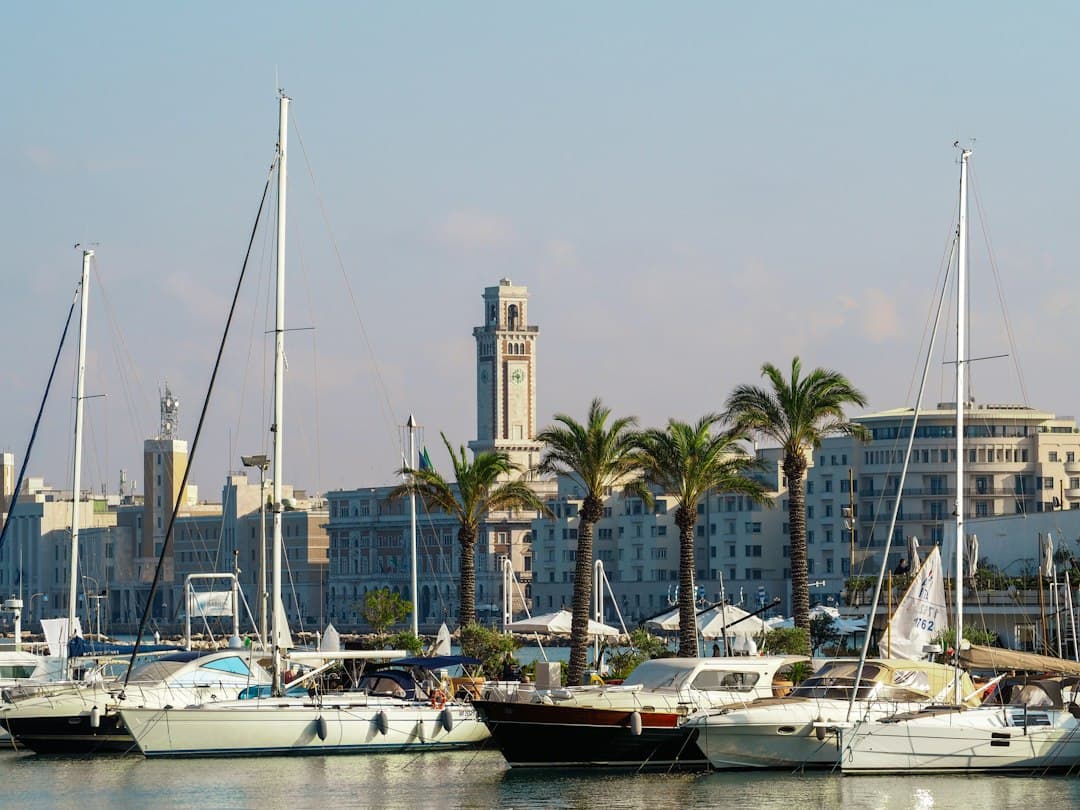
Along the coast, Bari opens into its great public stage: the Lungomare, one of the city’s defining spaces, with long promenades, views over the Adriatic, fishermen, runners, families, couples, and the city’s distinctive black cast-iron lampposts.
The Story of Bari: A Layered Adriatic City
Ancient Origins
Bari’s history stretches back far beyond its medieval fame. Archaeological and historical evidence suggests very early settlement in the area, possibly as far back as the Bronze Age or even the 4th millennium BC, though the exact origins remain uncertain.
Human settlement in what is now the northern part of the historic center is often traced to around 2000 BC. The area was inhabited by ancient peoples of Apulia, including pre-Roman and Illyrian-related communities. Greek influence later shaped the settlement known as Barion.
By the 3rd century BC, Bari had come under Roman control and was known as Barium. Under the Romans, it developed as a port and commercial center on the Adriatic. The city’s position made it useful for trade, military movement, and maritime connections.
A major boost came from the Via Traiana, a Roman road that improved connections across southern Italy and linked Bari more efficiently to the broader Roman road network. The route of the ancient Via Appia Traiana passed through the area now associated with Piazza del Ferrarese, where fragments of ancient paving can still be seen.
Late Antiquity and Byzantine Bari
After the fall of the Western Roman Empire, Bari entered centuries of instability. Control shifted among the Ostrogoths, Lombards, and Byzantines.
By the 6th century AD, Bari was again under Byzantine authority. This was crucial for the city’s later identity. Bari became a stronghold on the Adriatic and a link between Constantinople and Rome. The city’s medieval street plan, still preserved in Bari Vecchia, is often described as Byzantine in character: dense, winding, defensive, and organic rather than orderly.
For much of the early medieval period, Bari’s importance came from its location as a coastal gateway between Italy and the eastern Mediterranean.
The Emirate of Bari
One of the most distinctive episodes in Bari’s history was the creation of the Emirate of Bari. Between 847 and 871, the city was ruled by Muslim forces and became the capital of an independent emirate.
This was the only Muslim state ever established on the Italian mainland. Though brief, it reflects the intense contest for southern Italy among Byzantines, Lombards, local rulers, and Muslim powers.
The Norman Conquest and Saint Nicholas
In 1071, Bari was conquered by the Normans, ending over five centuries of Byzantine control. This conquest reshaped the city politically and religiously.
Then came the event that changed Bari forever.
In 1087, sailors from Bari brought the relics of Saint Nicholas from Myra, in present-day Turkey, to Bari. The relics arrived on 9 May 1087. This “translation” of the relics transformed Bari into a major pilgrimage destination.
To house them, the city began construction of the Basilica di San Nicola in 1087 on the site of the former residence of the Byzantine catepan, the Greek-Byzantine governor of southern Italy. The crypt was completed and consecrated by Pope Urban II in 1089, and the basilica was fully completed and consecrated in 1197.
The basilica made Bari a bridge between East and West. Saint Nicholas is venerated by both Catholics and Orthodox Christians, and Bari remains a major destination for Orthodox pilgrims today.
Destruction and Recovery
The Middle Ages were not peaceful. Bari suffered serious destruction in 1156, when it was razed by William I “the Bad”, a major setback before later recovery.
The Cattedrale di San Sabino was rebuilt in the 12th and 13th centuries over the ruins of an earlier Byzantine cathedral destroyed in this period. It was solemnly consecrated on 4 October 1292.
Under Frederick II in the 13th century, Bari gained renewed importance. The emperor favored the city and strengthened its status. The Castello Normanno-Svevo was rebuilt and expanded under Frederick II between 1233 and 1240, on earlier Byzantine and Norman foundations.
Early Modern Bari
From the 14th century onward, Bari passed through dynastic changes and eventually became tied to the Kingdom of Naples. By 1558, it was incorporated into the kingdom after earlier rule by noble families including the Sforza.
This period is often described as one of relative decline compared with Bari’s medieval peak. Southern Italy came under Spanish and later Bourbon control. Bari remained regionally important as a port, but its political influence was more limited. Plague, coastal raids, and instability affected the wider region.
During these centuries, Bari’s defenses were strengthened. The Fortino di Sant’Antonio, whose origins are linked to medieval defensive works and possibly a Norman tower associated with Robert Guiscard and the siege of 1071, was developed and rebuilt over time. In the 15th century, fortification works were associated with Giovanni Antonio Del Balzo Orsini, Isabella d’Aragona, and the Universitas barese.
The Murat District and Modern Bari
A major turning point came in 1813, when Joachim Murat, King of Naples under Napoleonic influence, ordered the creation of Bari’s new city. This planned grid became the Murattiano or Murat district.
This marked Bari’s transformation into a modern urban center. The gridded streets, shopping avenues, theaters, administrative buildings, and palazzi of the Murat district contrast sharply with Bari Vecchia’s medieval labyrinth.
In 1860, Bari became part of the newly unified Kingdom of Italy. After unification, the city expanded through port development, commerce, administration, and industry.
In the 20th century, Bari’s seafront was transformed. The Lungomare was created during the Fascist period and is commonly dated to 1927, when the modern seafront promenade was inaugurated. It projected Bari as a modern Adriatic capital.
Bari suffered damage during World War II, including damage to landmarks such as Teatro Margherita, which had been occupied by Allied troops as an auxiliary headquarters and entertainment venue.
After the war, the city continued to grow. Bari Vecchia, once widely associated with poverty and crime, underwent major restoration and revitalization. Between 1994 and 1999, EU Urban funds financed restoration of buildings and infrastructure. Around 2005, further redevelopment helped transform the old town into a walkable, lively historic district while preserving its lived-in character.
Today, Bari is defined by continuity: for more than two millennia, it has remained shaped by trade, religion, and the Adriatic Sea.
The Essential Bari Experiences
1. Bari Vecchia: The Living Heart of the City
Bari Vecchia is the medieval old town of Bari, occupying a triangle of land jutting into the Adriatic between the old and new harbors. It is not a theme park or a preserved shell. It is a lived-in neighborhood with laundry hanging over alleys, children playing in tiny squares, residents sitting outside their doors, and grandmothers making pasta in the street.
Why It Matters
Bari Vecchia is important because it is:
- A rare, continuously inhabited medieval center
- A district preserving a Byzantine-era street layout
- A major pilgrimage zone because of Saint Nicholas
- The symbolic heart of Bari and Puglia
- A place where religious, mercantile, culinary, and everyday traditions intersect
The old town contains around 40 churches and about 120 votive shrines scattered through its alleys. Its buildings range from the 11th to the 17th century, with later additions layered over Byzantine and Roman remains.
What It Feels Like
Walking into Bari Vecchia from the Murat district feels like crossing a frontier. The orderly grid dissolves into twisting stone lanes, archways, shrines, balconies, and doorways.
The smell is layered:
- Frying olive oil
- Garlic from tiny kitchens
- Fresh dough
- Yeast and sugar from bakeries
- Salt air from the Adriatic
- Sometimes incense from open church doors
The soundtrack is equally dense:
- Church bells
- Scooters on cobblestones
- Fast Bari dialect
- TV voices from open windows
- Children playing football
- Chairs scraping on stone
- Neighbors calling across alleys
Travelers often describe Bari Vecchia as feeling like “stepping into someone’s living room.” Life spills directly into the street.
Reputation and Reality
Bari Vecchia once had a reputation for danger and petty crime. Older locals remember when people from the newer Murat district avoided entering after dark. Today, it has changed dramatically. It is filled with restaurants, bars, B&Bs, walking tours, restored corners, and lively piazzas.
But it remains gritty. Expect:
- Graffiti
- Scooters in narrow lanes
- Noise at night
- Occasional litter
- Crowds in peak season
- A maze-like layout that can confuse Google Maps
Most visitors report feeling safe in the main touristed areas, especially in the evening when families, students, and locals are out. Still, use normal big-city caution, particularly late at night in quieter backstreets.
Practical Information
- Entry: Free
- Hours: Open 24/7 as a neighborhood
- Best times: Morning for daily life and pasta-making; evening for atmosphere, restaurants, and nightlife
- Key places inside or near Bari Vecchia:
- Basilica di San Nicola
- Cattedrale di San Sabino
- Castello Normanno-Svevo
- Strada delle Orecchiette
- Piazza Mercantile
- Piazza del Ferrarese
- Fortino di Sant’Antonio
- City walls and sea viewpoints
Review Verdict
Bari Vecchia is widely considered the heart of Bari and absolutely worth visiting. Even travelers who notice crowding, grittiness, or touristification usually agree that skipping it would mean missing the city’s essence.
2. Basilica di San Nicola: Bari’s Spiritual Core
Address: Largo Abate Elia, 13, 70122 Bari BA
Geo rating: 4.8 / 5 from 22,929 user ratings
Coordinates: 41.1303137, 16.8701375
The Basilica di San Nicola is Bari’s most famous monument and one of the most important religious sites in southern Italy. Built between 1087 and 1197, it houses the relics of Saint Nicholas of Myra, the saint who inspired the Santa Claus tradition.
History
In 1087, sailors from Bari took the relics of Saint Nicholas from Myra and brought them to Bari. They arrived on 9 May 1087. The Benedictine Abbot Elia, together with the people of Bari, decided to build a church specifically to house and venerate the relics.
Construction began in 1087 on the site of the former residence of the Byzantine catepan. The crypt was completed and consecrated by Pope Urban II in 1089, allowing the relics to be placed there. The basilica was fully completed and solemnly consecrated in 1197.
The basilica became a stop for pilgrims and Crusaders traveling to the Holy Land and helped affirm Norman and Latin Christian presence in a formerly Byzantine city.
Today, it is a center of Christian ecumenism, especially between Catholic and Orthodox Christians. The basilica is a pontifical basilica and is currently entrusted to the Dominican Order.
Architecture
The basilica is considered a masterpiece and prototype of Apulian Romanesque architecture.
Look for:
- Massive, sober exterior
- Thick walls and geometric volumes
- Tripartite façade
- Three portals
- Three naves inside
- Raised presbytery and transept above the crypt
- Romanesque structure with later Baroque additions
- Medieval sculptural decoration, capitals, and reliefs
The overall impression is austere, powerful, and Norman-influenced.
The Crypt
The crypt is the spiritual center of the basilica. It preserves:
- The relics of Saint Nicholas
- The Sacra manna or Myron, a liquid believed by devotees to exude from the saint’s tomb
- An Orthodox altar used for Orthodox liturgy
The atmosphere in the crypt is intense: low vaults, columns, icons, flickering lamps, whispered prayers in Italian, Russian, Greek, and other languages. Orthodox pilgrims may kneel or weep by the tomb.
Cattedra dell’Abate Elia
Inside the basilica is the famous Cattedra dell’abate Elia, a richly decorated stone bishop’s throne created for the Council of Bari in 1098. It symbolizes Bari’s religious ambition as a meeting point between East and West.
Other Treasures
In the right transept, note the silver altar, including a large inscribed silver plate dated 1684 with over 600 Latin characters.
Feast Days
Two major celebrations shape the basilica’s calendar:
- 7–9 May: Feast commemorating the translation of Saint Nicholas’ relics, with religious rites, processions, a maritime procession, and city-wide celebrations.
- 6 December: Saint Nicholas’ day, with dawn Mass and traditional processions.
On these days, crowds are large and access can change significantly.
Practical Information
- Entry: Free for basilica and crypt
- Donation: Appreciated
- Possible museum/treasury areas: If open, estimated €3–€6
- Typical hours:
- Monday–Saturday: about 07:00–20:30
- Sunday: about 07:00–22:00
- Feast days: May open earlier or close later; access may be restricted for liturgy
- Dress: Modest dress required; cover shoulders and avoid beachwear
- Best time: Early morning or late afternoon for quiet
Review Insights
Visitors love:
- The spiritual atmosphere
- The crypt
- The East-West Christian significance
- The austere Romanesque architecture
Common complaints:
- Crowds during peak times and cruise days
- Limited English signage
- Confusion over donations or candle payments
- Dress code corrections for inappropriate clothing
Real Verdict
Whether you are religious or not, the Basilica di San Nicola is one of Bari’s top must-see sites. The crypt is often described as deeply moving and historically fascinating.
3. Cattedrale di San Sabino: The Quieter Romanesque Sibling
Address: Piazza dell’Odegitria, 70122 Bari BA
Geo rating: 4.7 / 5 from 6,232 user ratings
Coordinates: 41.1285817, 16.8687875
The Cattedrale di San Sabino, Bari Cathedral, is the seat of the Archdiocese of Bari-Bitonto and one of the finest examples of Puglian Romanesque architecture.
History
The cathedral stands over earlier Christian and Byzantine structures. Excavations in the 1960s revealed remains of a paleochristian basilica from the 5th–6th century beneath the current building.
A first medieval cathedral was founded in 1034 by Archbishop Bisanzio, continued by his successor Nicola, and completed around 1064 under Archbishop Andrea II, when the episcopal seat of Canosa was transferred to Bari.
The current cathedral was rebuilt by Archbishop Rainaldo after the earlier Byzantine cathedral was destroyed in 1156 by William I “the Bad.” The structure was solemnly consecrated on 4 October 1292.
It is dedicated to San Sabino di Canosa, whose relics were transferred from Canosa to Bari. The church also preserves the venerated icon of the Madonna Odegitria, linked to a legend of arrival by sea during a storm.
Major restorations ended with the cathedral’s reopening to worship on 18 February 2005.
Architecture
The cathedral is a textbook example of late Puglian Romanesque.
Look for:
- Austere white Romanesque façade
- Three-nave basilical plan
- Transept and apse
- Columns and arches
- Pseudo-matronea galleries
- Bright, spacious interior
- Crypt with rich marble decoration
- Bell tower and photogenic exterior
Compared with San Nicola, the cathedral feels lighter and calmer. Sun filters through high windows and plays across pale stone. The atmosphere is often peaceful, especially outside peak visiting hours.
The Crypt
The 18th-century crypt houses:
- Relics of San Sabino
- The icon of the Madonna Odegitria
Succorpo / Underground Archaeological Area
One of the cathedral’s highlights is the succorpo, or hypogeum museum. It contains:
- Remains of a Roman civil building
- A three-nave paleochristian basilica
- A small Byzantine church
- A notable mosaic floor from the paleochristian church
These underground layers remind visitors that Bari sits literally on top of itself.
Cathedral Crypt Museum
Cathedral Crypt Museum of Bari
Address: Piazza dell’Odegitria, 24, 70122 Bari BA
Geo rating: 4.8 / 5 from 78 user ratings
Coordinates: 41.1284269, 16.8689328
This site is associated with the cathedral’s crypt and underground heritage and is worth checking if you are particularly interested in archaeology and church history.
Practical Information
- Main cathedral: Usually free
- Succorpo Museum: About €3 for adults
- Diocesan Museum nearby: Estimated €3–€6 if ticketed, though separate policies apply
- Typical church hours:
- Morning: roughly 08:00–12:30
- Afternoon: roughly 16:00–19:30
- Succorpo: Reported open Monday–Sunday, but exact hours can vary
- Best plan: Visit during standard Italian church visiting windows: 09:00–12:30 or 16:00–19:00
Review Insights
Visitors praise:
- Bright Romanesque interior
- Peaceful atmosphere
- Underground archaeological remains
- Less crowded experience than San Nicola
Common complaints:
- Less “wow” for travelers used to grander Italian cathedrals
- Limited English signage
- Underground areas not always open
Real Verdict
San Sabino is well worth visiting, especially if you care about Romanesque architecture, early Christian archaeology, or quieter sacred spaces.
4. Castello Normanno-Svevo: Bari’s Fortress of Power
Address: Piazza Federico II di Svevia, 70122 Bari BA
Geo rating: 4.3 / 5 from 3,832 user ratings
Coordinates: 41.127901, 16.8663979
The Castello Normanno-Svevo, or Swabian Castle, is one of Bari’s most important monuments. It stands at the edge of Bari Vecchia, guarding the transition between old town and city.
History
The original core dates to 1131–1132, attributed to Roger II of Sicily, built on Byzantine structures. The castle was later deeply remodeled by Frederick II between 1233 and 1240.
It was subsequently restored and consolidated in the Angevin period and further fortified in the 16th century under the Aragonese, with bastions and angular towers adapted to new military needs.
The castle has functioned as:
- Defensive fortress
- Royal residence
- Seat of power
- Prison
- Museum and exhibition space
One tower is known as the Torre dei Minorenni, named for its historical use as a juvenile prison.
Architecture
The castle has:
- Trapezoidal plan
- Central courtyard
- Massive stone walls
- Moat-like setting
- Angular towers
- Renaissance bastioned enclosure
- Norman, Swabian, Angevin, and Aragonese layers
The most impressive experience for many visitors is the exterior: its walls, scale, and fortress presence.
What to See
- Inner courtyard
- Angular towers
- 16th-century bastions
- Moat and outer walls
- Exhibition spaces
- Stonework and architectural fragments
- Occasional temporary exhibitions
Atmosphere
The castle feels moody and slightly austere. Damp stone, echoing footsteps, and thick defensive walls give it a contemplative, sometimes eerie quality. From the ramparts or exterior, you sense Bari’s long strategic importance on the Adriatic.
Practical Information
- Ticket: Full ticket around €10
- Reduced: Around €2
- Free entry: First Sunday of the month as part of “Domenica al Museo”
- Typical hours: 09:00–19:00
- Closures: Sources differ; some list closed Monday, others Tuesday. Verify before going.
- Last entry: Often about one hour before closing
Review Insights
Visitors love:
- Impressive exterior and moat
- Defensive architecture
- Good value
- Courtyards and structure
Common complaints:
- Interior can feel bare
- Limited English interpretation
- Some areas may be closed for restoration
- Not a furnished castle experience
Real Verdict
Worth visiting if you are in Bari Vecchia, especially for history and architecture. If you are short on time and not passionate about castles, the exterior may satisfy you.
5. Strada delle Orecchiette: Bari’s Pasta Street
Official name: Via/Strada dell’Arco Basso
Nickname: Strada delle Orecchiette / Pasta Street
Location: Bari Vecchia, near Castello Normanno-Svevo and Cattedrale di San Sabino
This is one of Bari’s most iconic living traditions: local women making orecchiette pasta outside their homes.
What Happens Here
Women sit at tables or thresholds, rolling semolina dough into long ropes, cutting it with knives, and dragging each piece into the little ear shape that gives orecchiette its name. The pasta is made from semolina and water only, then dried on wooden boards or framed screens in the open air.
What It Feels Like
Expect:
- Wooden boards dusted with semolina
- Rows of fresh orecchiette drying in the sun
- The tap-tap of knives
- Women chatting in Bari dialect
- Plastic bags or sealed packs of pasta for sale
- Neighbors, tourists, scooters, laundry, and doorways all in close quarters
It feels domestic, folkloric, and slightly performative at the same time. You are standing inches from someone’s real workspace and home.
Cultural Significance
This tradition is multi-generational. It has become one of Bari Vecchia’s most famous tourist experiences, but it is still rooted in household labor and local food culture. Authorities have introduced hygiene rules requiring sealed packaging and food-traceability measures, reflecting the shift from purely domestic production to tourist-facing street sales.
Practical Information
- Street access: Free
- Hours: Street accessible 24/7
- Best time to see pasta making: Weekdays roughly 09:00–14:00, especially 10:00–13:00
- Saturday: Often active and busy
- Sunday: More variable; fewer women may be working
- Buying pasta: Estimated €3–€6 per 500 g or €5–€10 per kg, depending on vendor and packaging
- Payment: Bring cash
- Tours: Bari Vecchia walking or food tours often include the street, usually €20–€40 per person for food-oriented tours
Etiquette
- Ask before taking close-up photos
- Do not block doorways
- Buy something if you spend time photographing
- Remember this is a workplace and home, not a stage
Review Insights and Warnings
Visitors love:
- The living tradition
- The visual beauty of pasta drying
- Interaction with local women
- The sense of authenticity
Criticism:
- Some feel it has become commercialized
- Pasta may cost more than in shops
- Some women may object to photos without purchase
- Hygiene-conscious travelers should buy sealed pasta and use judgment
Real Verdict
A must-see if you care about local culture, but approach respectfully. It is less a “sight” than a glimpse into living culinary heritage.
6. Piazza Mercantile: Bari’s Historic Civic Living Room
Geo listing: Palazzo del Sedile nearby
Palazzo del Sedile rating: 4.5 / 5 from 84 user ratings
Coordinates: 41.127807, 16.8717943
Piazza Mercantile is one of Bari’s historic main squares. It was the city’s commercial and civic heart for centuries and today is one of its most atmospheric social spaces.
History
The square dates to the Middle Ages. From around the 11th century, as Bari became a Mediterranean trading hub, this area functioned as a marketplace where merchants traded olive oil, wine, textiles, spices, and other goods.
In the late medieval and Renaissance periods, the square took on its more definitive form.
Palazzo del Sedile
The Palazzo del Sedile, built around 1590, was the headquarters of Bari’s Council of Nobles and later served as the Town Hall. It symbolized civic authority and the political importance of the square.
Colonna della Giustizia
The Column of Justice, also called the “infamous column,” was used as a pillory. Debtors and bankrupt individuals were chained here and publicly humiliated or punished. It is one of the square’s most important historical details.
Pigna Fountain
The Pigna Fountain, also known as the Fountain of the Four Faces, is another characteristic monument in or near the piazza.
Atmosphere
Morning:
- Espresso
- Cornetti
- Older locals reading newspapers
- Gentle conversation
Afternoon:
- Tour groups
- Children
- Sun on stone
- Clatter of plates
Night:
- Restaurants and bars full
- Music
- Wine
- Grilled seafood
- Fried snacks
- Perfume and laughter
- Warm lamplight on stone
Practical Information
- Entry: Free
- Hours: 24/7 public square
- Restaurants/bars: Usually late morning to late evening; often 23:00–01:00 or later on weekends
- Guided tours: Walking tours including the square commonly cost €15–€30 group, €35–€70+ private/specialty
Review Warnings
- Some restaurants around the square are tourist-oriented
- Avoid aggressive touts
- Prices can be higher than side streets
- Good for aperitivo and atmosphere; consider eating in quieter lanes for better value
Real Verdict
Piazza Mercantile is essential for understanding Bari’s social life. Sit here at least once, preferably in the evening.
7. Piazza del Ferrarese: The Hinge Between Old Town and Sea
Address area: Edge of Bari Vecchia, near Lungomare Imperatore Augusto
Geo listing nearby: Largo Albicocca also nearby in old town, rating 4.5 / 5 from 848 user ratings
Piazza del Ferrarese is the open square connecting Bari Vecchia, the Murat district, and the waterfront. It is one of Bari’s key meeting points and a natural starting point for exploring.
History
The square’s current form dates to the early 17th century, after the opening of Porta Nuova in 1612. It was created as an extension of Piazza Mercantile to connect the city, the new gate, and the port.
It was once known as Piazzetta d’Armi because of a guard corps and arsenal. The name Piazza del Ferrarese appears in the 18th century and is generally linked to Stefano Fabri, a merchant from Ferrara who owned property or had a trading presence here.
After World War II, it was temporarily renamed Piazza Giovanni Amendola, but the old name was restored by municipal resolution in 1956.
Roman Road Remains
Fragments of the ancient Via Appia Traiana are visible in the paving, reminding visitors that this was a crossing point long before the modern square.
What to See
- Former Fish Market, built in 1840
- Ramp to Via Venezia and Fortino di Sant’Antonio
- Sala Murat, a contemporary art space in a former storage building
- Apses of the medieval Chiesa Vallisa, now a multipurpose venue
- Palazzo Starita, an 18th-century palace with a sundial
- Sea views toward the old harbor
- Café terraces and evening crowds
Atmosphere
Piazza del Ferrarese feels more open and breezy than Piazza Mercantile. The sea is close. You smell salt, coffee, pastries, and sometimes fried food. It feels like a place of passage and possibility: from here you can go into Bari Vecchia, toward the sea, or into the modern city.
Practical Information
- Entry: Free
- Hours: 24/7 public square
- Best time: Late afternoon and evening
- Cafés/bars: Expect roughly €2–€3 for espresso or soft drink, €4–€6 for aperitivo drink, €15–€30 per person for a meal depending on venue
- Nightlife: Strongest from 18:00–24:00, especially Thursday to Sunday
Review Warnings
- Some bars and restaurants are overpriced for the quality
- Crowds and noise at night
- Good for drinks and people-watching; choose restaurants carefully
Real Verdict
A central transition point and one of Bari’s most atmospheric squares. Use it as a gateway between old town and seafront.
8. Teatro Margherita: The Theater Built Over the Sea
Address: Piazza IV Novembre, 70122 Bari BA
Geo rating: 4.6 / 5 from 2,216 user ratings
Coordinates: 41.1264206, 16.8728911
Teatro Margherita is one of Bari’s most distinctive landmarks: a former theater built on pillars over the sea, now restored as a contemporary art venue known as BAC – Bari Arte Contemporanea.
History
A first wooden theater on pilings, called Varietà Margherita, was built in 1910 and inaugurated on 5 October 1910. It burned down in July 1911.
The new theater was built in reinforced concrete between 1912 and 1914, making it the first building in Bari to use this technology. It was designed by Francesco De Giglio, with structural collaboration by Luigi Santarella, and opened as Kursaal Margherita on 22 August 1914.
It hosted variety shows, cinema, and museum displays. During World War II, it was occupied by Allied troops and suffered bomb damage. After the war, it functioned only as a cinema until 1979, then closed and fell into abandonment.
Restoration began around 2009 and was completed in 2018, converting it into a contemporary art center.
Architecture
Look for:
- Art Nouveau / Liberty and Beaux-Arts style
- Reinforced concrete structure
- Seafront setting on pillars
- Central façade with large arch
- Twin towers with decorative pinnacles
- Corinthian pilasters
- Large windows
- Dome/cupola
- Warm façade colors contrasting with blue sea
Inside:
- Spacious entrance hall
- Dome with stucco and frescoes from the 1914 inauguration
- Preserved decorative elements integrated into modern galleries
Practical Information
- Tickets: Exhibition-specific; major shows often around €10–€16
- Reduced: Often €8–€12, depending on exhibition
- Hours: Exhibition-dependent; often roughly 10:00–20:00 weekdays and 10:00–21:00 weekends, but verify
- Time needed: 15–30 minutes for exterior; 1–2 hours with exhibition
- Best photo light: Late afternoon / early evening
Review Insights
Visitors love:
- Beautiful setting over the water
- Architecture
- Cultural exhibitions
- Proximity to Piazza del Ferrarese and old harbor
Complaints:
- Exhibition quality varies
- Some shows may feel small or poorly explained
- Building may be closed between exhibitions
Real Verdict
Always worth seeing from outside. Go inside if the current exhibition interests you.
9. Lungomare Nazario Sauro and the Bari Seafront
Lungomare Araldo di Crollalanza Geo rating: 4.6 / 5 from 6,933 user ratings
Coordinates: 41.1237589, 16.8762465
Address area: Lungomare 70121, Bari
Lungomare Nazario Sauro is one of the central stretches of Bari’s long seafront promenade. The wider Bari lungomare is often described as Italy’s longest seafront promenade, stretching about 15 km.
History
The modern seafront was created during the Fascist period and inaugurated around 1927. It was intended to project Bari as a modern Adriatic capital, with wide avenues, rationalist and Liberty-style buildings, and a monumental edge facing the sea.
The promenade honors Nazario Sauro, an Italian patriot and naval officer celebrated as a World War I hero.
Architecture and Features
Look for:
- Rationalist architecture
- Liberty / Art Nouveau details
- 20th-century apartment blocks and institutional palazzi
- Wide pavements
- Sea views
- Benches
- The famous black cast-iron lampposts — 197 along the seafront
Atmosphere
The lungomare is where Bari breathes.
Morning:
- Fishermen checking lines
- Runners and dog walkers
- Soft light
- Quiet sea
Sunset:
- Couples strolling
- Families with children
- Friends eating gelato
- Pastel sky
- Warm façades
Night:
- Lampposts lit
- Sea breeze
- Restaurants and bars nearby
- Traffic hum along the road
Smells include salt, algae, diesel from boats, hot pavement, and sometimes food from nearby kiosks.
Practical Information
- Entry: Free
- Hours: Open 24/7
- Best times: Sunrise and sunset
- Use: Walking, jogging, sitting, photography
- Caution: It runs alongside roads; be alert crossing traffic
Review Insights
Visitors love:
- Scenic Adriatic views
- Local life
- Walkability
- Sunset atmosphere
Complaints:
- Traffic noise
- Pollution from road
- Some graffiti or litter
- It is a promenade, not a beach
Real Verdict
A must-do stroll. It gives you Bari’s maritime identity in its clearest form.
10. Bari Old Town Sea Wall and City Viewpoints
Bari Old Town Sea Wall
Address: Via Venezia, 4, 70122 Bari BA
Geo rating: 4.7 / 5 from 593 user ratings
Coordinates: 41.1278619, 16.8728495
The old city walls along Bari Vecchia provide some of the best views of the sea and harbor. Elevated walkways along the old defensive edge allow you to see the contrast between the compact old town and the open Adriatic.
Atmosphere
Here the air feels fresher. Breezes carry salt, seaweed, and food smells from below. You hear waves, traffic, music, and conversation rising from the streets.
At sunset, the walls become especially romantic: couples take photos, families stroll, and the old town glows golden.
Historical Significance
The walls speak to Bari’s defensive past: pirates, Ottoman threats, maritime raids, and the city’s need to protect itself as an Adriatic port.
Practical Information
- Entry: Free
- Hours: Public outdoor space, generally accessible 24/7
- Best time: Sunset
- Combine with: Piazza del Ferrarese, Fortino di Sant’Antonio, Teatro Margherita, Lungomare
Real Verdict
One of the simplest and most rewarding walks in Bari.
11. Fortino di Sant’Antonio: Defensive Bari Above the Sea
The Fortino di Sant’Antonio is a historic fortification on the edge of Bari Vecchia overlooking the old port and Lungomare Imperatore Augusto.
History
Its origins are often linked to the 11th century. Some reconstructions say that in 1071, Robert Guiscard had a stone tower, or turris petrinea, built to defend the port during the siege of Bari. Other sources document the site as a medieval fortification from at least the 14th century.
In 1440–1441, Giovanni Antonio Del Balzo Orsini began wider fortification work and left his coat of arms on the portal. In the 15th century, the fort was rebuilt under Isabella d’Aragona and the Universitas barese. In the 16th century, it took on a more fortified appearance.
Restoration between 1994 and 2000 revealed archaeological elements and returned the structure to public use.
What to See
- Elevated position over the sea
- Stone defensive structure
- Ground-floor and first-floor spaces used for cultural and civic activities
- Archaeological traces from restoration
- Remains linked to an older chapel or church dedicated to Sant’Antonio Abate
Practical Information
- Ticket: No standard fixed ticket found
- Opening: Often accessible by request or during exhibitions and public events
- Hours: No stable daily tourist schedule
- Best approach: Check local event listings or enjoy the exterior and viewpoint
Real Verdict
Do not plan your day around interior access unless you confirm an event. But the exterior and location are worth including in a seafront walk.
12. Teatro Petruzzelli: Bari’s Grand Opera House
Address: Corso Cavour 12, 70121 Bari
Geo note: Not in Geo Agent list but central to historical and review research
Teatro Petruzzelli is Bari’s main opera house, the fourth-largest theater in Italy, and one of the city’s great cultural symbols.
History
Bari already had the municipal Teatro Piccinni from 1854, but local elites wanted a larger venue. Merchants and shipbuilders Onofrio and Antonio Petruzzelli commissioned the theater, designed by engineer Angelo Cicciomessere, later Cicciomessere-Petruzzelli.
- Project approved: 1895
- Construction began: 23 May 1898
- Inaugurated: 14 February 1903
- Opening opera: Meyerbeer’s Les Huguenots / Gli Ugonotti
The theater became one of Italy’s premier opera houses. Artists associated with it include:
- Mascagni
- Gigli
- Del Monaco
- Muti
- Tebaldi
- Pavarotti
- Domingo
- Carreras
- Katia Ricciarelli
- Frank Sinatra
- Ray Charles
- Liza Minnelli
On 26 November 1991, the theater was destroyed by arson. Later court proceedings established it was burned by its impresario to collect insurance. Reconstruction took years and was completed in 2008. It reopened to the public on 12 October 2009 and was officially handed back to Bari and Puglia on 6 December 2009.
Architecture
The exterior is monumental and symmetrical, with arched openings, pilasters, and rich decoration.
Inside:
- Large foyer
- Marble columns
- Ornamental stuccoes
- Gold decoration
- Red and gold auditorium
- Multiple tiers of boxes
- Horseshoe-shaped hall
- Excellent acoustics
- Modern backstage technology
The original ceiling frescoes by Raffaele Armenise were destroyed in the fire, but the reconstruction restored the historic visual effect while meeting modern codes.
Capacity
- Original: about 2,192 seats
- Current: about 1,482 seats after modern safety updates
Practical Information
Performance tickets vary:
- Major opera/ballet: roughly €60–€120 for best seats, €35–€70 mid-range, €20–€40 upper/restricted
- Symphonic concerts: roughly €15–€70 depending on seat
- Guided tours: estimated €5–€15
- Some morning tour slots have been reported at 10:00 and 13:00
- Evening performances often around 20:30
- Book directly through official channels when possible
Review Insights
Visitors love:
- Beautiful interior
- Excellent acoustics
- Cultural prestige
- Guided tours
- Performances
Complaints:
- Tours may be mostly in Italian
- Schedule may not align with your visit
- Some visitors feel underdressed without clear guidance
Real Verdict
If you can attend an opera, ballet, or concert, do it. Even a guided tour is worthwhile for architecture and cultural history lovers.
Museums and Cultural Sites
13. Museo Archeologico di Santa Scolastica
Address: Via Venezia, 73, 70122 Bari BA
Geo rating: 4.6 / 5 from 825 user ratings
Coordinates: 41.1321122, 16.8710272
The Museo Archeologico di Santa Scolastica is Bari’s main archaeological museum, housed in a medieval Benedictine monastery and 16th-century bastion overlooking the sea.
History
The museum occupies the monastery of Santa Scolastica, with a legendary foundation by Pipin in 755, though the first documented mention is from 1102.
The porticoed hall was built by Benedictine abbess Giusanda Sebaste in the early 12th century.
The complex and nearby Parco archeologico di San Pietro form one of Bari’s most important archaeological-historical sites for understanding the city’s origins.
Restoration and reorganization began in 2011:
- 2014: 16th-century bastion opened to the public
- 2018: Ground-floor works completed, including the current “Archeologia di Bari” layout
Collections
The museum covers:
- Prehistory
- Protohistory
- Indigenous Apulian civilizations
- Daunia
- Messapia
- Peucezia
- Greek influence
- Byzantine artifacts
- Arab-Norman period
- Medieval remains
Particularly important are ceramics and bronze objects from Apulian civilizations between the 7th and 3rd centuries BCE.
Layout
Ground floor sections:
- Vita nel monastero
- Iapigi e Greci nella Puglia antica
- La collezione Polese
- Archeologia di Bari
- Bastion
- Western, central, and southern courtyards
- San Pietro archaeological area
First floor sections:
- Preistoria e protostoria in Terra di Bari
- Antiche genti di Puglia: i Peucezi
The museum is sometimes described as a “museum of itself”, because the building’s layers reveal Bari’s urban, religious, and military history.
Practical Information
- Hours:
- Monday: closed
- Tuesday–Saturday: 09:00–19:00, last entry 18:30
- Sunday and public holidays: 09:00–13:00, last entry 12:30
- Ticket: €5 full
- Reduced 18–25: €2
- Cumulative ticket with Pinacoteca: €8, valid 2 days
- Free: Under 18, people with disabilities and companion, guides on duty, ICOM/ICCROM, school groups, certain students and teachers, journalists, researchers, first Sunday of month, and other categories
Real Verdict
Excellent for travelers interested in archaeology, ancient Apulia, and urban layers. Combine it with a sea-wall walk.
14. Pinacoteca Metropolitana di Bari “Corrado Giaquinto”
Address: Via Spalato 19 / Lungomare Nazario Sauro 27, 70121 Bari
Geo note: Not in Geo list but important cultural site
The Pinacoteca Metropolitana di Bari “Corrado Giaquinto” is Bari’s main art gallery, housed on the 4th floor of the historic Palazzo della Provincia overlooking the seafront.
History
Founded on 12 July 1928, it brought together:
- Paintings from suppressed convents
- Works deposited by churches and convents of Puglia
- Loans from the National Galleries of Naples and Rome
- Acquisitions by the Provincial Administration of Bari
Initially housed in the Palazzo del Governo, it moved in 1935–1936 to the Palazzo della Provincia.
It is dedicated to Corrado Giaquinto (1703–1766), the Apulian painter born in Molfetta. Since 2002, an entire room has been devoted to his works.
Collections
The route is chronological across about 22 rooms.
Sections include:
- Medieval sculpture and painting
- Sculptures from the 11th–14th centuries
- Renaissance and post-Tridentine art
- Neapolitan Baroque painting
- Works by Luca Giordano and Andrea Vaccaro
- Corrado Giaquinto room
- 19th-century and early 20th-century art
- Riccardo Ferrara donation
- Grieco Collection
- 20th-century room opened in June 2021
- Works by Pellizza da Volpedo, Giorgio de Chirico, Carlo Carrà
- Applied arts: garments, maiolica, papier-mâché, furniture, sculpture, musical instruments
Atmosphere
Quiet, scholarly, cool, and reflective. Windows offer views over the Adriatic, creating a powerful dialogue between art and sea.
Practical Information
- Hours:
- Tuesday–Saturday: 09:00–19:00, last entry 18:30
- Sunday: 09:00–13:00, last entry 12:30
- Monday and public holidays: closed
- Ticket estimate: €5–€6 full, €3–€4 reduced
- Official cumulative ticket with Archaeological Museum: €8, valid 2 days
- Free first Sunday: Reported
- Access: 4th floor; elevator available
- Time needed: 1.5–2 hours
- Transport: 10–15 minutes on foot from Bari Centrale; city buses stop nearby
- Parking tip: Park at Pane e Pomodoro municipal lot and take shuttle B; parking + shuttle for 24 hours reported as €1
Real Verdict
Underrated and rewarding, especially in hot weather or if you want a quieter cultural break.
15. Museo Nicolaiano
The Museo Nicolaiano is a small but important museum dedicated to Saint Nicholas and the history of the Basilica di San Nicola.
Location
References include:
- Largo Papa Urbano II
- Strada Vanese 3 Both are in Bari Vecchia near the basilica.
History
The museum opened in 2010 to preserve and present the artistic, liturgical, and devotional heritage linked to Saint Nicholas and the basilica.
It documents:
- The cult of Saint Nicholas
- The basilica’s history
- Pilgrimage traditions
- Catholic and Orthodox devotion
- Donations from rulers, clergy, pilgrims, and local faithful
Layout and Collections
The museum is described in two complementary ways.
Three thematic levels:
- Antiquities
- Ex-votos
- Treasure of the Saint
Named rooms:
- Angelo Docente room: paintings, parchments, chalices, vestments
- Ruggero II room: basilica architecture and historical context
- Diavolo wood hall: wooden sculptures and artifacts
Objects include:
- Epigraphs
- Archaeological finds
- Illuminated manuscripts
- Parchments
- Reliquaries
- Silver liturgical objects
- Chalices
- Monstrances
- Crosses
- Paintings and icons
- Sacred vestments
- Ex-votos, including Orthodox devotional offerings
In 2019, an immersive installation introduced music, visual effects, and tastings of typical historical products.
Practical Information
- Ticket: Conflicting information. Older listings say €3 normal / €2.50 reduced; more recent sources mention around €8.
- Planning assumption: Bring about €8 cash per adult.
- Payment: Cash-only has been reported; bring euros.
- Possible discounts: Student discounts may apply, often limited to arts/architecture students from European countries with proof.
- Hours: Variable. One listing: open Monday, Tuesday, Thursday, Friday, Saturday, Sunday 11:00–18:00; Wednesday closed. Summer reports mention Monday–Friday 10:00–13:00 and 15:00–19:00.
- Weekends: Can vary; check locally.
- Accessibility: Reported wheelchair accessible with accessible restrooms.
- Time needed: Short visit; good add-on to the basilica.
Real Verdict
A compact hidden gem for those interested in Saint Nicholas, medieval devotion, and church treasures. Check hours and bring cash.
16. Museo Diocesano di Bari
Also called the Museo della Cattedrale or Museo degli Exultet, this is the diocesan museum of the Archdiocese of Bari-Bitonto.
Location
On the first floor of the Archbishop’s Palace / Episcopio next to Bari Cathedral, on Strada/Via dei Dottula, near San Sabino and the castle.
History
The museum was instituted on 7 June 1981 by Archbishop Mariano Magrassi and officially inaugurated on 16 June 1983.
It preserves heritage from:
- Bari Cathedral
- The diocesan territory
- Private donations
Its mission is to present the Christian roots of the Bari community.
Collections
The museum has five main sections:
-
Lapidary
Sculptural fragments, architectural elements, inscriptions, capitals, cornices, and stone reliefs. -
Art Gallery / Paintings
Devotional art, including works associated with artists such as Fenoglio and Mattia Preti. -
Treasury
Precious metalwork, reliquaries, silver chalices, crosses, liturgical furnishings. -
Sacred Vestments
Embroidered copes, chasubles, and liturgical textiles. -
Exultet Rolls
The museum’s most distinctive section: illuminated parchment scrolls used in the Easter Vigil liturgy in medieval southern Italy.
The museum also has a documentation center, specialized library, archive, photo archive, media library, bookshop, educational activities, and sometimes audioguides.
Practical Information
Official-style hours:
- Monday: 10:00–13:00
- Tuesday: closed, visits may be possible by request
- Wednesday: closed, by request
- Thursday: 10:00–13:00
- Friday: closed, by request
- Saturday: 10:00–13:00 and 17:00–20:00
- Sunday: 10:00–13:00
Ticket:
- No clear fixed official price
- Likely free with voluntary donation
- Plan a small donation of €3–€5 per person
- Older sources mention €4, but hours and policies may have changed
Contact details reported:
- Phone: +39 080 5210064
- Email: museobari@odegitria.bari.it
Real Verdict
Excellent for those interested in medieval manuscripts, liturgical art, and the religious history of Bari. Combine with the cathedral.
17. Palazzo Simi
Address: Str. Lamberti, 1, 70122 Bari BA
Geo rating: 4.4 / 5 from 129 user ratings
Coordinates: 41.1274321, 16.8697958
Palazzo Simi, also known as Simi Palace, is a historic building in Bari Vecchia. While the agent data provides only location and rating, it is worth noting as a lesser-known stop for travelers interested in the layered architecture of the old town.
Practical Notes
- Located close to the dense historic core
- Good to include while wandering between the cathedral, Piazza Mercantile, and the orecchiette streets
- Check locally for current opening and exhibition access, as historic palazzi in Bari may host cultural or archaeological displays with variable schedules
18. Regional Directorate of Museums
Address: Via Pier l’Eremita, 25b, 70122 Bari BA
Geo rating: 4.3 / 5 from 3,102 user ratings
Coordinates: 41.1309566, 16.8688307
The Regional Directorate of Museums appears in the Geo Agent attraction list as a highly reviewed establishment in Bari Vecchia. It is relevant for travelers because state-run heritage sites and museum administration in the area may connect to cultural programming, exhibitions, or official information.
Practical Notes
- Located in the historic center near major sites
- Useful landmark for cultural heritage orientation
- Check current functions and public access before planning a visit, as directorate offices are not always conventional tourist attractions
19. Acquedotto Pugliese – Palazzo dell’Acqua
Address: Via Salvatore Cognetti, 36, 70121 Bari BA
Geo rating: 4.5 / 5 from 317 user ratings
Coordinates: 41.1233695, 16.8740233
The Palazzo dell’Acqua is the headquarters of the Acquedotto Pugliese, one of the most important public water infrastructure institutions in southern Italy. Though not detailed in the historian report, its inclusion in the Geo Agent list highlights it as an architectural point of interest in central Bari.
Why It May Interest You
- Located near the Murat district and seafront
- Associated with Puglia’s modern infrastructure history
- Likely of interest to architecture lovers, especially those exploring 20th-century institutional buildings
- Combine with Teatro Petruzzelli, Lungomare, and Murat district walks
Practical Notes
- Verify whether guided visits or interior access are available during your travel dates
- Exterior viewing can be folded into a central walk
20. Orthodox Church of Saint Nicholas
Polish listing: Cerkiew św. Mikołaja w Bari
Address: Corso Benedetto Croce, 130, 70125 Bari BA
Geo rating: 4.6 / 5 from 1,014 user ratings
Coordinates: 41.1100323, 16.8722299
The Orthodox Church of Saint Nicholas reflects Bari’s unique role as a bridge between Catholic and Orthodox Christianity. While the Basilica di San Nicola itself includes Orthodox devotion around the saint’s relics, this separate church is important for those interested in Bari’s Eastern Christian connections.
Practical Notes
- Located outside Bari Vecchia, south of the central historic core
- Best for travelers with a strong interest in Orthodox Christianity, Saint Nicholas devotion, or Bari’s ecumenical identity
- Check current liturgical hours before visiting
- Dress modestly and be respectful if services are underway
21. Largo Albicocca – Piazza degli Innamorati
Address: Largo Albicocca, 70122 Bari BA
Geo rating: 4.5 / 5 from 848 user ratings
Coordinates: 41.127402, 16.8679029
Largo Albicocca, also known as Piazza degli Innamorati, is one of Bari Vecchia’s charming smaller squares. It is less monumental than Piazza Mercantile or Piazza del Ferrarese but atmospheric and beloved.
Why Go
- Intimate old-town setting
- Good for evening wandering
- Often associated with local food, casual drinks, and romantic atmosphere
- Useful as a stop while exploring the lanes around the castle and orecchiette street
Practical Notes
- Public square
- Free access
- Best in evening
- Expect local life, small eateries, and old-town ambience
22. Bari Sea Tours
Address listing: Maps link, 70122 Bari BA
Geo rating: 4.9 / 5 from 146 user ratings
Coordinates: 41.127234, 16.8726802
Bari Sea Tours appears in the Geo Agent list with a very high rating. Given Bari’s maritime identity, a sea tour can offer a different perspective on the old town, harbor, lungomare, and Adriatic horizon.
Why Consider It
- See Bari Vecchia from the water
- Understand the city’s coastal geography
- Enjoy sunset or harbor views
- Good for photographers and couples
- Connects with Bari’s long history as a port
Practical Notes
- Book in advance in high season
- Check cancellation rules for weather and sea conditions
- Bring sun protection and possibly a light layer for wind
- Confirm departure point carefully
Beaches and Waterfront Life
Pane e Pomodoro Beach
Pane e Pomodoro is Bari’s main urban beach, close enough to reach from the center by walking along the lungomare or by short public transport.
Vibe
The name means “bread and tomato,” evoking simple local beach picnics. The beach is democratic, local, and unpretentious rather than glamorous.
Expect:
- Families
- Teenagers
- Grandparents under umbrellas
- Students
- Vendors
- Sunscreen smell
- Warm sand
- Portable speakers
- Children shouting
- Calm water near breakwaters
Practical Information
- Access: Free public beach
- Facilities: Basic facilities, kiosks, sometimes showers
- Best for: Quick swim, local life, families, budget travelers
- Not best for: Pristine turquoise beach expectations
- Crowds: Very crowded in summer
Review Verdict
Worth it if you want a convenient urban beach break. Not a destination beach compared with Polignano or Salento.
Lido San Francesco
Lido San Francesco is a more structured beach area with lidos and facilities on Bari’s outskirts.
Pros
- Sunbeds and umbrellas
- Bars
- Showers
- Family-friendly shallow water
- More managed environment
Cons
- Paid access for many sections
- Can feel overpriced in peak season
- Still not a “wow” Puglia beach
- Less convenient by public transport
Review Verdict
Fine if you want comfort near Bari and do not mind paying. Not essential for short trips.
Food and Local Experiences
What to Eat in Bari
Bari’s food is one of the city’s greatest strengths. Visitors consistently praise its quality, value, and directness.
Essential Dishes and Snacks
-
Orecchiette alle cime di rapa
Ear-shaped pasta with turnip greens, garlic, olive oil, anchovy, and chili. -
Focaccia barese
Soft, oily focaccia topped with tomatoes and olives. -
Panzerotti
Fried stuffed dough, usually filled with tomato and mozzarella. Eat carefully: the filling can be dangerously hot. -
Sgagliozze
Fried polenta squares, often sold in Bari Vecchia. -
Raw seafood
Sea urchins, mussels, and shellfish, especially around the old port. -
Seafood pasta and grilled fish
-
Gelato and pastries
Street Food Atmosphere
Bari’s street food corners smell of:
- Hot oil
- Yeasty dough
- Tomato
- Melting cheese
- Oregano
The experience is informal: people queue, eat standing, lean against walls, and laugh as cheese stretches or sauce drips.
Food Tours
Bari food tours are highly rated. They often include:
- Focaccia
- Panzerotti
- Orecchiette
- Gelato
- Wine
- Bari Vecchia history
- Pasta street
- Local guide commentary
Typical prices:
- Food tours: often €20–€40 or more depending on inclusions
- General walking tours: €15–€30
- Private or specialty tours: €35–€70+
Review Pros
- Great orientation early in your trip
- Enthusiastic local guides
- Good quantity and variety
- Helpful restaurant recommendations
Review Cons
- Groups can be too large
- Stops may feel rushed
- Dietary restrictions need advance checking
- Independent travelers can self-design a food walk
Restaurant Warnings
The main tourist trap risk in Bari is food and drink around prime piazzas.
Be cautious with:
- Pushy staff trying to pull you in
- Multilingual picture menus in prime locations
- Seafood priced “by weight” without clear total estimate
- Seafront restaurants charging for view more than quality
Tips:
- Ask the price per kilo for seafood
- Ask estimated total before ordering fish by weight
- Check recent reviews
- Look a few streets away from Piazza Mercantile/Ferrarese for better value
- Expect slower southern Italian service
Porto Vecchio and Fish Market
The old port and fish market near Teatro Margherita are among Bari’s rawest local experiences.
Atmosphere
Early morning is best.
Expect:
- Fresh fish smell
- Saltwater
- Seaweed
- Diesel
- Strong coffee
- Fishermen shouting in dialect
- Gulls
- Knives scraping
- Buckets sloshing
- Blue fishing boats
- Plastic crates
Raw Seafood Ritual
A famous Bari ritual is eating raw seafood at the port:
- Sea urchins
- Mussels
- Other shellfish
- Lemon
- Sometimes white wine
This can be thrilling, but use judgment on hygiene.
Review Warnings
- Best visited early
- Can be messy and chaotic
- Some tourists report being charged tourist prices
- Raw shellfish may not suit sensitive stomachs
Real Verdict
Best for adventurous eaters, photographers, and travelers who want gritty authenticity.
Modern Bari: Murat, Via Sparano, Nightlife, and Everyday City Life
Murat District
The Murat district is the planned 19th-century grid of modern Bari. It is more polished and urban than Bari Vecchia.
What You’ll Find
- Via Sparano
- Fashion boutiques
- International brands
- Cafés
- Offices
- Students
- Restaurants
- Elegant late-19th and early-20th-century buildings
- Teatro Petruzzelli
- Palazzo dell’Acqua
Atmosphere
Smells:
- Espresso
- Pastries
- Perfume
- Panzerotti
- Store air-conditioning
Sounds:
- Footsteps
- Rolling suitcases
- Store music
- Phone notifications
- Conversation
- Street performers
Review Verdict
Good for shopping and everyday city life. Not as atmospheric as Bari Vecchia but important for understanding Bari as a real regional capital.
Via Sparano
Via Sparano da Bari is Bari’s main pedestrian shopping street.
Pros
- Car-free
- Good for strolling
- Cafés and gelaterie
- Easy route between station and old town
- Mix of international and Italian brands
Cons
- Can feel generic
- Crowded evenings and weekends
- Less historic charm
Real Verdict
You will probably pass through it. Good for shopping and people-watching, not essential if short on time.
Nightlife in Bari Vecchia and Murat
In the last decade, nightlife has grown significantly in Bari Vecchia and Murat.
Bari Vecchia at Night
Bars occupy stone arches and tiny squares. Tables sit under shrines, balconies, and old walls. The atmosphere is warm, crowded, and cinematic.
Murat at Night
More polished and linear, with bars, restaurants, and stylish crowds.
Sensory Details
Smells:
- Cigarettes
- Cocktails
- Spilled beer
- Perfume
- Marine air
Sounds:
- Clinking glasses
- Music
- Raised voices
- Scooters
- Laughter
- Doors opening and closing
Warnings
- Can be noisy late
- Watch belongings in crowds
- Stay on well-lit, populated streets
- Avoid deserted station-area backstreets late at night
Other Local Experiences and Sites
Parco 2 Giugno
Parco 2 Giugno is Bari’s largest city park, away from the historic center.
Why Go
- Local family life
- Walks and picnics
- Jogging
- Playgrounds
- Dogs
- Weekend community events
Atmosphere
Grass, trees, earth after rain, ice cream vendors, children, bicycles, and ordinary local contentment.
Real Verdict
Not essential for a short first trip, but rewarding if you want to see non-tourist Bari.
Stadio San Nicola
Designed by Renzo Piano and built for the 1990 World Cup, Stadio San Nicola is Bari’s massive, flower-shaped stadium.
Match-Day Atmosphere
Expect:
- Grilled meats
- Sausages
- Beer
- Smoke from flares
- Chants
- Drums
- Flags
- Car horns
- Collective roar
Real Verdict
Only worth prioritizing if you enjoy football culture or there is a match during your stay. On match day, it is one of Bari’s most emotional spaces.
Day Trips from Bari
Bari is an excellent base for exploring Puglia and nearby Basilicata.
Alberobello
Famous for its trulli, conical-roofed houses, Alberobello is a UNESCO site and one of the most popular day trips from Bari.
Pros
- Unique architecture
- Extremely photogenic
- Rione Monti and Aia Piccola
- Feasible by train or organized tour
Cons
- Crowded in summer and midday
- Many trulli are now souvenir shops
- Commercialized in main areas
Tips
- Arrive early or late
- Explore less commercial areas
- Stay only a few hours if crowds bother you
Verdict
Worth it for uniqueness, despite commercialization.
Polignano a Mare
Polignano a Mare is famous for dramatic cliffs, sea views, and the Lama Monachile cove.
Pros
- Spectacular coastal scenery
- Atmospheric old town
- Turquoise water
- Boat tours to sea caves
- Swimming in good weather
Cons
- Very crowded in high season
- Pebbly main cove
- Higher food and drink prices
- Parking issues if driving
Warnings
- Cliff-view restaurants can be overpriced
- Eat at better-reviewed side-street places if value matters
Verdict
Unmissable for scenery and easy from Bari.
Matera
Matera, in Basilicata, is famous for the Sassi cave dwellings.
Pros
- One of Italy’s most striking historic landscapes
- Cave houses and churches
- Film-location atmosphere
- Rich history of poverty, abandonment, and regeneration
Cons
- Lots of stairs and uneven paths
- Very hot in summer
- A day trip can feel rushed
- ZTL and parking issues if driving
Verdict
Well worth the time and effort. If possible, consider staying overnight.
Practical Tips and Warnings
Safety
Bari is generally safer and nicer than its old reputation suggests, especially in central tourist areas. But it is still a real city.
Use Caution Around
- Bari Centrale station area late at night
- Crowded buses
- Crowded old-town lanes during peak times
- Isolated backstreets after dark
- Busy nightlife zones
- Beaches, where belongings can be vulnerable
Common Issues
- Pickpocketing
- Bag-snatching
- Unofficial helpers or guides asking for money
- Taxi fare inflation
- Restaurant tourist traps
- ZTL driving fines
- Scooters in pedestrian-feeling areas
Taxis
Some travelers report taxis not using meters or quoting inflated flat fares, especially from the airport or port.
Tips:
- Use official taxi ranks
- Confirm fare or meter before departure
- Use reputable apps if available
- Ask your accommodation for typical prices
Driving and ZTL
Driving in Bari can be stressful:
- Aggressive driving
- Scooters
- Difficult parking
- Limited traffic zones
- Risk of fines
If staying centrally, you may not need a car. If driving, research ZTL boundaries carefully.
Crowds
Crowds are worst:
- Summer
- Cruise ship days
- Around San Nicola
- Around Pasta Street
- Piazza Mercantile/Ferrarese at night
- Popular beaches
- Day trip towns like Alberobello and Polignano
Language
English is common in tourist-facing places but limited in some local restaurants, markets, and museums. Learn basic Italian phrases or use translation apps.
Church Etiquette
For San Nicola, San Sabino, Orthodox sites, and smaller churches:
- Cover shoulders
- Avoid beachwear
- Keep voices low
- Do not interrupt services
- Respect photography restrictions
- Expect restricted access during Mass
Cash
Bring cash for:
- Pasta street purchases
- Some small museums
- Museo Nicolaiano, where cash-only entry has been reported
- Markets
- Small food stalls
- Tips or donations
Best Times of Day
- Early morning: Fish market, lungomare, quiet old town
- Late morning: Pasta street
- Afternoon: Museums, shade, cafés
- Sunset: Sea walls and lungomare
- Evening: Piazza Mercantile, Piazza del Ferrarese, nightlife, dinner
Geo Agent Attraction Reference List
For travelers who like precise landmarks, here are the Geo Agent’s top Bari attractions and points of interest with ratings and addresses.
| Attraction | Type | Rating | Reviews | Address / Location |
|---|---|---|---|---|
| Bazylika św. Mikołaja w Bari / Basilica di San Nicola | Church | 4.8 | 22,929 | Largo Abate Elia, 13 |
| Katedra w Bari / Bari Cathedral | Church | 4.7 | 6,232 | Piazza dell’Odegitria |
| Regional Directorate of Museums | Establishment | 4.3 | 3,102 | Via Pier l’Eremita, 25b |
| Castello Svevo di Bari | Establishment | 4.3 | 3,832 | Piazza Federico II di Svevia |
| Palazzo del Sedile | Establishment | 4.5 | 84 | Bari Vecchia |
| Largo Albicocca – Piazza degli Innamorati | Establishment | 4.5 | 848 | Largo Albicocca |
| Archaeological Museum of Santa Scolastica | Establishment | 4.6 | 825 | Via Venezia, 73 |
| Palazzo Simi | Establishment | 4.4 | 129 | Str. Lamberti, 1 |
| Bari Sea Tours | Establishment | 4.9 | 146 | Bari Vecchia / harbor area |
| Lungomare Araldo di Crollalanza | Establishment | 4.6 | 6,933 | Lungomare 70121 |
| Orthodox Church of Saint Nicholas | Church | 4.6 | 1,014 | Corso Benedetto Croce, 130 |
| Cathedral Crypt Museum of Bari | Establishment | 4.8 | 78 | Piazza dell’Odegitria, 24 |
| Acquedotto Pugliese – Palazzo dell’Acqua | Establishment | 4.5 | 317 | Via Salvatore Cognetti, 36 |
| Teatro Margherita | Establishment | 4.6 | 2,216 | Piazza IV Novembre |
| Bari Old Town Sea Wall | Establishment | 4.7 | 593 | Via Venezia, 4 |
Suggested Ways to Organize Your Time
If You Have One Day
Morning:
- Bari Vecchia walk
- Basilica di San Nicola
- Cattedrale di San Sabino
- Strada delle Orecchiette
Lunch:
- Focaccia, panzerotto, or orecchiette in/near Bari Vecchia
Afternoon:
- Castello Normanno-Svevo or Archaeological Museum
- Piazza Mercantile and Piazza del Ferrarese
Sunset:
- City walls and lungomare
Evening:
- Aperitivo in Piazza del Ferrarese or Mercantile
- Dinner on a side street rather than the most touristy terrace
If You Have Two Days
Day 1:
- Bari Vecchia, San Nicola, San Sabino, Pasta Street, Castello, piazzas
Day 2:
- Fish market early
- Lungomare walk
- Pinacoteca or Santa Scolastica
- Teatro Petruzzelli tour or show
- Murat district and Via Sparano
- Sunset sea wall
If You Have Three or More Days
Add:
- Pane e Pomodoro beach
- Museo Nicolaiano
- Museo Diocesano
- Teatro Margherita exhibition
- Bari Sea Tour
- Orthodox Church of Saint Nicholas
- Parco 2 Giugno
- Day trips to Polignano, Alberobello, or Matera
Final Thoughts: How to Love Bari
Bari rewards travelers who are willing to let go of perfection.
It has rough corners, yes. You may see graffiti, hear scooters where you wish there were silence, wait longer than expected for service, or find a famous pasta street more touristed than imagined. You may pass a restaurant that feels too pushy or a square that is too loud. But these things are part of Bari’s reality as a living city.
What Bari gives in return is considerable:
- A medieval old town that still feels inhabited
- One of Christianity’s great pilgrimage basilicas
- Romanesque churches and archaeological layers
- A seafront that turns daily life into theater
- Street food that is cheap, hot, messy, and memorable
- Grand opera and raw fish markets within walking distance
- A sense of East-West connection rare in Italy
- A practical base for some of southern Italy’s best day trips
- A city that feels loved by its residents, not staged for visitors
The lasting memory of Bari is often not a single monument. It is a sequence of moments: salt air on the lungomare, a grandmother shaping pasta, the hush of San Nicola’s crypt, gulls screaming over the fish market, sunset from the walls, a panzerotto burning your fingers, dialect echoing through stone lanes, and the feeling that the city has simply continued living around you—and briefly allowed you to fall into step.