Cartagena Travel Guide (for people who’ve already booked): the massive, practical, no-surprises version
You’re going to Cartagena soon. That means you’re past the dreamy “Should I go?” stage and into the real one: How do I actually do Cartagena well—without getting hustled, overheated, or stuck in mediocre tours—while still soaking up the magic?
This guide is designed for exactly that moment.
It preserves every detail from all four research agents—Geo (attractions), Historian (history + practical info), Vibe (sensory/atmosphere), and Critic (reviews, warnings, real-world issues). You’ll see some information that conflicts (for example: different opening hours from different sources, or even research about another Cartagena in Spain). Per your instructions, nothing is filtered out; instead it’s all included and clearly contextualized so you can plan with eyes open.
Table of contents
- Introduction: what Cartagena will feel like
- The Story of Cartagena (two Cartagenas: Colombia and Spain)
- Top Experiences (do these first): a narrative, day-by-day-friendly approach
- 1) Enter through Torre del Reloj + Plaza de los Coches (and feel the switch flip)
- 2) Wander the Centro Histórico / Ciudad Amurallada (UNESCO core)
- 3) Sunset on the Walls of Cartagena (Las Murallas)
- 4) Plaza Santo Domingo + the classic Cartagena night scene
- 5) San Felipe de Barajas Fort (Castillo) + tunnels + heat strategy
- 6) Getsemaní + Plaza de la Trinidad (street art + nightly “living room”)
- 7) Convento de la Popa (panoramic + spiritual counterpoint)
- 8) The bay: Bahía de Cartagena + piers + modern waterfront energy
- 9) Rosario Islands / Barú: the beach day that can be amazing—or a mess
- 10) Bazurto Market (if you want the city’s raw, beating heart)
- Hidden Gems & smaller stops (still worth your time)
- Culture & Atmosphere (what you’ll smell, hear, and feel)
- Food & Local Experiences (from street arepas to rooftops)
- Practical Tips & Warnings (the “don’t ruin your trip” section)
- Conclusion: how to get the “magic realism” without the chaos tax
Introduction: what Cartagena will feel like
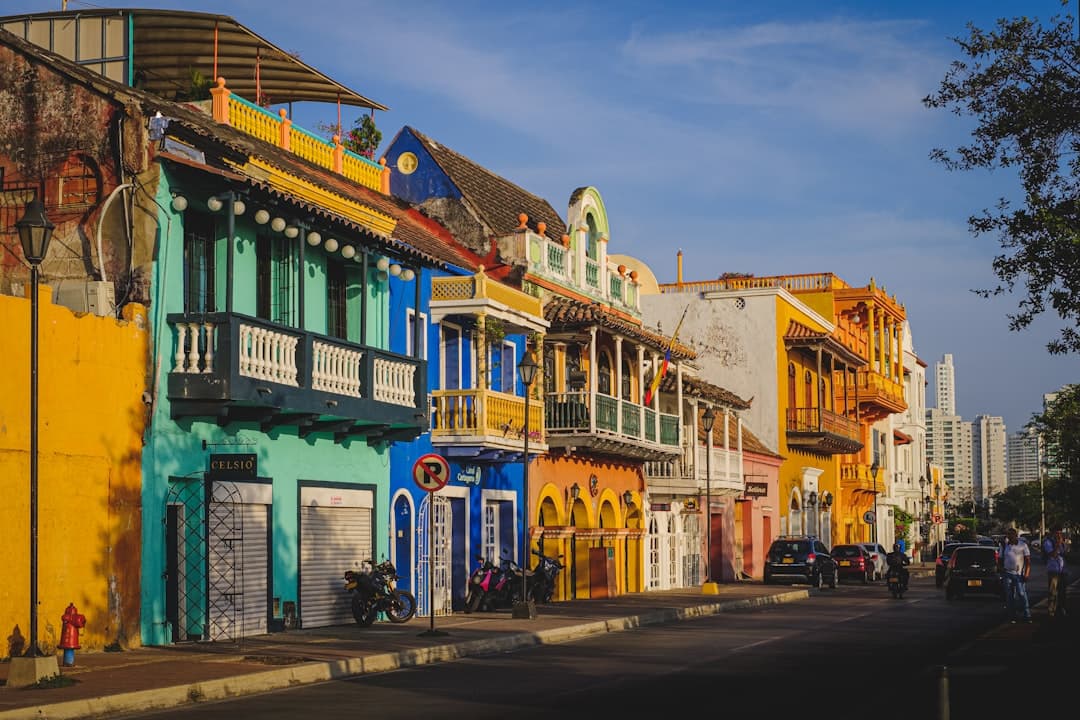
Cartagena’s overall vibe (per the Vibe/Influencer research) is a blend of magical realism, Afro-Caribbean energy, colonial romance, and raw tourist chaos. It’s regularly described as steamy, colorful, musical, emotionally charged—a city where beauty and crowds coexist and where the city “rises from every cobblestone” with its own spell.
You’ll feel it immediately in the Walled City:
- Narrow cobblestone streets
- Pastel and terracotta mansions
- Turquoise and pink façades
- Wooden balconies dripping bougainvillea
- Morning smells of papaya, mango, fried arepas, strong coffee
- Afternoon heaviness: humidity, faint salt from the Caribbean, plus perfume and car exhaust
- Soundtrack: Afro-Caribbean rhythms, hawkers calling prices, horse hooves, church bells, and the laughter/banter of Palenqueras (fruit sellers in bright dresses)
At night: the streets go yellow-lit, balconies cast shadows, plazas fill with performers and couples, and the whole thing can feel like a film set—often compared to a García Márquez mood where everyday scenes feel unnaturally vivid.
The Critic research adds the other half of the truth: Cartagena is also famous for aggressive hustling, tourist traps, and beach/boat-related scams, especially in the most touristed areas. Reviews are overwhelmingly positive about the city’s beauty, history, nightlife, and food—but the complaints cluster around:
- Crowds
- Vendor harassment
- Tourist pricing
- Noise/party energy
- Payment fraud risks (card skimming)
- Drink-spiking concerns in nightlife contexts
- Overpriced, harassing city beaches (especially Bocagrande)
This guide is built so you can get the best of the “magic” while minimizing the chaos.
The Story of Cartagena (two Cartagenas: Colombia and Spain)
This is crucial because the Historian research includes extensive material on Cartagena in Spain (Region of Murcia) and detailed material on Cartagena de Indias (Colombia)—and the Critic agent explicitly warns that TripAdvisor and search results sometimes mix them up.
Cartagena de Indias (Colombia): colonial port, fortifications, independence
Cartagena de Indias (the one you’re visiting) is defined by its UNESCO-listed historic center and fortifications, with massive defensive works constructed between the 16th and 18th centuries to protect Spain’s principal Caribbean port from pirates and enemy fleets.
Key framing details from the Historian report:
- The Walled City is known as Ciudad Amurallada, Centro Histórico, or Corralito de Piedra
- It includes sectors: Centro, San Diego, La Matuna, and nearby Getsemaní
- The walls were built largely in the 1600s, expanded over two centuries, and constructed in coral stone and masonry
- The district itself is free and open 24/7 (streets and ramparts as public spaces), while museums/churches inside often charge small individual fees
- Cartagena was founded in 1533 by Pedro de Heredia
- It became one of the Spanish Empire’s most important ports in the Americas, central to export of gold and to the transatlantic slave trade, and thus wealthy enough to finance major churches, convents, and mansions
- It played a role in independence history, including the Siege of Cartagena (1815)
The defensive jewel outside the walls is Castillo de San Felipe de Barajas, begun in 1536, expanded particularly 1639–1657, and pivotal in the British siege of 1741 under Blas de Lezo against Admiral Edward Vernon.
Cartagena (Spain, Region of Murcia): 2,200+ years from Carthage to ARQVA
The Historian research also provides a deep, coherent history of Cartagena, Spain (southeastern Spain), including a continuous urban history of more than 2,200 years—Carthaginian, Roman, Byzantine, Visigothic, Islamic, Christian, and modern industrial phases.
Key highlights (Spain):
- Founded as Qart Hadasht (“New City”) around 227–228 BCE by Hasdrubal the Fair
- Chosen for:
- one of the best natural harbors in the western Mediterranean
- nearby silver and lead mines near modern La Unión
- mining revenue supporting Carthage, including after the First Punic War and during the Second
- Linked to Hannibal’s campaign departure (elephants toward Italy)
- Captured by Scipio Africanus in 209 BCE; renamed Carthago Nova
- Sacked by Vandals in 425 CE
- Byzantine “Spania” presence in the 6th century
- Islamic naval base under Abd al-Rahman I (8th c.) and mining-driven port prominence under Abd al-Rahman III (10th c.)
- Sacked by Ferdinand III of Castile in 1243
- Major modern episodes: mining/industrialization; Cantonal Revolution 1873; key Republican naval base in the Spanish Civil War
Spain-specific sites covered in the Historian report include:
- Teatro Romano de Cartagena (built 5–1 BCE; 7,000 capacity; museum route through Palacio Pascual de Riquelme; free Tuesday last 2 hours)
- Muralla Púnica (3rd c. BCE Carthaginian wall; interpretation center; seasonal hours; ~€3.50)
- ARQVA National Museum of Underwater Archaeology (Spain’s national museum; €3 general; free Saturday after 15:00 and all day Sunday; Tue–Sat 09:30–20:00, Sun/holidays 10:00–15:00; closed Mondays; address Paseo Alfonso XII, 22)
- Castle of Concepción (13th–14th c.; interpretation center; €4–5; seasonal hours; accessed via panoramic lift)
- Additional Roman Theatre Museum details (architect Rafael Moneo; seasonal schedule; €7/€6 reduced; closed Mondays)
These are not in Colombia—but they’re included here because your instruction was to preserve every detail from all agents.
Why this matters for your trip: review mix-ups
The Critic agent explicitly warns:
One TripAdvisor result relates to Cartagena in Spain, not Colombia. This reinforces the importance of checking that reviews apply to the correct city.
So if you’re browsing “Cartagena top things to do,” confirm it says Cartagena de Indias, Bolívar, Colombia—not Murcia, Spain.
Top Experiences (do these first): a narrative, day-by-day-friendly approach
This section integrates:
- Geo Agent’s 20 mapped attractions (names, types, ratings, counts, addresses)
- Historian’s practical details (tickets, hours, UNESCO, construction dates)
- Vibe Agent’s sensory “you are there” descriptions
- Critic Agent’s review pros/cons + scam warnings
1) Enter through Torre del Reloj + Plaza de los Coches (and feel the switch flip)
Why it’s iconic (Historian + Vibe + Geo):
The Torre del Reloj (also Puerta del Reloj or Boca del Puente) is the main gate into the historic walled city and one of Cartagena’s strongest symbols.
- Origin: built as Boca del Puente (principal land entrance) connecting to Getsemaní by drawbridge across marsh/water
- Construction: roughly 1601–1631
- Damaged during attacks including French privateer Baron de Pointis
- Repaired in 1704 by engineer Juan de Herrera y Sotomayor, who added a baroque façade with four Tuscan columns and bombproof lateral vaults
- Renovated in 1888: added an octagonal neogothic clock tower with a pendulum clock; a Swiss mechanism later replaced it in early 20th c. and reportedly still runs
- Height: described as about 30 meters
- Today: the “great gateway of Colombia” and a standard walking tour meeting point
Practicalities (Historian):
- Exterior/gate: free; walk through any time
- Hours: described as 24/7 because it’s a public passage
- Interior access: not routinely open as a ticketed monument; verify locally if special access exists
- Paid experiences here are typically walking tours, carriage rides, or bundles—not a gate ticket
Geo Agent listing (for your map brain):
- While Geo lists Plaza de los Coches (below), Torre del Reloj is effectively the threshold between the outside approach (Camellón de los Mártires) and the plaza just inside.
Plaza de los Coches (Geo):
- Name: Plaza de los Coches
- Type: park
- Rating: 4.6
- User ratings total: 670
- Address: Cra. 7, El Centro, Cartagena de Indias, Bolívar, Colombia
- Lat/Lng: 10.4231939, -75.5493106
- Place ID: ChIJiY6K558v9o4R01tIuz8dWZE
What it will feel like (Vibe):
The moment you pass under the arch you hit that Cartagena sensory wall: bright façades, heat radiating off stone, vendors, music, and the feeling that you’ve stepped into a staged-but-real historical theater.
Critic reality check (vendor dynamics):
- Street performers (rappers/musicians) may do unsolicited performances then demand money
- Palenquera photo interactions can become unexpected charges if you don’t clarify the price first
- Always ask cost upfront for souvenirs, snacks, services
2) Wander the Centro Histórico / Ciudad Amurallada (UNESCO core)
This is the main event. Nearly every review set agrees: despite crowds and hustling, the Historic Center is the reason people come.
Geo Agent listing:
- Centro Histórico de Cartagena
- Type: tourist_attraction
- Rating: 4.8
- User ratings total: 4262
- Address: Cra. 7 #32-41, El Centro, Cartagena de Indias, Bolívar, Colombia
- Lat/Lng: 10.422906, -75.54961
- Place ID: ChIJL83Blo0v9o4RJ9POEoMtaUE
Historian: what it is and how it works
- UNESCO World Heritage site (1984 inscription for historic center + fortifications)
- Fortified core enclosed by roughly 11 km of coral-stone walls
- Sectors: Centro, San Diego, La Matuna, nearby Getsemaní
- Streets + ramparts are typically free and open 24/7
- No general “walled city” ticket—budget for individual museums/churches
Typical institution hours (Historian “rule of thumb”):
- Museums/churches: Mon–Sat ~09:00–18:00
- Sundays/holidays: ~10:00–16:00
- Always confirm per-site, because each institution sets its own hours
Vibe: how to wander it like you mean it
- Morning: papaya/mango + fried arepas + coffee
- Afternoon: heavy humidity, salt, perfume, car exhaust
- Sounds: Afro-Caribbean rhythms, hawkers, hooves, bells, Palenqueras
- Night: yellow light, shadowed balconies, plazas alive with performers and couples
- Emotional tone: romantic awe + nostalgic melancholy; “bohemian yet polished” (boutique hotels + designer shops alongside street carts and families)
- Best “experience” can be unnamed alleys: shifting smells block to block (bougainvillea, laundry soap, rice/plantains, garbage awaiting collection), glimpses through inset doors into hidden courtyards, changing light from harsh noon to lantern-lit night
Critic: what you’ll likely love vs hate
- Love: architecture, walkability, dining/nightlife concentration, history, photogenic streets
- Hate: crowds (cruise days/evenings), aggressive vendors/touts, high prices, noise/party vibe at night
- Key strategy: firm “No, gracias,” confirm prices, avoid peak midday heat
3) Sunset on the Walls of Cartagena (Las Murallas)
Geo Agent listing:
- Walls of Cartagena
- Type: historical_landmark
- Rating: 4.8
- User ratings total: 34,233
- Address: Cl. de la Serrezuela, San Diego, Cartagena de Indias, Bolívar, Colombia
- Lat/Lng: 10.4296098, -75.54486500000002
- Place ID: ChIJxyC0P58v9o4R4CLqohDRUyU
Historian:
- Built between 16th and 18th centuries, coral stone and masonry
- The wall is described as a free public walkway with sea views; access “not gated,” “no ticket booths,” can be walked long stretches
- But another practical note says managed access to the walls is generally from morning until about 7:30 pm, with staff clearing around 7:00 pm for safety/maintenance (so: plan sunset accordingly)
Vibe:
- Stone underfoot warm from daytime heat
- Smell: salt + sunscreen + faint oil from grills
- Sound: wind + laughter + camera shutters + clinking glasses + distant traffic
- Emotional tone: contemplative and slightly melancholic—past violence/slavery/trade beneath your feet, present-day leisure on top of it
Critic:
- Worth doing once even if crowded
- You do not need to sit in the most expensive wall-top venues to get the sunset
4) Plaza Santo Domingo + the classic Cartagena night scene
Geo Agent listing:
- Plaza de Santo Domingo
- Type: historical_landmark
- Rating: 4.6
- User ratings total: 10,770
- Address: Cl. 35, El Centro, Cartagena de Indias, Bolívar, Colombia
- Lat/Lng: 10.42434, -75.551975
- Place ID: ChIJK5gNOqAv9o4ROBqrL_clHwU
Vibe:
- Iconic plaza with café terraces; famous Botero sculpture outside Iglesia de Santo Domingo
- Evening smell: garlic shrimp, grilled fish, wine, plus floral hints from balconies
- Sounds: live bands, cutlery, servers, vendors selling jewelry/art
- Social feeling: you’re “on a stage” (people-watching squared); playful legends about touching the Botero sculpture for luck/fertility
- Emotional tone: sociable, theatrical, flirtatious; expensive but memorable
Critic tie-in:
- This is the kind of “over-touristed but still special” spot where asking for menus/prices and confirming extras matters.
5) San Felipe de Barajas Fort (Castillo) + tunnels + heat strategy
Geo Agent listing:
- San Felipe de Barajas Fort
- Type: historical_landmark
- Rating: 4.7
- User ratings total: 67,798
- Address: Cielo mar, La Boquilla, Cl. 31, Pie Del Cerro, Cartagena de Indias, Bolívar, Colombia
- Lat/Lng: 10.4225232, -75.5392887
- Place ID: ChIJKykMr4Iv9o4RwbGBeh5eM1Y
Historian: history
- Begun 1536 using enslaved African labor, first known as Castillo de San Lázaro on Hill of San Lázaro
- Major expansion 1639–1657, then further improvements through 17th–18th centuries
- Fortification style: Hispano-American military fortification with Italian and Flemish influences
- Key event: British siege 1741, defended under Blas de Lezo against Admiral Edward Vernon
- UNESCO: included as part of the fortifications in 1984
- Symbol of Cartagena’s colonial military engineering and one of the most visited landmarks
Historian: what you’ll see
- Terraced, massive stone/brick bastions, batteries, platforms
- Interconnected levels connected by ramps and stairways (designed for moving troops and artillery)
- Tunnel and gallery network (troop movement/communication; possibly mining tactics). Visitors can walk through some tunnels.
- Garitas (sentry boxes), guard posts
- Panoramic viewpoints over the city and bay
- Signage and sometimes audio guides
Historian: practical info (hours vary by source)
- Sources list:
- 8:00–18:00 daily
- 7:00–18:00 daily
- 8:00–19:00 daily (Spanish-language listing with free-entry Sundays for Colombians)
- “Safe window” suggestion: ~8:00–18:00, last entry 30–60 min before close
- Best time: early morning 8:00–10:00 to avoid heat/crowds; confirm hours locally because they’ve shifted in recent years
Historian: ticket prices (vary by year/source)
- Jan 2024 confirmed (Cartagena Explorer):
- Foreign: 36,000 COP
- Colombians/residents: 31,000 COP
- Children 6–13 / Colombian students & teachers: 15,000 COP
- Free: under 6; Colombians over 62; Colombian military/police; other categories
- Older Colombian listing: 25,000 COP “plena,” 20,000 Colombians, 10,500 reduced
- 2026 resolution guide:
- Full: 38,000 COP
- Colombians: 33,000 COP
- Children/students/teachers: 16,000 COP
- Working estimate for 2024–2025:
- International adult: 36,000–38,000 COP
- Colombian/resident adult: 31,000–33,000 COP
- Children 6–13/students: 15,000–16,000 COP
- Under 6 / Colombians 62+: typically free
Vibe:
- Atmosphere: imposing, sun-blasted, “war-haunted”
- Smell: hot dust, stone, sparse grass
- Sound: wind, footsteps; tunnels echo, cooler air, mineral scent, some moisture
- Emotional: awe + unease; the fortress makes the link between beauty and violent colonial protection of trade routes (including slavery) hard to ignore
Critic: review warnings
- Heat and lack of shade can be punishing midday
- Guide quality varies; some hard-sell at entrance
- Limited English signage; some under-maintained areas
- Walk from Walled City can feel uncomfortable; take taxi/Uber
- Informal guides may quote high prices—agree price + scope upfront
6) Getsemaní + Plaza de la Trinidad (street art + nightly “living room”)
Geo Agent anchor point:
- Centenario Park
- Type: park
- Rating: 4.4
- User ratings total: 4,645
- Address: Media, Getsemaní, Cartagena de Indias, Bolívar, Colombia
- Lat/Lng: 10.4226512, -75.5472715
- Place ID: ChIJESaXJZ4v9o4RcMpl1r0H14E
Getsemaní is repeatedly described (Vibe + Critic) as Cartagena’s bohemian quarter—street art, nightlife, local life—and also the place where gentrification tensions show.
Vibe:
- Once gritty working-class district with a crime reputation; now “hipster,” mural-covered, still locally rooted
- Epicenter: Plaza de la Trinidad becomes nightly open-air living room:
- Smell: humidity + frying oil + grilled meat; arepas de huevo; cheap beer
- Scenes: kids playing football, older men debating politics, backpackers on church steps
- Sound: reggaetón, champeta, live guitars; multiple music tracks from bars; oil crackle; multilingual chatter
- Visuals:
- Murals (Afro-Colombian portraits, political statements, surreal images), festivals like Ciudad Mural
- Streets like Calle de la Sierpe with umbrellas/flags/papel picado overhead casting patterned light/shadow
- Emotional: communal, gritty-romantic; sense of rebirth; art “on the walls, not in galleries”
Critic:
- Pros: “authentic” feel, creative energy, better-priced food/bars, people-watching
- Cons: noisy and packed in evenings; petty theft risk (phone theft especially); gentrification changing the vibe
- Warnings: prices around main plaza can inflate; keep phone away; normal urban caution at night
7) Convento de la Popa (panoramic + spiritual counterpoint)
Historian: history
- Official name: Convento de Santa Cruz de la Popa
- Founded early 1600s:
- 1607 first wooden/palm chapel promoted by Discalced Augustinian friar Vicente Mallol
- 1608 convent construction began; called Convento de Santa Cruz
- Name “La Popa” from hill resembling a ship’s stern
- By 1612 nearly finished; ~15,000 ducats invested; construction 6–7 years
- Independence war note: night of 11 November 1815, patriots repelled surprise assault by Spanish troops under Pablo Morillo during siege
- Returned to Augustinians in 1961
- Dedicated to Nuestra Señora de la Candelaria, patroness of Cartagena; pilgrimage around 2 February (feast of Candlemas)
Historian: what you’ll see
- Highest hill in Cartagena; 360° views over walled city, bay, Bocagrande, neighborhoods
- White stucco walls, red-tiled roofs, arched entryways, two-story cloister around courtyard with garden/fountain
- Church with image of Nuestra Señora de la Candelaria on ornate baroque main altarpiece (gilded wood, columns, niches, paintings)
- Side chapels, colonial religious art, ex-votos
- Terraces/miradors: excellent photos of walled city and San Felipe from above
Historian: practical info (tickets vary)
- Sources report:
- Adults ~13,000 COP; children ~11,000 COP
- “Around 15,000 COP” for foreigners
- Tour platform suggests 25,000 COP adults and 10,000 COP children under 9 (possibly bundled)
- Traveler reports: 13,000–14,000 COP at gate
- Planning range for 2024–2025:
- Adults (foreign): 13,000–15,000 COP (bring up to 20,000 COP cash in case of increase)
- Children: 10,000–11,000 COP
- Tours including transport: often US$25–40 plus other sites
Historian: hours
- Listings converge around:
- Daily 8:00/8:30–17:30
- Best practice: arrive after 8:30 and before 16:30; schedules may shift around religious holidays (esp. 2 Feb)
- Mass schedules (e.g., Saturday 7:30; Sunday 8:00 and 17:00) are separate from tourist hours
Vibe:
- Road up can be bumpy; once there, “white-washed calm”
- Smell: incense and old wood in chapel; dusty-cool religious-building scent; floral notes in courtyard
- Sound: church hush and whispers; breeze at viewpoint; city noise becomes distant roar
- Emotion: detachment + perspective—beauty and poverty, colonial roofs and high-rises all visible at once
Critic: caution
- Route to La Popa can feel unsafe/uncomfortable without trusted driver; some regret going
- Taxis/driver overcharging risk; agree price; use reputable transport
- Some reviews note site feels worn, limited interpretation
- Not universally recommended if time is short; fortress + old city often prioritized
8) The bay: Bahía de Cartagena + piers + modern waterfront energy
Cartagena is a harbor city; the Geo data includes several bay/port-related points.
Geo Agent listings:
-
Bahía De Cartagena
- Type: tourist_attraction
- Rating: 4.8
- User ratings total: 830
- Address: Carrera 7 Calle 6, Castillogrande, Cartagena de Indias, Bolívar, Colombia
- Lat/Lng: 10.3969772, -75.5544259
- Place ID: ChIJsROm_j4v9o4RMsML9N2WqA8
-
Muelle Turistico de Cartagena
- Type: tourist_attraction
- Rating: 4.6
- User ratings total: 308
- Address: Cl. 24 #2343, Manga, Cartagena de Indias, Bolívar, Colombia
- Lat/Lng: 10.4085492, -75.5379957
- Place ID: ChIJAdPkcmUv9o4R4Syh9TGISeY
-
Puerto Bahia de Castillo Grande
- Type: tourist_attraction
- Rating: 4.8
- User ratings total: 438
- Address: Calle 6, Carrera 10 Av Maturin 5A #Esquina, Castillogrande, Cartagena de Indias, Bolívar, Colombia
- Lat/Lng: 10.3954263, -75.5507145
- Place ID: ChIJgbcIqUAv9o4RkVpkCnsAlaY
Vibe tie-ins:
- From rooftops and walls you’ll see the bay as part of Cartagena’s layered skyline: colonial domes + modern towers.
- Boat departures (for islands) often begin with diesel/harbor smells and engine thrum before the sea air clears.
Critic: bay/boat warning context
- Boat trips are “operator-dependent.” Don’t buy the cheapest dock offer without clarity on inclusions, timing, safety.
9) Rosario Islands / Barú: the beach day that can be amazing—or a mess
Vibe:
- Boat ride: diesel harbor smell → fresher saline air in open water
- Arrival: turquoise water, white/golden sand, grilled fish + coconut rice smells
- Sound: softer waves; reggaetón/vallenato from bars; bottles clinking
- Emotional: “release and exhale” after city intensity
- But: some accounts worry about overcrowding and reef health; vibe ranges from chill-bohemian to party-boat chaos
Critic:
- Pros: better beaches and clearer water than city beaches; snorkeling; escape from city vendors
- Cons: slow boats, unreliable captains, disorganized tours leaving/returning late; crowding/commercialization; variable quality
- Scam/warning:
- price opacity; tourist-price inflation if you don’t prebook
- reports of robbery on some routes to Barú with alleged driver collusion
- alcohol/drug offers and extortion scams reported; decline drugs; don’t share contact info; if extortion messaging occurs, ignore and contact GAULA (anti-extortion unit) per one Reddit story
10) Bazurto Market (if you want the city’s raw, beating heart)
Vibe:
- Often described as Cartagena’s most intense sensory experience
- Smell layers: raw fish/seafood, blood/offal, fried empanadas, ripe/overripe fruit, plastic, damp wood, sweat
- Sound: vendors shouting, champeta and salsa from speakers, chopping knives, carts rattling, constant negotiation
- Emotional: fascination + discomfort; feels “real,” unfiltered by tourism
Critic connection:
- Not explicitly detailed by Critic agent as a scam hotspot, but the general advice (prices upfront, awareness, keep valuables secure) applies strongly in crowded markets.
Hidden Gems & smaller stops (still worth your time)
This section collects every additional attraction from the Geo list plus Vibe “hidden gem” spaces and Historian museum/landmark details.
Plaza de la Aduana (Geo)
- Name: Plaza de la Aduana
- Type: historical_landmark
- Rating: 4.6
- User ratings total: 3,257
- Address: Cl. 32 #130, El Centro, Cartagena de Indias, Bolívar, Colombia
- Lat/Lng: 10.4221647, -75.5503234
- Place ID: ChIJsfwXWHUv9o4R-yrFJEjioNs
How to use it: A classic pause point on a daytime wander—pair it with nearby plazas and museums for a loop inside Centro.
Camellón de los Mártires (Geo + Historian’s Torre del Reloj context)
- Name: Camellón de los Mártires
- Type: historical_landmark
- Rating: 4.6
- User ratings total: 368
- Address: Cl. 31 #71-48, El Centro, Cartagena de Indias, Bolívar, Colombia
- Lat/Lng: 10.4222616, -75.5483085
- Place ID: ChIJR9-reHUv9o4Roxkn_QrkGow
This is the open space facing the Clock Tower Gate—your “before” scene to the Walled City “after.”
Plaza de Bolívar (Geo + Historian + Vibe)
Geo listing:
- Name: Plaza de Bolívar
- Type: plaza
- Rating: 4.6
- User ratings total: 2,851
- Address: Cra. 5 #33-15, El Centro, Cartagena de Indias, Bolívar, Colombia
- Lat/Lng: 10.4232347, -75.5511905
- Place ID: ChIJzVmqHaAv9o4RLcOAf9wz7PE
Historian layering of names:
- Originally Plaza de la Iglesia / Plaza Mayor
- Renamed Plaza de la Inquisición in 1610 with establishment of Holy Office tribunal
- Renamed after Bolívar statue installed—park inaugurated Nov 11, 1896, statue placed 1900, name Plaza de Bolívar used in honor of Bolívar
What’s around it (Historian):
- Palace of the Inquisition / Historical Museum is the key landmark on the plaza
- Nearby cathedral and colonial buildings create a dense historic ensemble
Vibe:
- Midday “oasis”: mature trees, shade, benches, mottled green light
- Smells: moist earth, subtle snack whiffs, faint museum/church mustiness
- Sounds: fountains splashing, birds, guides speaking, soft conversation
- Emotional: calm and reflective break from the louder plazas
Practical:
- The square itself: public, no ticket, no fixed hours
- Museum hours/prices below
Museo Histórico de Cartagena de Indias (Palace of the Inquisition) (Geo + Historian)
Geo listing:
- Name: Museum of Cartagena de Indias
- Type: history_museum
- Rating: 4.2
- User ratings total: 4,657
- Address: 46, Plaza de Bolivar Carrera 3 33, El Centro, Cartagena de Indias, Bolívar, Colombia
- Lat/Lng: 10.4231599, -75.5515244
- Place ID: ChIJqyJFGqAv9o4R-UdTDPYDfvA
Historian:
- Building dates to 18th century; commonly completed 1770
- Headquarters of Holy Office of the Inquisition in Cartagena
- Became museum in 1953
- Exhibits: colonial justice, punishment, religious authority; broader colonial and republican history
Practical (Historian):
- Tickets (current official visitor info cited):
- Adults: 24,000 COP
- Children/students/teachers/older adults: 20,000 COP
- Under 5: free
- Other sources: adult ~24,000–30,000 COP; discounted ~20,000 COP
- Hours:
- Mon–Sat: 9:00–18:00
- Sun/holidays: 10:00–16:00
Catedral de Santa Catalina de Alejandría (Geo + Historian)
Geo listing:
- Name: Catedral de Santa Catalina de Alejandría
- Type: point_of_interest
- Rating: 4.8
- User ratings total: 2,710
- Address: Calle de los Santos de Piedra, Cra. 4, El Centro, Cartagena de Indias, Bolívar, Colombia
- Lat/Lng: 10.4236446, -75.5506735
- Place ID: ChIJe0rj858v9o4R3ezE9PMYieQ
Historian deep history:
- Diocese created 1534 by Pope Paul III
- First cathedral built 1535–1537, simple palm/wood/thatch; destroyed in 1552 fire
- Second cathedral 1563–1568, still light materials; insufficient
- Current cathedral construction began 1577 under Bishop Tomás del Toro
- Attacked 1586 by Francis Drake: cannonball hit a column; destroyed columns, four arches, part of roof; construction delayed; ransom paid to avoid total destruction
- Completed 1612
- Early 20th c. renovation by French architect Gastón Lelarge:
- remodeled interior
- stucco imitating marble
- built the tower that defines skyline
- 1953: Pope Pius XII granted title Basílica menor
- Recognitions: National Monument of Colombia; part of UNESCO context
Architecture notes (Historian):
- Colonial Spanish style; influences from Iberia and Canary Islands
- Stone/masonry structure (late 16th–early 17th)
- Red tile dome/cupola iconic
- Interior stucco “marble” from 20th c. renovations
- “Fortified” solidity consistent with city’s defensive character
Practical (Historian):
- Hours listing: daily 7:00–20:00 (Mon–Sun) from one portal
- Ticket: no specific ticket mentioned in sources; likely free for basic entry, possibly donations; tours may include it as a stop
- Note: access may be restricted during Masses, weddings, special events
- Contact number provided by portal: +57 5 664 5308
Plaza San Pedro Claver (Geo) + San Pedro Claver complex (Vibe + Critic)
Geo listing:
- Name: Plaza San Pedro Claver
- Type: historical_landmark
- Rating: 4.7
- User ratings total: 1,806
- Address: Centro, Cartagena, Bolivar, Colombia
- Lat/Lng: 10.42164, -75.5508345
- Place ID: ChIJQ-Lww58v9o4REtkuOfpHmd4
Vibe (complex):
- Tropical serenity + heavy historical weight (enslaved Africans; Peter Claver’s ministry)
- Cloisters around courtyard with lush plants, arcades, soft green light
- Smell: incense, old stone, wood; courtyard earth/flowers/sea air
- Sounds: subdued; bells; guides; birds
- Emotional: reverence and sorrow; peaceful space that confronts slavery history
Critic:
- Pros: moral/historical significance; beautiful tranquility; informative collections
- Cons: limited English interpretation; museum relatively small
- Verdict: worth it for reflective experience
(Historian mentions it as a paid church/museum example inside the Walled City, but does not give exact ticket figures in the provided text—just that institutions like this charge individual fees.)
Plaza de Santa Teresa (Geo)
- Name: Plaza de Santa Teresa
- Type: historical_place
- Rating: 4.7
- User ratings total: 5,272
- Address: Cra. 2, El Centro, Cartagena de Indias, Bolívar, Colombia
- Lat/Lng: 10.4217304, -75.5523073
- Place ID: ChIJJ3jxmwov9o4R33qpK0hxnak
Monumento a las palenqueras (Geo) + Palenqueras vibe and photo-price ethics (Vibe + Critic)
Geo listing:
- Name: Monumento a las palenqueras
- Type: tourist_attraction
- Rating: 4.9
- User ratings total: 16
- Address: Cl. 34 #° 8 - 20, El Centro, Cartagena de Indias, Bolívar, Colombia
- Lat/Lng: 10.4240063, -75.5479752
- Place ID: ChIJK5GCdwAv9o4R1bLJ7oaE9UE
Vibe:
- Palenqueras are iconic Afro-Colombian women in bright dresses with fruit bowls
- Sensory: vivid colors; smell of cut papaya/pineapple/citrus; voices negotiating/joking
- Cultural roots linked to San Basilio de Palenque, one of the first free Black towns in the Americas
- Emotional: joy + curiosity + ethical reflection (tourism/postcard dynamics)
Critic warning:
- Photos can trigger unexpected charges; clarify price before photographing
- Similar dynamic with street performers demanding payment afterward
Monumento Unión de los Océanos (Geo)
- Name: Monumento Unión de los Océanos
- Type: tourist_attraction
- Rating: 4.5
- User ratings total: 147
- Address: Centro, Cartagena, Bolivar, Colombia
- Lat/Lng: 10.4204375, -75.5533014
- Place ID: ChIJpx5c8Aov9o4R7NsQD1BVKf0
Alcatraces Monument (Geo)
- Name: Alcatraces Monument
- Type: park
- Rating: 4.6
- User ratings total: 240
- Address: Cartagena, Bolivar, Colombia
- Lat/Lng: 10.4290563, -75.549143
- Place ID: ChIJN_oB6pgv9o4RDY2ZzEMo6lA
Monumento India Catalina (Geo)
- Name: Monumento India Catalina
- Type: monument
- Rating: 4.5
- User ratings total: 10,983
- Address: Av. Venezuela, La Matuna, Cartagena de Indias, Bolívar, Colombia
- Lat/Lng: 10.4264716, -75.5440235
- Place ID: ChIJvdH_D5wv9o4RnAhw4aZTLZc
Centenario Park (Geo) (also useful for wildlife sightings sometimes mentioned in travel lore, though not in provided text)
Already listed above as Getsemaní anchor:
- Rating 4.4, 4,645 reviews; Media, Getsemaní
Plaza de la Trinidad (Vibe + Critic)
Not in Geo list as an entry, but central to your experience. Treat it as a nightly “drop in” rather than a scheduled attraction.
La Serrezuela (Critic)
Not in Geo list, but strongly mentioned in Critic report:
- Renovated bullring turned upscale shopping/dining/cultural complex
- Pros: impressive restoration; air-conditioned comfort; rooftop views; clean and managed
- Cons: expensive; “mall for rich tourists”; less cultural depth
- Not a scam hotspot, but a “tourist trap” in value terms for budget travelers
Las Bóvedas (Historian + Critic)
Historian:
- Built into walls; originally storage and later military barracks; now craft shops/galleries
- Typical opening window: daily ~8:00–18:30 but varies by vendor Critic:
- Pros: historic setting; convenient souvenir cluster
- Cons: touristy, repetitive merchandise, inflated prices; bargain; browse/compare; don’t feel obligated
- Verdict: quick stop, not essential
Abaco Bookshop & Café (Vibe “hidden gem”)
- Cozy interior: floor-to-ceiling books (Spanish/English)
- Smell: coffee, pastry, musty old books
- Sounds: espresso hiss, pages turning, low conversation, jazz/soft music
- Emotional: refuge, journaling/planning, “cultural living room”
- Strong magical realism / García Márquez association in traveler imagination
Rooftops: 51 Sky Bar (Vibe)
- “Modern elevated Cartagena”: cooler, windier, more ocean breeze than street odors
- DJ sets, clinking glasses, city grid and domes below
- Described as offering views “without overwhelming crowds”
- Emotional: cosmopolitan glamour + detachment (above the fray)
Boutique hotels & hidden courtyards (Vibe)
- Behind massive wooden doors: secret courtyards with foliage, pools, candlelight
- Smells: jasmine/tropical flowers, chlorine, essential oils, stone/wood
- Sounds: trickling fountains, soft music, muted conversation
- Emotional: privacy, romance, intrigue—micro-worlds inside the city
Bocagrande & Castillogrande (Vibe + Critic + Geo)
Geo points:
- Bahía de Cartagena listing is in Castillogrande area
- Puerto Bahia de Castillo Grande is another
Vibe:
- “Miami-meets-Caribbean high-rise resort land”
- Smell: salt, sunscreen, fried snacks; sometimes fuel from jet skis/boats
- Sound: waves + vendors + reggaetón/pop + traffic + A/C hum at night
- Emotional: detached comfort; some find it generic, others like calmer base
Critic:
- Beaches heavily criticized:
- ugly/crowded/murky water vs postcard expectations
- relentless vendor harassment; can’t relax without raising your voice
- overpricing; chairs/umbrellas/food/massages can become “wildly overpriced” if not negotiated
- “classic tourist trap zone”: items/services presented cheap/free then charged high
- Verdict: many experienced travelers advise skipping city beaches, go islands/beach clubs instead
Culture & Atmosphere (what you’ll smell, hear, and feel)
Cartagena isn’t a city you simply “see.” The research repeatedly frames it as felt on the skin.
Heat, humidity, and pacing (Vibe + Critic)
- Days often in the mid‑80s Fahrenheit; nights only slightly cooler (Vibe report)
- The heat shapes everything: you’ll move slower, seek shade, and naturally shift activities to mornings and nights
- Critic report reinforces: midday heat is one of the most consistent complaints, especially at exposed sites like San Felipe
Practical implication:
Plan your “stone and sun” sightseeing early, and your “plazas and cocktails” sightseeing late.
Soundtrack: Afro-Caribbean rhythms, champeta, reggaetón (Vibe)
- Walled City: Afro-Caribbean rhythms from shops; hawkers; hooves; bells
- Getsemaní: reggaetón, champeta, guitars, layered bar music
- Walls at sunset: wind + laughter + clinking glasses
Smell map (Vibe)
- Morning Centro: fruit + fried arepas + strong coffee
- Afternoon: salt + perfume + car exhaust
- Plaza Trinidad: frying oil + grilled meat + beer
- San Felipe: hot dust + stone
- Convento de la Popa: incense + old wood + courtyard flowers
- Bazurto: fish/offal + ripe fruit + sweat + plastic + fried snacks
- Rooftops: cocktails/kitchen aromas more than street smells
Emotional map: romance, awe, melancholy, moral weight (Vibe + Historian)
- Walls: beauty + bittersweet contrast (past conflict and slavery vs present leisure)
- San Pedro Claver: peace + sorrow (explicit confrontation with slavery history)
- San Felipe: awe + unease (defensive architecture built to protect imperial trade)
- Hidden alley wandering: wonder + gentle disorientation (“magic is rising from every cobblestone”)
Food & Local Experiences (from street arepas to rooftops)
The Critic agent calls food one of Cartagena’s biggest genuine highlights, while also warning about price gaps and safety issues.
Street food and casual eating (Vibe + Critic)
You’ll encounter:
- Arepas (including arepas de huevo in Getsemaní’s Plaza Trinidad scene)
- Fried snacks around plazas
- Island lunches of grilled fish + coconut rice (Rosario vibe)
Critic cautions:
- Food safety concerns are mentioned in forums: some street vendors or low-quality restaurants can cause illness
- Be selective; consider reputable food tours
Restaurants, plazas, and “tourist price” reality (Critic)
- Walled City has many of the best restaurants and rooftops, but also:
- significantly higher prices than elsewhere in Colombia
- overpriced tourist menus near main plazas
- “surprise extras” (confirm before ordering)
Rooftop bars, nightlife, and drink safety (Vibe + Critic)
- Rooftops like 51 Sky Bar: sleek, curated, cooler breeze, DJ sets
- Critic: nightlife is where disproportionate number of bad experiences occur:
- overpriced drinks/cover
- card skimming risk (pay cash)
- drink-spiking risk (don’t accept drinks from strangers; don’t leave unattended; caution re scopolamine reports)
Practical Tips & Warnings (the “don’t ruin your trip” section)
This section consolidates all practical details across Historian + Critic + Vibe, including conflicting info.
1) Tickets & opening hours: how Cartagena actually works
Walled City / Centro Histórico
- Streets: free, open 24/7
- Walls/ramparts:
- described as free, not gated, walk anytime
- also described as being cleared around 7:00 pm and “open until about 7:30 pm” in some managed-access guidance
- Museums/churches: typically small fees; typical schedules:
- Mon–Sat ~09:00–18:00
- Sun/holidays ~10:00–16:00
- Always confirm per site
Torre del Reloj
- Free, public passage; 24/7
- No standard ticket; paid costs usually for tours
Castillo San Felipe
- Hours vary by source: 7:00–18:00 vs 8:00–18:00 vs 8:00–19:00
- Safe plan: arrive early morning; treat 8:00–18:00 as likely; verify locally
- Ticket: ~36,000–38,000 COP foreign adult (2024–2026 range)
Palace of the Inquisition (Museo Histórico)
- Ticket: 24,000 COP adults, 20,000 COP concessions, under 5 free
- Hours: Mon–Sat 9:00–18:00, Sun/holidays 10:00–16:00
Museo Naval del Caribe (Historian)
- Location: Calle 31 (San Juan de Dios) #3‑26 or #3‑62 (same stretch)
- Hours:
- Recent sources converge on daily 10:00–18:00
- Some older sources: 9:00–17:00 or 10:00–17:30
- Vacation periods: sometimes 9:00–18:00
- Tickets:
- Older: adults 16,000 COP; children under 13 2,000; students 5,000
- 2026 guide: adults 23,000; students/seniors 10,000; military 5,000; children 2,000
- Budget: adults ~20,000–23,000 COP
Museo del Oro Zenú (Historian)
- Small, organized, air-conditioned; 30–60 minute visit
- Admission: widely reported free
- Hours most consistent:
- Tue–Sat 9:00–17:00
- Sun 9:00–14:00
- Mon closed
- Some variation exists in listings; verify locally if timing is tight
Convento de la Popa
- Hours: daily 8:00/8:30–17:30
- Tickets: likely 13,000–15,000 COP adult, 10,000–11,000 COP child, but some listings higher (25,000 COP adult on tour platform context)
2) The hustle: what it looks like and how to respond (Critic + Vibe)
Common situations
- Palenqueras photo ops → unexpected charges
- Rappers/musicians → unsolicited performance → demand payment
- Souvenir and street food prices inflated without upfront signage
- Beach services “cheap/free” → large bill later (especially Bocagrande)
- Informal guides at San Felipe → aggressive approach, high quotes
Script that works (Critic)
- Say “No, gracias” clearly and keep walking.
- Ask “¿Cuánto cuesta?” before accepting anything.
- If no price given: walk away.
- Agree on scope + price before a tour begins.
3) Money + card safety (Critic)
- Card skimming risk is mentioned in nightlife/tourist-heavy establishments
- Recommendation: use cash rather than cards in nightlife and riskier venues
- Exchange money only in reputable places (airport, malls)
- Check change carefully
4) Drink safety and nightlife risk (Critic)
- Reports (isolated but serious) of drink spiking / scopolamine robberies
- Don’t accept free shots/drinks from strangers
- Don’t leave drinks unattended
- Stay with trusted companions; avoid sketchy offers
5) Phones, petty theft, and situational awareness (Critic)
- Frequent risk: quick phone theft in Centro and Getsemaní
- Keep phones pocketed except in secure venues/transport
- Use hotel safe for passports/spare cards
- Transitional areas and poorly lit streets at night: extra caution
6) Transport: getting to forts and hilltops (Critic + Historian)
- Walk to San Felipe: some say uncomfortable; taxi/Uber recommended
- La Popa: route safety concerns; use a trusted driver; agree on price (round-trip with waiting is common)
- For private drivers/taxis: set clear fare in advance
7) Beaches: manage expectations (Critic + Vibe)
Bocagrande beaches
- Vibe: urban resort strip; convenient but generic
- Critic verdict: widely seen as not worth hassle due to vendor harassment, overpricing, murky water
Islands/Barú
- Often worth it, but operator-dependent; prebook reputable agencies
Conclusion: how to get the “magic realism” without the chaos tax
Cartagena rewards travelers who do two things at once:
- Lean into the atmosphere—early-morning cobblestones, shady plazas, wall sunsets, Getsemaní nights, hidden courtyards, the salt-air glow of the bay.
- Hold firm boundaries—prices upfront, cash habits, phone awareness, transport planning, skepticism with beaches and boats.
If you do that, you’ll likely experience the version travelers rave about: a city where color, music, heat, and history combine into something that feels both intensely real and slightly dreamlike—where a mango vendor, a balcony of bougainvillea, and distant drums can make the streets feel like the edge between reality and story.
Appendix A: Geo Agent’s 20 attractions (complete reference list)
Below is the Geo list preserved in full detail (names, types, ratings, totals, addresses, coordinates, place IDs):
-
Plaza de los Coches — park — 4.6 (670)
Cra. 7, El Centro, Cartagena de Indias, Bolívar, Colombia
Lat 10.4231939, Lng -75.5493106
Place ID: ChIJiY6K558v9o4R01tIuz8dWZE -
San Felipe de Barajas Fort — historical_landmark — 4.7 (67,798)
Cielo mar, La Boquilla, Cl. 31, Pie Del Cerro, Cartagena de Indias, Bolívar, Colombia
Lat 10.4225232, Lng -75.5392887
Place ID: ChIJKykMr4Iv9o4RwbGBeh5eM1Y -
Centro Histórico de Cartagena — tourist_attraction — 4.8 (4,262)
Cra. 7 #32-41, El Centro, Cartagena de Indias, Bolívar, Colombia
Lat 10.422906, Lng -75.54961
Place ID: ChIJL83Blo0v9o4RJ9POEoMtaUE -
Plaza de la Aduana — historical_landmark — 4.6 (3,257)
Cl. 32 #130, El Centro, Cartagena de Indias, Bolívar, Colombia
Lat 10.4221647, Lng -75.5503234
Place ID: ChIJsfwXWHUv9o4R-yrFJEjioNs -
Camellón de los Mártires — historical_landmark — 4.6 (368)
Cl. 31 #71-48, El Centro, Cartagena de Indias, Bolívar, Colombia
Lat 10.4222616, Lng -75.5483085
Place ID: ChIJR9-reHUv9o4Roxkn_QrkGow -
Plaza de Bolívar — plaza — 4.6 (2,851)
Cra. 5 #33-15, El Centro, Cartagena de Indias, Bolívar, Colombia
Lat 10.4232347, Lng -75.5511905
Place ID: ChIJzVmqHaAv9o4RLcOAf9wz7PE -
Centenario Park — park — 4.4 (4,645)
Media, Getsemaní, Cartagena de Indias, Bolívar, Colombia
Lat 10.4226512, Lng -75.5472715
Place ID: ChIJESaXJZ4v9o4RcMpl1r0H14E -
Bahía De Cartagena — tourist_attraction — 4.8 (830)
Carrera 7 Calle 6, Castillogrande, Cartagena de Indias, Bolívar, Colombia
Lat 10.3969772, Lng -75.5544259
Place ID: ChIJsROm_j4v9o4RMsML9N2WqA8 -
Museum of Cartagena de Indias — history_museum — 4.2 (4,657)
46, Plaza de Bolivar Carrera 3 33, El Centro, Cartagena de Indias, Bolívar, Colombia
Lat 10.4231599, Lng -75.5515244
Place ID: ChIJqyJFGqAv9o4R-UdTDPYDfvA -
Monumento a las palenqueras — tourist_attraction — 4.9 (16)
Cl. 34 #° 8 - 20, El Centro, Cartagena de Indias, Bolívar, Colombia
Lat 10.4240063, Lng -75.5479752
Place ID: ChIJK5GCdwAv9o4R1bLJ7oaE9UE -
Alcatraces Monument — park — 4.6 (240)
Cartagena, Bolivar, Colombia
Lat 10.4290563, Lng -75.549143
Place ID: ChIJN_oB6pgv9o4RDY2ZzEMo6lA -
Monumento Unión de los Océanos — tourist_attraction — 4.5 (147)
Centro, Cartagena, Bolivar, Colombia
Lat 10.4204375, Lng -75.5533014
Place ID: ChIJpx5c8Aov9o4R7NsQD1BVKf0 -
Plaza San Pedro Claver — historical_landmark — 4.7 (1,806)
Centro, Cartagena, Bolivar, Colombia
Lat 10.42164, Lng -75.5508345
Place ID: ChIJQ-Lww58v9o4REtkuOfpHmd4 -
Muelle Turistico de Cartagena — tourist_attraction — 4.6 (308)
Cl. 24 #2343, Manga, Cartagena de Indias, Bolívar, Colombia
Lat 10.4085492, Lng -75.5379957
Place ID: ChIJAdPkcmUv9o4R4Syh9TGISeY -
Plaza de Santo Domingo — historical_landmark — 4.6 (10,770)
Cl. 35, El Centro, Cartagena de Indias, Bolívar, Colombia
Lat 10.42434, Lng -75.551975
Place ID: ChIJK5gNOqAv9o4ROBqrL_clHwU -
Walls of Cartagena — historical_landmark — 4.8 (34,233)
Cl. de la Serrezuela, San Diego, Cartagena de Indias, Bolívar, Colombia
Lat 10.4296098, Lng -75.54486500000002
Place ID: ChIJxyC0P58v9o4R4CLqohDRUyU -
Plaza de Santa Teresa — historical_place — 4.7 (5,272)
Cra. 2, El Centro, Cartagena de Indias, Bolívar, Colombia
Lat 10.4217304, Lng -75.5523073
Place ID: ChIJJ3jxmwov9o4R33qpK0hxnak -
Catedral de Santa Catalina de Alejandría — point_of_interest — 4.8 (2,710)
Calle de los Santos de Piedra, Cra. 4, El Centro, Cartagena de Indias, Bolívar, Colombia
Lat 10.4236446, Lng -75.5506735
Place ID: ChIJe0rj858v9o4R3ezE9PMYieQ -
Monumento India Catalina — monument — 4.5 (10,983)
Av. Venezuela, La Matuna, Cartagena de Indias, Bolívar, Colombia
Lat 10.4264716, Lng -75.5440235
Place ID: ChIJvdH_D5wv9o4RnAhw4aZTLZc -
Puerto Bahia de Castillo Grande — tourist_attraction — 4.8 (438)
Calle 6, Carrera 10 Av Maturin 5A #Esquina, Castillogrande, Cartagena de Indias, Bolívar, Colombia
Lat 10.3954263, Lng -75.5507145
Place ID: ChIJgbcIqUAv9o4RkVpkCnsAlaY
Appendix B: Spain “Cartagena” heritage details (preserved from Historian report)
Because the Historian agent provided extensive Spain-based Cartagena research, it is preserved here for completeness (and to help you avoid confusion when browsing reviews).
Teatro Romano de Cartagena (Spain)
- Built 5–1 BCE under Augustus; dedicated to Gaius and Lucius Caesar
- Cavea diameter 87.6 m; capacity ~7,000
- Museum route via Palacio Pascual de Riquelme
- Ticket: €7 general, €6 reduced; school groups ~€3; under 3 free
- Free: Tuesdays last 2 hours (seasonal windows: Oct–Apr 16:00–18:00; May–Sep 18:00–20:00)
- Hours:
- Winter (Oct–Apr): Tue–Sat 10:00–18:00; Sun 10:00–14:00; Mon closed
- Summer (May–Sep + Holy Week): Tue–Sat 10:00–20:00; Sun 10:00–14:00; Mon closed
- Some temporary split schedules reported during works
Muralla Púnica (Spain)
- 3rd c. BCE Carthaginian wall; rare Carthaginian remain in Spain
- Hellenistic model; double parallel walls of local sandstone (tabaire); preserved >3m height
- Hours (seasonal):
- Jul 1–Sep 15: Mon–Sun 10:00–20:00
- Mar 15–Jun 30 and Sep 16–Nov 1: Tue–Sun 10:00–19:00; closed Mon except Easter week open daily
- Nov 2–Mar 14: Tue–Sun 10:00–17:30; closed Mon
- Closed: Jan 1, Jan 6, Dec 25; reduced 10:00–14:00 on Jan 5, Dec 24, Dec 31
- Ticket: ~€3.50 general; ~€2.50 reduced
ARQVA National Museum of Underwater Archaeology (Spain)
- Roots 1970; 1982 MNAM–CNIAS; new building and name ARQVA in 2008
- Address: Paseo Alfonso XII, 22, Cartagena, Murcia, Spain
- Contact: +34 968 121 166; informacion.arqua@cultura.gob.es
- Hours: Tue–Sat 09:30–20:00; Sun/holidays 10:00–15:00; closed Mondays
- Closed: Mondays; Jan 1 & 6; May 1; Dec 24/25/31; plus one local holiday
- Ticket: €3 general; €1.50 reduced
- Free: Saturdays from 15:00; all day Sunday; plus special days (May 18; Oct 12; Dec 6)
- Annual cards: ARQVA €25; State Museum Card €36
- Guided visit times referenced in schedules (e.g., 10:30, 12:30, 17:30, 19:30)
Castle of Concepción (Spain)
- Medieval fortress 13th–14th c.; built after reconquest (Infante Alfonso, 1245)
- Built over Roman temple of Aesculapius and Islamic alcázaba; reuse of Roman inscriptions/tombstones
- Later uses: prison (16th–17th c.); Civil War siren station
- Now interpretation center; viewpoints over harbor; accessed via Parque Torres; panoramic lift (Calle Gisbert)
- Tickets: €4–5 adult; reduced €3–4; children up to 3 free; ~€0.50 supplement for combined lift ticket
- Hours seasonal:
- Summer (Jul 1–Sep 15): usually 10:00–20:00 daily (some early July variation)
- Mid season (Mar 15–Jun 30; Sep 16–Nov 1): Tue–Sun 10:00–19:00 (Holy Week often daily)
- Low season (Nov 2–Mar 14): Tue–Sun 10:00–17:30
- Closed major holidays (Jan 1, Jan 6, Dec 25; afternoons only on Jan 5, Dec 24, Dec 31)
If you tell me your dates, where you’re staying (Centro? Getsemaní? Bocagrande?), and your trip style (history-heavy, nightlife-heavy, beach-heavy, or balanced), I can turn this into a hyper-detailed day-by-day itinerary that uses the hour windows and scam-avoidance strategy above—while keeping the sensory “vibe” moments front and center.