Comprehensive Travel Guide: Guardamar del Segura
Guardamar del Segura: The Massive “You’ve-Already-Booked-It” Guide (Beaches, Dunes, Archaeology, Views, Real-World Reviews, and Practical Know-How)
You’ve already booked Guardamar del Segura—perfect. This guide is written for the last-mile phase: planning your days, knowing what’s worth your time, understanding the town’s layered backstory so places feel meaningful when you arrive, and avoiding small disappointments (like showing up to a site during restoration, or expecting a “big castle” when it’s really a viewpoint with ruins).
Guardamar del Segura (Alicante province, Costa Blanca) is repeatedly defined by space: wide beaches, a vast dune-and-pine forest system, and a calm town rhythm that feels more “lived-in Mediterranean” than “crowded resort.” It’s also a place where nature and history share the same terrain: Phoenician port-city remains sit inside the dunes; an Umayyad-era fortified monastic complex survives almost intact in a sandy pine forest; a medieval fortress-town was shattered by an 1829 earthquake and rebuilt on a neoclassical grid; and a 20th-century engineering project planted hundreds of thousands of trees to stop the dunes from swallowing the town.
This article merges every detail from four different research angles:
- Geo Agent: a concrete list of 18 attractions (with ratings, coordinates, and addresses)
- Historian Agent: deep history + practical visitor info (hours, prices, closures, tickets), plus many site-specific architectural and historical details
- Vibe Agent: the sensory Guardamar—how it feels, sounds, smells, and why the transitions between sea/dunes/forest/river matter
- Critic Agent: review realities, what’s genuinely loved, what’s divisive, and the most realistic “warnings”
Use it as a working document: you can skim by headings, but you can also build full days around the itineraries and “experience clusters” below.
Table of Contents
- Introduction: What Guardamar Actually Feels Like
- The Story of Guardamar del Segura (2,700+ Years in Layers)
- Top Experiences (All Major Attractions + How to Do Them)
- Hidden Gems & “Worth It If You’re Curious” Stops
- Culture & Atmosphere: The Sensory Guardamar
- Food & Local Experiences (Markets, Walks, Daily Rhythms)
- Practical Tips & Warnings (Tickets, Closures, Heat, Expectations)
- Conclusion: How to Leave Guardamar Feeling You “Got It”
Introduction: What Guardamar Actually Feels Like
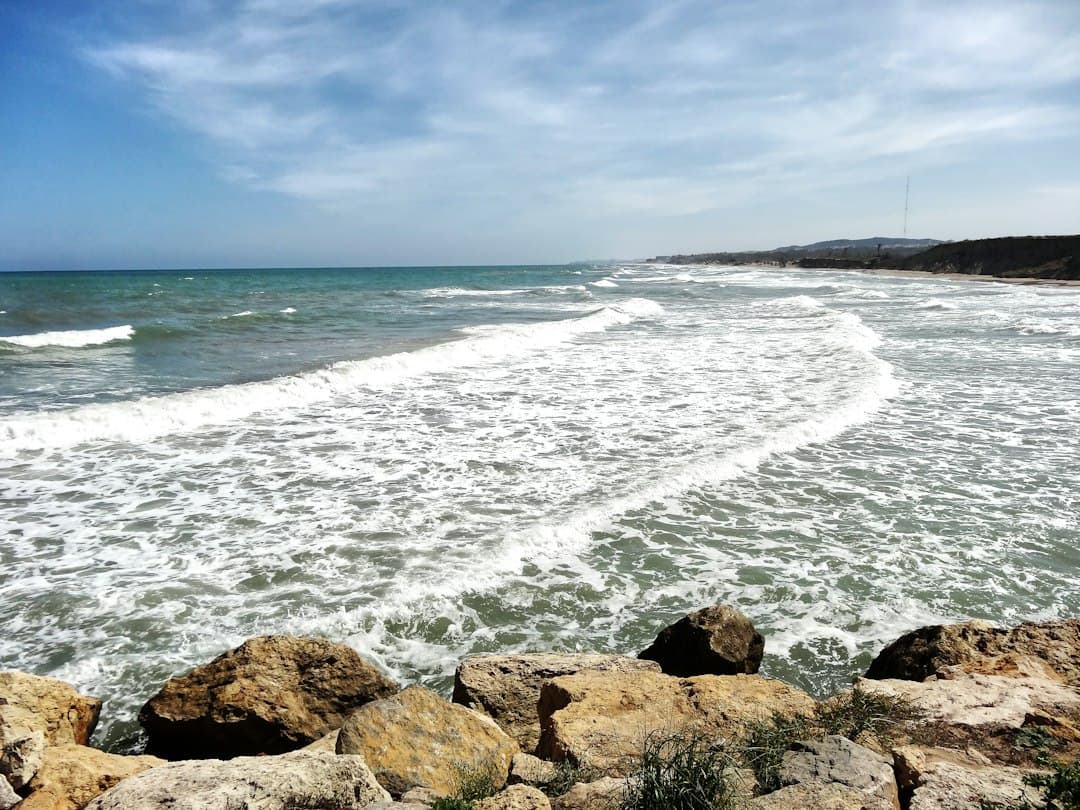
Guardamar del Segura’s atmosphere is shaped by wide space, sea air, dunes, pine shade, and recovered history. It often feels less like a crowded resort and more like a town where landscape is the main attraction: 11 km of fine sandy beaches, a huge dune-and-pine system, archaeological remains literally hidden in nature, and a calm, compact center.
The “signature” of Guardamar is not one monument—it’s transition:
- salty open air → pine resin shade → bright dune ridges → back to the sea
- urban streets → a threshold where pavement becomes sand → forest and dunes
- beach horizon openness → enclosed, gentle shade in parks → marshy river-mouth intimacy
This is why many travelers come expecting “beach town” and leave remembering a landscape narrative: dunes that once threatened the town, a reforestation project that transformed everything, and layers of Phoenician/Iberian/Islamic/medieval/modern life stacked in the same coastal strip.
On the ground, the vibe tends to be approachable, unpretentious, and calm. You hear wind, birds, waves, everyday conversation more than loud entertainment. Smells mix: salt, pine resin, warm sand, and “street level Spain” (coffee, bakery air).
The Story of Guardamar del Segura (2,700+ Years in Layers)
Guardamar del Segura sits in the Vega Baja del Segura region at the mouth of the Segura River, close to the Mediterranean—an alignment that has made it a focal point for settlement, defense, and trade for nearly three millennia.
1) Founding and earliest settlements (Phoenician + Iberian)
- The earliest known settlement in the area dates to the 8th century BC, when Phoenician traders established a colony at La Fonteta near the Segura’s mouth.
- Excavations begun in the 1990s revealed one of the best-preserved Phoenician urban settlements in the western Mediterranean, occupied roughly 8th–6th centuries BC.
- La Fonteta had streets, houses, defensive structures, and a harbour-like river access, emphasizing it as a commercial/maritime hub.
- A Roman geographer, Avienius, in Ora Maritima, mentions a Phoenician colony called Herna, believed to correspond to this settlement at the Segura’s mouth.
- Nearby Iberian sites show indigenous settlement and cultural interaction; finds include the Dama de Guardamar (an Iberian sculpture) and other material remains, suggesting coexisting/trading Iberian communities.
2) Roman and Late Antique era
- In the Roman period, the lower Segura region integrated into the Roman provincial system. Guardamar seems to have been minor coastal/agricultural, rather than a major Roman city.
- The area’s fertile alluvial plains and sea access supported agriculture and fishing—a continuity that later tradition emphasizes as long-lasting.
3) Islamic (Moorish / al‑Andalus) period: defense + a unique monastic complex
Guardamar’s most striking medieval remains belong to the Islamic period:
- The settlement was fortified and became strategically important in the coastal defense system of eastern al‑Andalus.
- A crucial monument is the Rábita Califal, a fortified Islamic monastery complex located in dunes near the river mouth, inside today’s Alfonso XIII park.
Rábita Califal key facts:
- Main phase dated to 944 AD, under Umayyad caliph Abd al‑Rahman III.
- Earlier phase: a simpler prayer area in the late 9th century.
- Unique: the only Islamic monastic complex of the Umayyad period in al‑Andalus preserved almost entirely, with around 22–23 cells, each containing an oratory and its own mihrab, organized around two main streets/open corridors.
- Function: a ribāṭ where religious devotees combined spiritual retreat with a defensive role guarding the coast (tensions with rival powers like the Fatimids are mentioned).
- Used into early 11th century, then abandoned.
During the same period:
- The town itself—likely known as Almodóvar—was fortified; the hill later holding the castle became a strongpoint.
4) Christian conquest and medieval Guardamar: founding + castle-town
- Guardamar enters a new phase in the 13th century: Jaime I of Aragon conquered the area around 1264, taking the Islamic fortification on the hill for Alfonso X of Castile.
- Alfonso X “the Wise” formally founded the Christian town of Guardamar in the 1270s, sources placing foundation between 1271 and 1277, under the Fur d’Alacant (Alicante’s charter).
- Repopulated with settlers from Catalan and other Christian territories; Andalusi Muslims remained as well.
- The town developed as a fortified community:
- upper fortress on the hill (Islamic origin, later modified)
- below it, a walled settlement with square, church, and houses.
Castle details:
- Largely dates from the 14th century built on earlier Islamic foundations.
- In 1359, during the War of the Two Pedros, Pedro I “the Cruel” occupied the castle.
5) Early modern era to 19th century: continuity… then catastrophe (1829 earthquake)
- Guardamar remained modest: farmers and fishermen.
- The decisive turning point: earthquake of 23 March 1829:
- medieval town and castle heavily damaged/destroyed.
- earthquake caused hundreds to more than a thousand deaths in the wider area (one of the most tragic events in local history).
- Old hillside medieval core largely abandoned.
- Rebuilt on safer ground with a neoclassical urban plan (straighter streets, regular plots) that still defines the central grid.
- Castle left as a stabilized “ruina consolidada.”
6) Modern era: dunes, reforestation, tourism
- Late 19th and early 20th centuries: advancing dunes threatened town/agriculture.
- A major reforestation project began around 1900 and lasted about 30 years (with a project approved 2 December 1897).
- Over 700 hectares (also cited as about 800 hectares) of dunes: over 600,000 trees planted—mainly pines, plus palms, cypresses, eucalyptus.
- Result: today’s distinctive littoral pine forest, ecological barrier, and recreational space.
- Dunes also preserved major archaeological sites like La Fonteta and the Rábita.
Top Experiences (All Major Attractions + How to Do Them)
This section combines the Geo Agent’s list of 18 attractions with the Historian, Vibe, and Critic insights—history, what it feels like, what reviews say, and how to visit.
1) Castle of Guardamar del Segura (Castillo / Castell)
Geo facts:
- Type: castle
- Rating: 4.1 (user_ratings_total 1661)
- Address: Cerro del, Carrer Castell, 03140 Guardamar del Segura, Alicante, Spain
- Coordinates: 38.0916732, -0.6576992
- Place ID: ChIJ7zasmkesYw0R6sT8DisoIwE
History & significance (deep detail):
- Recognized as a Bien de Interés Cultural (BIC/SCI) since 1985.
- Origins as an Arab citadel, probably 12th century, on a rocky hill about 60–68 m above sea level.
- Earlier occupation: remains from Iron Age, Phoenician, Iberian, Roman periods.
- Christian foundation: Alfonso X credited with creating the castle-town and founding the Christian villa in 1271 on the hill known as El Castell.
- From 1271 until the 1829 earthquakes, the entire town was within the walled precinct.
- War involvement: taken by Jaime I in 1264; taken by Pedro I “el Cruel” in 1359 (War of the Two Pedros).
- 1829 earthquakes: hilltop town and castle almost completely destroyed; population relocated to lower site. The castle remains a ruin (“ruina consolidada”) with ongoing archaeology/partial rehab.
- Modern meaning: described as the “memoria viva de un pueblo” (living memory).
What you’ll see (manage expectations):
- It’s a consolidated ruin: mostly walls, foundations, platforms, viewpoint areas—not a complete fortress.
- Features noted:
- elongated rocky hill, irregular north–south plan (“castillo montano”)
- polygonal upper enclosure
- double polygonal enclosure protected by towers + a modern polygonal bastion (artillery defense)
- curtain walls (some Gothic and modified in 16th century)
- tower bases
- silos cut into rock
- excavated streets/domestic remains of the former walled town
- Views: Mediterranean, dunes/pine forest, Segura river mouth, town below.
How it feels (vibe):
- Dry stone, exposed earth, wind on the hilltop, big panoramic light.
- The climb shifts you from daily streets to a reflective historic height—Guardamar suddenly looks broader and older than street level.
Reviews reality (Critic Agent):
- TripAdvisor snippet: around 160–161 reviews, rating around 3.4/5 (divisive).
- Pros: views, pleasant short walk, “clean, maintained,” sea-side and mountain-side views.
- Cons: expectation mismatch—people expect a substantial castle, but it’s more “walls and a mirador.”
Practical access, tickets, hours (including contradictions):
- Confusion exists:
- Some sources: entry to recovered public space is free and open (“libre y gratuita”).
- Official guided route (“Memories of Sand / Memoria de Arena”) including the castle: €5 regular, €4 reduced (8–18, students up to 25, retirees/pensioners), free under 8 and persons with functional diversity.
- Hours:
- Hilltop treated as open public space with daylight access; no fixed 10:00–20:00 documented.
- Guided route example: Fridays 11:00 in English (other Spanish sessions), with variations (also reported Fridays/Saturdays 10:00 or 11:00 depending on year).
- Best practical approach: treat the castle hill as free self-visit; budget €5/€4 if doing official guided heritage route; check locally.
Access routes:
- On foot from town center via signposted ascent with ramps/stairs through landscaped parkland.
- By road via Santa Ana industrial estate (follow signs up).
2) Parque Alfonso XIII (Dune & Pine Forest Core)
Geo facts:
- Type: park
- Rating: 4.4 (user_ratings_total 1613)
- Address: Ingeniero Mira, s/n, 03140 Guardamar del Segura, Alicante, Spain
- Coordinates: 38.0985938, -0.6493544
- Place ID: ChIJX4Zw36OtYw0RQiVHDav4sMA
Why it matters:
- This is the living evidence of the dune defense/reforestation that “saved” Guardamar.
- Part of the bigger Dunas de Guardamar landscape (800 hectares cited; also 700+ hectares).
What it feels like (Vibe Agent’s strongest signature):
- You move from salty open air into pine shade, then back toward bright dunes and sea.
- Smells: resin, dry pine needles, warm sand, faint salt carried inland.
- Sounds: wind in trees, cicadas in summer, footsteps on soft paths, distant surf.
- Emotional effect: relief and spaciousness—restorative, quiet, unusually “unbuilt.”
Reviews reality:
- Parque Alfonso XIII is listed and reviewed; exact review count not always shown in snippets, but it’s consistently in top clusters with dunes/beach corridors.
Practical info:
- Dunes/forest access is repeatedly described as free.
- Hours not formally ticketed in sources—practically daylight access.
3) Dunas de Guardamar / Guardamar Dunes (multiple mapped entries)
Guardamar’s dunes appear in the Geo list in several “duplicate” place entries—keep them all, because they represent different mapped access points/labels.
3A) Dunas de Guardamar (park)
- Rating: 4.8 (user_ratings_total 5)
- Address: 03140 Guardamar del Segura, Alicante, Spain
- Coordinates: 38.1027874, -0.6492837
- Place ID: ChIJJ9TnVQCtYw0R6Eh1ViIE1fM
3B) Dunas de Guardamar (park)
- Rating: 4.3 (user_ratings_total 3)
- Address: Carrer Alacant, 03140 Guardamar del Segura, Alicante, Spain
- Coordinates: 38.0943756, -0.6530768
- Place ID: ChIJD7ymAEetYw0RrDIKHf-3Pgc
3C) Dunas de Guardamar del Segura (park)
- Rating: 4.6 (user_ratings_total 38)
- Address: C. Ing. Codorníu, 109, 03140 Guardamar del Segura, Alicante, Spain
- Coordinates: 38.0943463, -0.6461032
- Place ID: ChIJHfEOBQCtYw0R3S9V2jt6rVQ
3D) Las dunas (park)
- Rating: 4.4 (user_ratings_total 7)
- Address: Guardamar del Segura, 03140, Alicante, Spain
- Coordinates: 38.1140651, -0.6474993
- Place ID: ChIJN1MalFWtYw0RtGuR5RVtIUg
3E) Guardamar Dunes (hiking area)
- Rating: 4.7 (user_ratings_total 106)
- Address: Urb. Buenavista, 50-122, 03140 Guardamar del Segura, Alicante, Spain
- Coordinates: 38.1231326, -0.6423881
- Place ID: ChIJTWDhKIKtYw0RW5UDRb7Tzyc
3F) Dunas de Guardamar (hiking area)
- Rating: 4.9 (user_ratings_total 12)
- Address: C. Dunas, 03140 Guardamar del Segura, Alicante, Spain
- Coordinates: 38.0987291, -0.6510091
- Place ID: ChIJVeIWIfytYw0RDvPdnV5DMPY
Why the dunes are central (History + meaning):
- Dunes once advanced inland threatening homes/crops.
- “Project for the Defence and Reforestation of the Guardamar Dunes” approved 2 Dec 1897.
- Engineer: Francisco Mira y Botella.
- Scale: about 800 hectares (also over 700 hectares) transformed, with 600,000+ trees planted.
Vibe:
- Dunes are “movement and silence”: wind sound, dry salt smell, vegetation, soft shifting sand.
- Emotional response often awe + calm, with “heroic” backstory: dangerous becomes protected.
Practical:
- Entry is free, no standard fee, no formal hours stated; assume daylight.
Critic Agent warning:
- Environmental: dunes are fragile; stay on paths.
- Not a “tourist trap”; just manage heat/wind, and don’t underestimate distance.
4) Reina Sofía Park (Parque Reina Sofía)
Geo facts:
- Type: park
- Rating: 4.5 (user_ratings_total 12022)
- Address: Av. dels Pins, s/n, 03140 Guardamar del Segura, Alicante, Spain
- Coordinates: 38.0892361, -0.6506803
- Place ID: ChIJT2JkhUSsYw0RPzLU5Bzvj94
What it is:
- Big free public park in the center, close to pine forest and beach.
- Inaugurated 1991.
- Size: 70,000 m² (about 17 acres).
What you’ll see (high detail):
- Pine forest park with mature/“century-old” pines; rugged natural terrain, dirt paths.
- Ponds/small lakes with ducks, geese, turtles; cascades/waterfalls; small bridges.
- Free-roaming peacocks (signature feature); squirrels and birds.
- Large children’s playground:
- swings, slides, seesaws
- climbing structures (incl. pyramid)
- small zip line (tirolina)
- zones for different ages
- Board-game tables with markings for parchís, chess, draughts, tic-tac-toe (tres en raya).
- Small open-air theatre/amphitheatre for performances/events.
- Picnic tables, petanque court, informal play spaces.
- Services: cafeteria, public toilets, park amenities.
Vibe:
- Shaded, soft, reflective; water sounds, ducks; gentle enclosure compared to open dunes.
- After beach brightness, it feels like cool calm without losing “natural Guardamar.”
Reviews reality (it’s the standout):
- Critic Agent: ranked #1; ~632 TripAdvisor reviews (snippet), very positive.
- Why people love it: “best place in Guardamar to have a walk,” animals, waterfalls, ponds, playground; especially good in summer heat for shade.
Practical:
- Free entry (explicit in multiple sources).
- Hours:
- Travel listings: open 24 hours, 7 days (TripAdvisor snippet “12:00 AM–11:59 PM”; Spain-info says open 24 hours).
- Other sources say “daylight hours,” but the dominant listing treats it as 24/7.
- Best use: day to evening for safety and to enjoy services.
5) Archaeological Museum of Guardamar del Segura (MAG)
Geo facts:
- Type: tourist_attraction
- Rating: 4.5 (user_ratings_total 283)
- Address: Carrer Colon, 60, 03140 Guardamar del Segura, Alicante, Spain
- Coordinates: 38.0924402, -0.6540593
- Place ID: ChIJidplBUasYw0RCbCFAe6pQsw
What it is (and why it’s worth your time):
- Local archaeological, ethnological, paleontological museum in the Casa de Cultura, Calle/Carrer Colón 60.
- Displays human occupation from Pliocene/Pleistocene, through Paleolithic (~300,000 years ago evidence mentioned), Phoenician, Iberian, Roman, medieval, to modern era.
- Holds 250+ pieces, retracing Guardamar history from Prehistory to present.
Foundation dates (contradictory but preserved):
- Inaugurated 1987 (one source).
- Current museum project inaugurated 13 July 1990, recognized as museum in 1993 (official tourism article).
- Interpreted as a late-1980s installation formalized/reorganized 1990–93.
Exhibits and layout:
- Ground floor of Casa de Cultura; includes “Sala 0” for earliest phases.
- Geological/paleontological section (Pliocene/Pleistocene context).
- Prehistory/Protohistory: Paleolithic, Neolithic, Bronze Age.
- Phoenician colonization (La Fonteta).
- Iberian culture (ceramics, sculpture, everyday objects).
- Roman and later periods.
- Ethnology section: traditional life objects, agriculture/crafts/domestic culture.
Key link: Cabezo Lucero
- Dama de Guardamar / Dama de Cabezo Lucero: found 22 Sept 1987, late 5th–early 4th c. BC, comparable to Dama de Elche; exhibited in Sala 2 (museum mention).
Reviews reality:
- Critic Agent: ~27 TripAdvisor reviews, rating around 4.3/5—small volume but liked.
Practical info (including variations):
- Address: Calle/Carrer Colón 60.
- Phones cited: 965 728 610 and 96 672 71 66.
- Email: magmuseo@gmail.com.
- Website referenced as magmuseo / magmuseoguardamar (URL not reproduced).
Opening hours (multiple conflicting schedules preserved):
- Many sources: Tuesday–Saturday open; Monday closed.
- Seasonal pattern (directory):
- Winter: Tue–Sat 10:30–14:30 & 17:30–20:30
- Summer (1 Jul–15 Sep): Tue–Sat 11:00–14:30 & 18:00–21:30
- Another tourism page (2021 data): Tue–Sat 11:00–14:30 & 17:30–20:30, Sunday 10:00–14:30, Monday closed.
- Museum website simplified schedule:
- Mon–Fri 10:00–20:00
- Sat 10:30–14:30
- Closed Sundays & public holidays
- Another listing: Tue–Sat 11:00–14:30 & 17:00–20:30, closed Mon/Sun.
- Practical recommendation from sources: assume Monday closed; plan Tue–Sat late morning/late afternoon; verify close to visit.
Tickets (also conflicting but preserved):
- Ordinary entrance: €1 (sometimes combined ticket MAG + Casa Museo Ingeniero Mira).
- Some mention entry is free; alongside mention of a €1 ticket that allows Casa Museo access too.
- Guided visits: €3 per person (group guided visits also €3).
- Practical: expect free or €1; guided around €3; verify.
6) Casa Museo Ingeniero Mira (Casa Forestal / Tourist Info)
What it is:
- Small museum dedicated to engineer Francisco Mira y Botella, who led the dune reforestation that saved Guardamar.
- Housed in his former residence (Casa Forestal), now also a tourist information office.
History details:
- Built in 1906 as residence/workplace for forest engineer and guards.
- Dedicated to Mira’s figure + the history of dune repopulation.
- Recently remodeled and reopened (“new Casa-Museo”), with reform making it more authentic and better interpreting original spaces.
Architecture details:
- Built following local traditional models, with:
- neoclassical façade
- modernist elements in some carpentry + main staircase
- Internal division:
- Chief engineer zone: two bedrooms, hall/receiving room, office, dining room, kitchen, pantry on ground floor.
- Forest guards zone.
Exhibits:
- Photographic documentation, furniture, objects related to reforestation.
- Panels/videos/images telling technical + human story of dune fixation and pine forest creation.
- Some descriptions mention a copy of the Iberian bust Dama de Guardamar as part of broader narrative.
- Because it’s also tourist info, you can pick up maps and updates here.
Practical info (addresses preserved):
- Address reported as Plaza/Plaça de la Constitució 7 and also Carrer Miguel Hernández 2—same central area.
- Telephone: +34 965 724 488 / 965 72 44 88.
Opening hours (conflicting schedules preserved):
- Museum site: Mon–Sat 10:00–14:00, closed Sundays and holidays.
- Murciatoday seasonal:
- Winter (16 Sep–30 Jun): Mon–Sat 10:00–15:00 & 17:00–19:00
- Summer (1 Jul–15 Sep): Mon–Sat 10:00–14:30 & 18:00–21:00
- 2021 program lists free visit hours:
- Mon–Sat 10:00–14:00
- Sundays 10:00–14:30
- Best estimate: Mon–Sat 10:00–14:00, Sundays often closed/limited; verify.
Tickets:
- Multiple sources: €1 combined entry for Casa Museo + MAG.
- Tripadvisor reviewers mention about €1.
- No clear 2024/25 decree; assume ~€1, possible free days.
7) La Fonteta (Phoenician port-city archaeological site)
Geo listing (as “Jaciment arqueològic de la Fonteta”):
- Type: historical_landmark
- Rating: 4.8 (user_ratings_total 41)
- Address: 482X+JW, 03140, Alicante, Spain
- Coordinates: 38.1013804, -0.6504826
- Place ID: ChIJL5T98o-tYw0R6R9BdJgTx5E
Why it matters:
- Phoenician city founded 8th–6th centuries BC, a major port-city site among dunes and pine forest of Alfonso XIII Park near Segura mouth.
- Protected as Bien de Interés Cultural.
- Excavations show streets, domestic buildings, defensive structures; role as river-sea trade link.
Status warning (important):
- Regional tourism portal states La Fonteta is currently closed due to restoration work, expected to reopen after completion.
- This is a key “check before you go” item.
Tickets (two modes):
- Guided routes (Memoria de Arena):
- €5 general, €4 reduced, free under 8 + functional diversity.
- Some sources mention free access when open with optional guided tours (€4–€5).
- Given restoration closure + controlled access emphasis: safest assumption is guided tour pricing.
Hours (indicative, variable, preserved):
- Reported: Wed–Fri 09:00–14:30, Sat–Sun 10:00–14:00.
- Another: Tue–Sat 09:00–14:30, free entrance, guided Sat 11:00 small fee.
- Tours:
- Fridays English 10:00 or 11:00; Saturdays Spanish 10:00 or 11:00, ~2 hours.
- Always verify due to restoration and seasonal shifts.
Vibe:
- Not “grand ruins”—it’s contrast: pale sand, scrub, coastal wind, quiet.
- Emotional: curiosity, discovery; archaeology and ecology overlap.
8) Rábita Califal (Rábita Califal de las Dunas de Guardamar)
Geo listing (“Rábita Califal”):
- Type: historical_landmark
- Rating: 4.6 (user_ratings_total 89)
- Address: Parque Alfonso XIII, Partida de la Fonteta LIC Dunes de Guardamar, Carrer la Fonteta, 03140 Guardamar del Segura, Alicante, Spain
- Coordinates: 38.1019698, -0.6508769
- Place ID: ChIJi-buK4etYw0RypKEvTWwey0
What makes it exceptional:
- 10th-century fortified Islamic monastery (ribat), considered:
- first ribat identified in Spain
- only Umayyad Andalusi Islamic monastic complex preserved almost intact in the western Islamic world
- Dated by foundation slab to 944.
- Occupied ~944 to early 11th century; earlier ribat beneath from late 9th/early 10th.
Discovery & excavations (detailed):
- Detected late 19th century by engineer Francisco Mira y Botella during dune reforestation.
- Excavations 1984–1992 led by Rafael Azuar, documented about two thirds of complex.
- 1996–1999 continued with Casa de Velázquez + University of Alicante, exploring protohistoric layers beneath.
Architecture (high detail):
- Three parallel building bodies around central sacred area.
- Four commemorative mosques facing a large community mosque built over qibla wall of earlier musallá.
- Access via reception zone alternating rooms for pilgrims and mihrab cells.
- 22–23 cells/oratories, each with mihrab, along two main streets.
- Functions: religious devotion, hospitality to pilgrims/travelers, defensive coastal role.
Practical (preserved data + inference markers):
- Ticketing:
- One source says general entry to site is free during ordinary opening.
- Guided visits Saturdays at 11:00 price ~€4–€5.
- Hours (source says):
- Tue–Sat 09:00–14:30 free access.
- Guided Saturdays 11:00 paid.
- Sunday/holiday not clearly specified; Monday likely closed (inferred but stated as inference).
- Advice: wear comfortable shoes for sand; bring water, sun protection; confirm access method and schedule.
Vibe:
- Quiet, contemplative, embedded in dunes; wind, scrub, sand, minimal soundscape.
- Feels like a “secret” preserved by the landscape.
9) Cabezo Lucero (Iberian settlement + necropolis; Dama de Guardamar origin)
Key facts:
- Iberian archaeological site (settlement + necropolis), 6th–3rd centuries BC.
- Between Guardamar and Rojales on right bank of Segura River.
- Necropolis ~2,500 m²; intense use around 400–370 BC.
- Famous find: Dama de Guardamar / Dama de Cabezo Lucero discovered 22 Sept 1987, dated late 5th–early 4th c. BC.
What you see:
- Fortification walls; square tower footprint; houses/street plan; necropolis terrain; interpretive signage (sculptures not in situ).
- Views over Segura river valley and former lagoon/albufera.
Practical:
- Outdoor site likely free access/daylight; guided visits possible via tourist office (fees not clearly listed).
- Best paired with MAG museum where Dama and sculptures are displayed.
- MAG schedule listed in one directory: Mon closed; Tue–Sat 11:00–14:30 & 17:00–20:30, Sun closed.
10) Cabezo Pequeño del Estaño / Yacimiento del Cabezo del Estaño (Phoenician fortified settlement)
Why it’s special (big claims preserved):
- Early Iron Age Phoenician fortified settlement c. 780–650 BCE.
- Considered one of the most important colonial enclaves on lower Segura.
- Only known Phoenician casemate-walled town in Iberian Peninsula.
- Evidence of a major earthquake around 730–740 BCE, described as the first archaeologically documented earthquake affecting an inhabited area in Spain.
- Site size ~1.1 ha, previously misread as a small fort; now seen as planned urban nucleus with orthogonal organization.
Architecture and finds:
- Located on spur-like hill ~25 m above sea level; about 2 km west of Guardamar center.
- Casemate walls with compartments; southern bastion; western casemates.
- Oriental-type domestic architecture.
- Metallurgical workshop excavated 2015–2017:
- circular-plan building
- furnace, workbench, tools
- galena argentífera for silver processing
- workshop phase ~700–650 BCE
- Material culture includes imported Phoenician goods + indigenous Late Bronze/proto-Iberian items.
Practical (uncertain; preserved as such):
- No explicit ticket prices in sources; inferred likely free open-air access; guided tours may be low fee (~2–5€) but marked as inference.
- Opening hours not specified; likely daylight; guided tours have schedules not provided.
- Access via right bank near Urbanización El Edén, via cañada de los Estanys, short walk uphill; uneven/exposed terrain—bring water and sun protection.
11) Iglesia de San Jaime Apóstol (Parish Church)
Why it matters:
- 19th-century church built after 1829 earthquakes, symbol of rebirth.
- Previous temples: one built 1724 replacing 14th-century church.
- Designed by engineer José Agustín de Larramendi, also responsible for new Guardamar’s urban plan.
- Construction began 1845; consecrated 1892; completed 1910 (long phased build).
- Designed with seismic safety in mind (“calculated to withstand hypothetical new seismic movements”).
- Spanish Civil War: attempted burning July 1936; building saved but artworks, archive, furnishings destroyed; used as guard post, storehouse, soldiers’ kitchen, parking.
- 1960s reforms: bell tower extension; exterior rendering covering original stone façade.
Architecture:
- Neoclassical, three naves, Latin cross plan, simple lines.
- Central location on Plaza de la Constitución; role in festivals, notably Moros y Cristianos honoring San Jaime.
Practical (preserved schedules):
- No entrance fee mentioned; implied free.
- Mass times (two source patterns):
- Directory: Sunday masses 9:00, 11:00, 12:00, 19:00, 20:00; weekday 9:00, 19:00, 20:00.
- Another: Mon–Sat mass 20:00; Sunday 09:00, 11:00, 20:00.
- Visiting hours (explicit listing):
- Mon 19:15–20:30
- Tue 19:15–20:30
- Wed 19:15–20:30
- Thu 19:00–20:30
- Fri 19:15–20:30
- Sat 19:15–20:30
- Sun 09:00–10:00; 11:00–12:00; 19:15–21:00
- Tourism site says open Mon–Sun from 09:00 onwards (no close time).
- Advice: aim for morning windows or evening access; confirm with parish/tourist office.
12) Torreta de los Americanos (Estación Radio / Radionaval de Guardamar)
What it is:
- Giant military radio antenna mast (guyed mast), Cold War era.
- Built around 1962 (some sources: 1963–65 works).
- Built by US Navy under 1953 Spain–US agreements (Franco/Eisenhower).
- Operated by US Navy until early 1990s; after Gulf War (1991) became fully Spanish Navy (Campamento Santa Ana), guarded by Spanish Marines.
Function:
- Transmits orders/messages to submerged submarines using low frequency (LF).
- Key military comms infrastructure for Spanish Navy and maritime traffic control.
Records/size (conflicting heights preserved):
- Height cited 370–380 m (370, 365, 380 mentioned; installation states 380 m).
- Considered tallest structure in Iberian Peninsula and EU; tallest military structure in Europe.
- Located on loma of El Moncayo; coordinates approx 38.07167 N, -0.66444 W.
- Visual: ultra-thin mast, multiple cable levels, fenced perimeter, military signage.
Visitor reality (warning):
- Active military installation; generally closed to public.
- Some rare authorized guided visits occurred “for the first time” breaking secrecy, but not a regular tourist program.
- No standard tickets/prices/hours for tourists; best treated as landscape landmark to view from outside; respect security and signage.
Hidden Gems & “Worth It If You’re Curious” Stops
Here we include the remaining Geo Agent items (plus lesser-discussed places in other reports) and expand what they are good for—especially if you want variety beyond beach + dunes + main park.
1) beach la roqueta
Geo facts:
- Type: tourist_attraction
- Rating: 5.0 (user_ratings_total 2)
- Address: Av. de la Libertad, 61, 03140 Guardamar del Segura, Alicante, Spain
- Coordinates: 38.0785361, -0.6477317
- Place ID: ChIJC55tHACtYw0R85HSnKMisqI
Very small review volume but perfect score in the map listing. Treat it as a micro-target: if you’re staying nearby, use it as an easy “local beach entry point” rather than a headline destination.
2) Playa del Campo
Geo facts:
- Type: city_park (mapped as park-like)
- Rating: 4.7 (user_ratings_total 556)
- Address: 03140 Guardamar del Segura, Alicante, Spain
- Coordinates: 38.0556791, -0.6506128
- Place ID: ChIJcZzjMY-rYw0RJ-DDV2EYNpc
Critic Agent: shows up with about 74 reviews in one snippet and strong rating around 4.5/5 (note: different platforms/counts).
This is one of those “less discussed than main beaches but strongly liked by those who go” places—good if you want a variation day.
3) Far de Guardamar (Lighthouse area / river-edge atmosphere)
Geo facts:
- Type: tourist_attraction
- Rating: 4.5 (user_ratings_total 117)
- Address: 4966+QX, Alicante, Spain
- Coordinates: 38.1119756, -0.6375943
- Place ID: ChIJOy9sSQCtYw0RTCzKZwsLoB0
The Vibe Agent emphasizes a small red lighthouse near river mouth/marina area—quiet, boundary-marker mood, photogenic “edge conditions.”
4) Foto Park
Geo facts:
- Type: park
- Rating: 4.3 (user_ratings_total 367)
- Address: Av. de Cervantes, 124, 03140 Guardamar del Segura, Alicante, Spain
- Coordinates: 38.0786705, -0.6510137
- Place ID: ChIJr_wR52isYw0R5zPtW7GlVX4
Useful as an urban green pause point and a “walk connector” if you’re moving between beach access and town center.
5) Plaza Porticada
Geo facts:
- Type: park
- Rating: 4.2 (user_ratings_total 536)
- Address: Prta de Tripoli, 5, 03140 Guardamar del Segura, Alicante, Spain
- Coordinates: 38.0843258, -0.6504801
- Place ID: ChIJ2XU67kKsYw0RdcpTx7f28mM
Treat it as a “town rhythm” space: a square for pauses, coffees, and the lived-in feel of Guardamar’s center.
6) Plaça Jaume II
Geo facts:
- Type: historical_landmark
- Rating: 4.1 (user_ratings_total 59)
- Address: Plaça Jaume II, 03140 Guardamar del Segura, Alicante, Spain
- Coordinates: 38.0844595, -0.6546737
- Place ID: ChIJh1GIl0GsYw0Rll0h-Y0LSvI
A smaller landmark stop—good to include in a self-guided “old town grid + castle shadow” walk.
7) Casa de Cultura (Cultural hub + MAG inside)
Historian detail recap:
- Built 1988.
- Address: Calle Colón 60.
- Phone: 96 572 86 10.
- Email: culturaguardamar@gmail.com.
- Admin hours: 08:00–15:00 (one source).
- Exhibition hall hours (2026 notice): Mon–Fri 08:00–20:00, Sat 10:30–14:30, Sun closed.
- No standard building admission fee; activities may be free or ticketed.
- Tickets sold here for guided heritage routes: typically €5 general / €4 reduced / free under 8 + disabilities, and some shows €8 (event pricing).
8) Acueducto de la Font de la Vídua (low-documentation heritage)
This is included with explicit uncertainty preserved:
- Little documented online; likely minor local hydraulic work linked to traditional irrigation/water supply (late medieval–19th c typical for such structures in region).
- Likely features (by analogy): small masonry arches, narrow water channel (specus), integration with a spring/fountain (Font), possibly linked to ponds/balsas and an aljibe/cistern.
- No evidence of ticketing or fixed schedule; likely free outdoor access unless on private/restricted land.
- Only explicit heritage price found in related context: La Senda de la Historia tourist train excursion was €5 when available.
- Recommendation: confirm locally (tourism office/archives/signage).
Culture & Atmosphere: The Sensory Guardamar
This section deliberately leans into the Vibe Agent’s “how it feels” research and anchors it to real places so you can plan experiences, not just visits.
1) The beach-dune-forest “spine” (Guardamar’s signature experience)
Guardamar is often best understood as a coastal corridor of transitions. You can walk through ecosystems without leaving town:
- open sea wind and surf
- dunes: wind-driven silence, dry salt air, soft sand shifting underfoot
- pine forest: resin scent, needle carpet, filtered light, cooler shade
- parks: enclosed calm, water sounds, birds
- river mouth: brackish air, reeds, herons, ducks, mudflats, tidal changeability
This movement is the emotional engine of Guardamar: you’re not just going from A to B—you’re moving through zones that tell a story of survival and adaptation (dune threat → reforestation success → today’s protected landscape).
2) Beaches as “breathing room” (11 km of horizon)
The beaches are repeatedly described as natural rather than overly urbanized—backed by dunes and pine forest rather than dense promenade walls. That creates:
- more wind and horizon
- less commercial noise
- a sense you can “claim a stretch of coast,” even in popular seasons
The sensory palette: salt on skin, hot sand, swimsuit drying in the breeze, steady waves on broad shorelines.
Sunset is singled out as especially powerful here: dunes and pine line silhouette, wide open stage for light; cooler salt smell, softer wind, quieter day, waves more prominent.
3) Reina Sofía Park as the “cool shade counterpoint”
After beach brightness, this park offers a different kind of calm: shaded pine canopy, pond water, birds, the soft murmur of people. It’s restorative and family-friendly rather than dramatic.
4) Castle hill as “wind + perspective + resilience”
Even as ruins, the castle hill gives you an emotional and visual overview: you see the sea, dunes, river mouth, town grid. The mood is solemn/poetic because it represents repeated cycles: built → damaged → rebuilt → remembered.
5) Archaeology in the dunes: “history tucked into landscape”
La Fonteta and the Rábita aren’t isolated museum monuments—they’re embedded in dunes. That creates “quiet authenticity”: wind, sand, scrub, restrained acoustics. Visitors often feel respect and curiosity because the past isn’t “performed”—it’s partly hidden, as if dunes protected it.
6) River mouth + marina: softer maritime calm
The Segura river mouth adds intimacy and ecology: marsh vegetation, birds, brackish air. The marina adds a tidy contemporary layer without dominating—more strolling and watching than nightlife.
Food & Local Experiences (Markets, Walks, Daily Rhythms)
The agents’ data is stronger on market/promenade/parks than on specific named restaurants, so this section focuses on local experiences that reliably shape your days, plus the market and the town’s walking culture.
1) Mercadillo Campo de Guardamar del Segura (weekly market experience)
Critic Agent review facts:
- Appears among the most reviewed experiences: ~121 reviews, rating around 4.1/5.
Why you should go (even if you “don’t do markets”):
- Spanish town markets are culture you can walk through: produce, clothing, household goods, browsing rhythm, crowd flow.
- Pros: variety, atmosphere, the “real life” of Guardamar rather than a staged attraction.
- Cons: heat, crowds, repetitive souvenir items, variable quality; some stalls may be tourist-oriented.
- Caution: normal market vigilance—wallets, pricing clarity, impulse buys.
2) Paseo Marítimo (promenade walking + sunset routine)
Critic Agent facts:
- Paseo Marítimo de Guardamar has ~101 reviews.
It’s connective tissue more than a standalone destination. Use it for:
- morning coffee + sea air
- sunset walks (especially when beaches are cinematic)
- easy access to beach entries and casual dining zones
3) “Guardamar day design”: slow rhythm template
Because Guardamar is landscape-first, many visitors have the best time when they structure days around heat and shade:
- Morning: beach swim/walk while light is soft
- Midday: retreat to shade (Reina Sofía Park, pine forest, museum)
- Afternoon: dunes/forest trails (or siesta, then back out)
- Sunset: beach horizon + promenade social ease
- Evening: town squares (Plaza Porticada / central grid), church square vibe
This rhythm matches what the Vibe Agent describes: a town designed for breathing, walking, lingering.
Practical Tips & Warnings (Tickets, Closures, Heat, Expectations)
This section preserves all the concrete practical information and “real-world” review warnings—especially where sources conflict.
1) The biggest practical warning: La Fonteta may be closed for restoration
- Regional portal: currently closed due to restoration, reopen after works.
- Plan B: Rábita + dunes + MAG museum + castle hill viewpoint still make a complete day.
- Always check tourist office / municipal cultural agenda close to your visit.
2) Expect conflicting ticket information (and plan accordingly)
Guardamar has multiple “free public space” resources plus “paid guided routes.” Many confusions are explained by that split.
Castle tickets
- Self-guided access often described as free, no booth.
- Guided route including castle: €5 regular / €4 reduced / free under 8 + functional diversity.
MAG museum tickets
- Reported as free in some listings.
- Also reported as €1 general tariff; sometimes €1 combined ticket MAG + Casa Museo Ingeniero Mira.
- Guided visits/groups: €3.
Rábita tickets
- Reported free general entry during ordinary opening.
- Guided Saturday visits: ~€4–€5.
Casa Museo Ingeniero Mira tickets
- Often €1, usually combined with MAG.
Practical approach:
Budget “symbolic culture spend” of €0–€5 per stop, and a likely €5 if you do an official guided heritage route. Bring cash and/or card; confirm at tourist office.
3) Expect conflicting opening hours (and treat them as “check before you go”)
- Castle hill: no fixed published timetable; treated like open space (daylight).
- MAG: multiple schedules; common pattern Tue–Sat with split hours; museum website claims broader weekday hours.
- Casa Museo: Mon–Sat 10:00–14:00 common; seasonal extended hours also reported.
- Church: visiting windows around mass times; explicit evening windows most reliable.
- Fonteta/Rábita complex: morning-only patterns common; guided tours Fri/Sat at 10:00 or 11:00 depending on year.
4) The most important “expectation management” warning: the castle is divisive
Critic Agent summary:
- Castle is worth it for views and context, but can disappoint if you expect a fully developed fortress.
- Treat as: scenic walk + archaeology + viewpoint + “living memory,” not a grand castle tour.
5) Heat, wind, and distance: your real “safety” issues are environmental
- Dunes and trails are exposed: bring water, sun protection, and don’t underestimate distance.
- Wind can shape beach comfort; pine forest provides shade and relief.
- Stay on marked paths in dunes to protect fragile ecosystems.
6) Torreta de los Americanos: do not attempt casual entry
- Active military installation; access restricted.
- View from outside; do not approach fences/signage.
- No public ticket booth/hours; any open days are exceptional and institutionally organized.
Conclusion: How to Leave Guardamar Feeling You “Got It”
Guardamar del Segura rewards travelers who do more than “pick attractions.” It’s a place you understand through layering:
- the openness of 11 km of beaches
- the engineered miracle of dunes stabilized by 600,000+ trees
- the quiet wonder of Phoenician and Islamic archaeology embedded in sand
- the resilience symbolized by a castle-town destroyed in 1829 and rebuilt below
- the calm daily rhythm of parks, promenade, squares, and lived-in streets
If you want the “complete Guardamar” in a single trip, make sure you do three things:
- Walk a beach → dune → pine forest transition (at least once, slowly).
- Visit at least one heritage layer with interpretation (MAG museum or a guided route).
- Catch sunset on the wide horizon—because that’s when Guardamar’s spaciousness becomes emotional rather than just scenic.
Appendix: The Geo Agent’s 18 Attractions (Full List Preserved)
- Castle of Guardamar del Segura (castle) — 4.1, 1661 ratings
- Cerro del, Carrer Castell, 03140 Guardamar del Segura
- 38.0916732, -0.6576992
- Parque Alfonso XIII (park) — 4.4, 1613
- Ingeniero Mira, s/n, 03140 Guardamar del Segura
- 38.0985938, -0.6493544
- Reina Sofía Park (park) — 4.5, 12022
- Av. dels Pins, s/n, 03140 Guardamar del Segura
- 38.0892361, -0.6506803
- Archeological Museum of Guardamar del Segura (tourist_attraction) — 4.5, 283
- Carrer Colon, 60, 03140 Guardamar del Segura
- 38.0924402, -0.6540593
- beach la roqueta (tourist_attraction) — 5.0, 2
- Av. de la Libertad, 61, 03140 Guardamar del Segura
- 38.0785361, -0.6477317
- Dunas de Guardamar (park) — 4.8, 5
- 03140 Guardamar del Segura
- 38.1027874, -0.6492837
- Rábita Califal (historical_landmark) — 4.6, 89
- Parque Alfonso XIII, Partida de la Fonteta… Carrer la Fonteta
- 38.1019698, -0.6508769
- Playa del Campo (city_park) — 4.7, 556
- 03140 Guardamar del Segura
- 38.0556791, -0.6506128
- Far de Guardamar (tourist_attraction) — 4.5, 117
- 4966+QX, Alicante
- 38.1119756, -0.6375943
- Dunas de Guardamar (park) — 4.3, 3
- Carrer Alacant, 03140 Guardamar del Segura
- 38.0943756, -0.6530768
- Dunas de Guardamar del Segura (park) — 4.6, 38
- C. Ing. Codorníu, 109, 03140 Guardamar del Segura
- 38.0943463, -0.6461032
- Foto Park (park) — 4.3, 367
- Av. de Cervantes, 124, 03140 Guardamar del Segura
- 38.0786705, -0.6510137
- Plaza Porticada (park) — 4.2, 536
- Prta de Tripoli, 5, 03140 Guardamar del Segura
- 38.0843258, -0.6504801
- Las dunas (park) — 4.4, 7
- Guardamar del Segura, 03140
- 38.1140651, -0.6474993
- Guardamar Dunes (hiking_area) — 4.7, 106
- Urb. Buenavista, 50-122, 03140 Guardamar del Segura
- 38.1231326, -0.6423881
- Plaça Jaume II (historical_landmark) — 4.1, 59
- Plaça Jaume II, 03140 Guardamar del Segura
- 38.0844595, -0.6546737
- Jaciment arqueològic de la Fonteta (historical_landmark) — 4.8, 41
- 482X+JW, 03140
- 38.1013804, -0.6504826
- Dunas de Guardamar (hiking_area) — 4.9, 12
- C. Dunas, 03140 Guardamar del Segura
- 38.0987291, -0.6510091
If you tell me your travel dates, whether you have a car, and if you’re staying near the beach or in the center, I can turn this into a day-by-day plan that matches the reported guided tour times (Fri/Sat heritage routes), avoids likely closures, and sequences the outdoors for heat/shade.