Keszthely Travel Guide: The Complete Pre-Trip Guide for Travelers Who Have Already Booked
Keszthely is one of western Hungary’s most rewarding small cities: an elegant Lake Balaton resort town with an old-world soul, a palace city shaped by the Festetics family, a museum town full of quirky collections, a lakeside holiday base with beaches and promenades, and one of the oldest continuously inhabited places in the region.
If you have already booked your trip, this guide is designed to help you arrive prepared: what to prioritize, how the city fits together, which attractions are genuinely essential, which are niche or “tourist-curiosity” stops, where to slow down, what to watch out for, and how to plan your days around opening hours, ticket structures, crowds, and the rhythm of Lake Balaton.
Keszthely rewards travelers who understand its dual personality. On one side, it is refined: Baroque and neo-Baroque palace wings, aristocratic libraries, formal gardens, Gothic frescoes, literary memorials, historic townhouses, and museums dedicated to Lake Balaton, agriculture, carriages, dolls, transport, and local memory. On the other, it is relaxed and summery: shallow lake water, beach snack bars, children playing by the shore, evening promenades, cafés, market stalls, and the slow pace of a Balaton resort.
It is not a huge city, and that is part of its charm. You can walk between the palace, the main square, the historic pedestrian street, Helikon Park, the Balaton Museum, and the lakefront. Yet the historical depth is enormous: prehistoric settlement, Roman fortifications at Fenékpuszta, post-Roman Christian continuity known as the Keszthely culture, medieval market-town development, Ottoman-era fortification, aristocratic transformation under the Festetics family, railway-era tourism, and modern lakeside leisure.
This is a place where a single day can be excellent, but two or three days are even better if you enjoy museums, gardens, slow walks, and lake time.
Quick Orientation: What Kind of Destination Is Keszthely?
Keszthely sits on the western shore of Lake Balaton, Hungary’s great inland lake. It is often treated as a center of West Balaton and is commonly paired with nearby Hévíz, Gyenesdiás, Kis-Balaton, and other Balaton-region destinations.
The atmosphere is repeatedly described by travelers as:
- Elegant, because of Festetics Palace and the aristocratic heritage of the town.
- Relaxed, because of Lake Balaton, beaches, parks, and promenades.
- Walkable, because the main sights cluster around the palace, Fő tér, Kossuth Lajos Street, Helikon Park, the Balaton Museum, and the lakeshore.
- Cultured, because of the palace library, Balaton Museum, Georgikon agricultural heritage, Gothic church frescoes, literary Helikon traditions, and numerous specialty museums.
- Quirky, because Keszthely has many small private or themed museums: Doll Museum, Nostalgia Museum, Historical Panopticon, Horrorarium and Torture Museum, Snail Parliament, House of Stoves, Marzipan Museum, and even a Medieval Erotic Wax Museum.
- Family-friendly, thanks to beaches, animal parks, parks, playgrounds, and outdoor viewpoints.
- Seasonal, because summer brings beaches, crowds, longer hours, and a more resort-like feel, while shoulder seasons are quieter and often better for sightseeing.
Traveler sentiment is strongly positive overall. Reviews commonly say Keszthely is absolutely worth a day trip or a one- to two-night stay, especially for travelers interested in history, Lake Balaton, palace architecture, and offbeat museums. The main complaints are not about safety or scams, but about peak-season crowds, confusing or layered museum ticketing, limited English interpretation in some museums, and some small museums or lakefront eateries feeling overpriced for what they offer.
Essential Keszthely Map of Attractions
The following attractions were identified in location research, with ratings, review counts, and addresses where available. Some names below appear in Polish or Hungarian forms depending on the source; both are useful when searching maps.
| Attraction | Type | Rating | Reviews | Address / Location |
|---|---|---|---|---|
| Festetics Palace / Pałac Festeticsów | Palace / museum complex | 4.7 | 20,322 | Keszthely, Kastély u. 1, 8360 Hungary |
| Helikon Park / Helikonpark | Public park | 4.6 | 1,224 | Keszthely, park utca 15, 8360 Hungary |
| Kis-Balaton Visitor Centre / Kis-Balaton Látogatóközpont | Nature visitor center | 4.5 | 1,236 | Keszthely, Tőzegtelep 5, 8360 Hungary |
| Horrorarium and Torture Museum | Specialty museum | 3.5 | 435 | Keszthely, Bakacs u. 2, 8360 Hungary |
| Historical Panopticon / Történelmi panoptikum | Wax/panopticon museum | 4.4 | 76 | Keszthely, Kossuth Lajos u. 11/a, 8360 Hungary |
| Balaton Museum / Muzeum Balatonu / Balatoni Múzeum | Regional museum | 4.6 | 1,382 | Keszthely, Múzeum u. 2, 8360 Hungary |
| Wielkie Pole / Nagymező area | Outdoor recreation / nature area | 4.8 | 631 | Gyenesdiás, 8315 Hungary |
| Amazon House | Visitor center / museum | 4.7 | 470 | Keszthely, Kastély u. 17–19, 8360 Hungary |
| Keszthely Municipal Beach / Kąpielisko Keszthely / Városi Strand | Beach | 4.4 | 8,761 | Keszthely, 8360 Hungary |
| Padkűi Kilátó / Pad-kövi Lookout | Viewpoint | 4.9 | 263 | Vállus, Pad-kövi kilátó felé, 8316 Hungary |
| Mikus Gyula Promenade / Mikus Gyula sétány | Lakeside promenade | 4.7 | 6,108 | Keszthely, 8360 Hungary |
| Georgikon Manor Museum / Magyar Mezőgazdasági Múzeum és Könyvtár Georgikon Majortörténeti Kiállítóhely | Agricultural museum | 4.8 | 340 | Keszthely, Bercsényi Miklós u. 65–67, 8360 Hungary |
| Festetics Animal Park / Festetics Állatpark | Animal park | 4.5 | 1,732 | Gyenesdiás, Dornyai Béla út 4, 8315 Hungary |
| HajdúZoo | Zoo / animal attraction | 4.8 | 246 | Keszthely, Hrsz.:055 32, 8360 Hungary |
| Festetics Lookout Tower / Wieża widokowa Festetics / Festetics kilátó | Lookout tower | 4.8 | 1,005 | Gyenesdiás, Festetics kilátó, 8315 Hungary |
| Nostalgia Museum | Specialty museum | 4.5 | 84 | Keszthely, Kossuth Lajos u. 2, 8360 Hungary |
| Our Lady of Hungary Parish Church / Kościół NMP Węgierskiej Pani w Keszthely / Magyarok Nagyasszonya | Church | 4.8 | 736 | Keszthely, Fő tér 5, 8360 Hungary |
Additional attractions and experiences repeatedly mentioned in historical, atmosphere, or review research include:
- Helikon Castle Museum
- Carriage / Coach Museum
- Folk Costume Doll Museum
- Medieval Erotic Wax Museum
- Snail Parliament
- House of Stoves
- Marzipan Museum
- Festetics Mausoleum
- Fenékpuszta Roman Ruins
- Keszthely Main Square / Fő tér
- Holy Trinity Column
- Pethő House / Goldmark House
- Keszthely Market
- Helikon Beach
- Festetics Imre Park
- Keszthely Ferris Wheel / Óriáskerék
The Story of Keszthely: A Deep Historical Overview
Keszthely is not simply a pretty lakeside town. It is one of the oldest continuously inhabited places in western Hungary, with settlement stretching back to prehistory, important Roman-era activity nearby at Fenékpuszta, a distinctive early medieval post-Roman culture, a documented medieval town, and later a major aristocratic estate center under the Festetics family.
Its history is unusually layered for a compact destination. You can move from a Gothic church on the main square to a Baroque palace, from a Roman fortress site to a 20th-century Balaton museum, from a Jewish courtyard synagogue to a literary memorial park, all within or near the town.
Prehistoric and Celtic Roots
The Keszthely region has been inhabited since prehistoric times. Archaeological evidence indicates occupation from the Neolithic onward, followed by traces from the Copper Age, Bronze Age, and Celtic period. By the 4th century BCE, Celts had appeared in the area.
The reason is geography. Keszthely lies on the western shore of Lake Balaton, in a strategically important corridor where routes crossed between the Transdanubian interior and the lake’s southern approaches. The area offered movement, trade, communication, water access, fertile land, and defensible positions. Long before written history, this region mattered.
Roman Keszthely and Fenékpuszta
The Roman period was one of the formative eras of the Keszthely region. Western Transdanubia came under Roman rule in the late 1st century BCE, and by the early Imperial period the area was integrated into the province of Pannonia.
The most important Roman site associated with Keszthely is Fenékpuszta, just south of the modern city. In antiquity, this fortified settlement is associated with Valcum. In the 4th century CE, the Romans built a major fortress here: approximately 15 hectares, about 377 × 358 meters, defended by massive stone walls and 44 towers. It stood at the crossing of major provincial roads, including routes from Aquileia to Aquincum (Óbuda) and from Sopianae (Pécs) to Savaria (Szombathely).
Fenékpuszta was part of the Pannonian frontier-defense system and controlled communications around the southwestern end of Lake Balaton. Excavations have identified at least 22 buildings, including military, religious, and storage structures. Surviving or reconstructed features include:
- A gate complex
- A three-aisled basilica
- A state granary / storage building
- Remains of walls, towers, and other structures
The site was not abandoned immediately after Roman power weakened. Instead, it continued to be occupied and transformed.
The Keszthely Culture: Post-Roman Christian Continuity
One of the most distinctive historical chapters associated with the town is the Keszthely culture, a mixed Romanized, Germanic, Avar, and Christian cultural enclave that developed in the 6th and 7th centuries around Keszthely and northern Lake Balaton.
This culture matters because it shows the survival of Romanized population and Christian traditions after the collapse of Western Roman authority. Archaeology from Fenékpuszta and the surrounding region reveals continuity of settlement, late antique material traditions, and Christian burial customs. This makes the area especially important for understanding cultural change during the Migration Period.
After Roman military withdrawal in the 5th century, the region passed through control by the Huns and later the Eastern Goths. The Gothic king Thiudimer is associated with Fenékpuszta as a seat, highlighting the continued importance of the fortress. Later, the area became part of the Avar realm, with Christian populations—including Germans and Byzantines—settled around the fortress. By around 630, the stronghold was largely abandoned, though parts were reused in the 9th century under the Carolingian Empire. The fort and settlement were probably destroyed in the early 10th century, likely during the period of the Hungarian conquest.
Medieval Keszthely
Keszthely’s first written mention appears in 1247. By then the area had passed through the post-Roman and early Hungarian periods and was part of the medieval Kingdom of Hungary. After the Hungarian conquest, the region became royal property, later shifting among noble families.
Keszthely received market-town status in 1421, a major milestone indicating growing commercial and administrative importance. Medieval Keszthely had two important centers:
- The area around today’s Main Square / Fő tér
- The area around the later Festetics Castle / Palace
The town benefited from its location near Lake Balaton and its role as a regional service center. Its medieval development, however, was affected by later warfare and frontier instability.
One of the most important surviving medieval monuments is the Our Lady of Hungary Parish Church on Fő tér. The church dates to 1386, when it was commissioned by István Laczkfy / Lackfy, Palatine of Hungary, who invited Franciscan friars to settle in Keszthely. Lackfy was executed in 1397 and buried in the church; his marble tombstone remains in the sanctuary wall.
Ottoman-Era Pressure and Fortification
During the Ottoman period, Keszthely’s growth was constrained by military pressure. The parish church and monastery were adapted into a fortified stronghold during the mid-16th century, especially as danger increased after the Battle of Mohács in 1526.
The Italian engineer Giulio Turco is associated with the church’s transformation into a defensive site. The church and monastery complex repelled attacks several times. The Franciscan friars were driven out and returned only in 1723. The building was later reworked in Baroque style after the Turkish wars, while preserving underlying medieval fabric.
The Festetics Era: Keszthely Transformed
A major turning point came in 1739, when Kristóf Festetics acquired the Keszthely estate. The Festetics family became the dominant force in the town’s development, shaping architecture, education, agriculture, culture, and urban life.
Under their patronage, Keszthely transformed from a modest market settlement into an aristocratic and cultural center. The family built and expanded Festetics Palace, supported museums and institutions, founded educational initiatives, influenced the town’s Baroque and later historicist identity, and helped make Keszthely one of the most important towns around Lake Balaton.
The Festetics era gave Keszthely much of its present identity:
- The palace and gardens
- Aristocratic collections
- The Helikon cultural tradition
- The Georgikon agricultural heritage
- Public monuments such as the Holy Trinity Column
- The broader transformation of Keszthely into the “capital” or cultural center of the West Balaton region
Modern Keszthely: Railway, Tourism, Museums, and Lake Life
In the 19th century, modernization accelerated. The Balatonszentgyörgy–Keszthely railway opened in 1888, connecting the town more directly to wider networks. Keszthely’s lakeside resort identity grew, especially with the development of beaches, promenades, and hotels.
Near the lakefront, Hotel Hullám and Hotel Balaton were built in the 1890s as part of monarchy-era resort development. Hotel Hullám opened in summer 1894 and was expanded with tower wings in 1897; Hotel Balaton opened in 1895.
In the 20th century, Keszthely became known for education, culture, and tourism. The palace became the Helikon Palace Museum, officially opened in 1974. The Balaton Museum became the central museum of Lake Balaton’s natural, archaeological, ethnographic, and tourism history. The town center was renewed in 2012, when Fő tér was pedestrianized and paved with white cobblestones. Helikon Park has seen upgrades as recently as spring 2024.
Today, Keszthely’s appeal lies in this combination: historical depth, aristocratic elegance, small-town walkability, lakefront leisure, green parks, family attractions, and unusual museums.
Top Experiences in Keszthely
1. Festetics Palace: Keszthely’s Essential Landmark
Address: Keszthely, Kastély u. 1, 8360
Rating: 4.7 / 20,322 reviews
Typical time needed: 2–3 hours for palace and selected exhibitions; longer if visiting all exhibitions and gardens
Best for: History lovers, architecture fans, palace interiors, gardens, photography, first-time visitors
Review verdict: The one place you should not miss in Keszthely
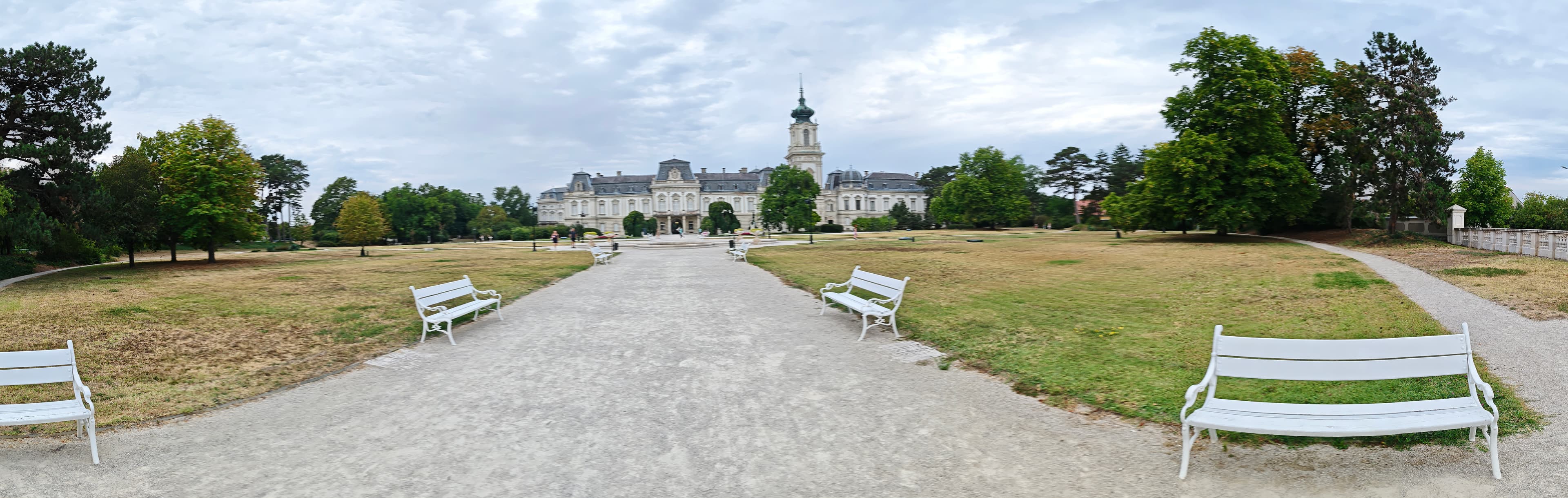
Festetics Palace is the emotional, visual, and historical anchor of Keszthely. It is one of Hungary’s largest and best-preserved aristocratic residences, often compared to a smaller Hungarian Versailles, and one of the three largest historic country houses in the country.
The palace began when Kristóf Festetics acquired the Keszthely estate in 1739 and chose it as the center of his lands. Construction began around 1745, on the foundations of an earlier ruined castle or fortification. The earliest part, the central eastern wing, was completed around 1745–1750 in Baroque style. The original building was a two-storey, U-shaped Baroque palace with 34 rooms.
The palace grew over more than a century:
- 1769–1770: Pál Festetics III enlarged the wings while largely retaining the façade.
- Around 1792: György Festetics I added the southern library wing in late Baroque “Zopf” style.
- 1883–1887: Tasziló Festetics II ordered a major transformation by Viennese architect Viktor Rumpelmayer. The northern wing was demolished and replaced, a central towered section joined old and new wings, and the palace nearly doubled in size. It gained a mansard roof, central heating, plumbing, and lavish Neo-Baroque and Neo-Rococo interiors.
By its final form, the palace had grown to 101 rooms.
What to Look For
The palace combines original Baroque sections with 19th-century Neo-Baroque and Neo-Rococo additions. Look for:
- The broad U-shaped plan and formal courtyard
- Pilasters, balanced window rhythms, stucco decoration, and Baroque symmetry
- The later central tower and more theatrical historicist façade
- The French-inspired mansard roof
- The grand staircase redesigned as a ceremonial space
- State rooms, salons, dining rooms, reception rooms, and private chambers
- Ballrooms and guest suites in the northern wing
- The famous Festetics Library
The library is one of the palace’s great highlights. Built as part of György Festetics I’s cultural project, it symbolizes the family’s intellectual ambition. It contains tens of thousands of volumes and is one of Hungary’s most important surviving aristocratic libraries. The atmosphere is hushed and ceremonial: polished wood, old paper, rare books, and the feeling of aristocratic learning preserved in place.
The palace grounds add another layer. The gardens are scenic, formal, and peaceful, with the mood of a French château softened by Balaton-region greenery. Even visitors who do not enter every exhibition often enjoy walking the grounds and photographing the façade.
Museums and Exhibitions in the Palace Complex
The palace is not just one building. The Helikon Castle Museum complex includes several exhibitions, often ticketed separately or through combined tickets:
- Main palace interiors
- Festetics Library
- Carriage / Coach Museum
- Hunting exhibition
- Model or diorama exhibition
- Amazon House Visitor Center
- Other temporary and thematic exhibitions
This is where some travelers encounter the main practical complication: ticket layering. Reviews are strongly positive, but several visitors warn that the cost rises if you try to see everything. If you are museum-oriented, the full experience may be worthwhile. If you are not, choose the palace interior and one or two themed exhibitions that genuinely interest you.
Practical Information
Typical recent patterns:
- Low season / much of year: Tuesday–Sunday, around 10:00–17:00, Monday closed.
- May–June and September: often daily 10:00–17:00.
- July–August: daily, often 9:00 or 10:00–18:00.
- Some sources mention Wednesday late evening openings in summer, 20:00–23:00.
Recent ticket estimates vary by ticket structure:
- Adult palace + 5 exhibitions: around 7,500 HUF
- Adult palace + 1 exhibition: around 4,600 HUF
- Discounted palace + 5 exhibitions: around 3,750 HUF
- Discounted palace + 1 exhibition: around 2,300 HUF
- Other sources list basic palace tickets around 3,000–3,500 HUF
- Student/senior/youth tickets often around 1,500–1,800 HUF
- Children under 6 are typically free
- National holidays such as 15 March, 20 August, and 23 October may offer free entry in some Hungarian museum contexts
Tip: Arrive before 15:30–16:00 if the palace closes at 17:00. In high season, go early or later in the day to reduce ticket queues and crowding.
Review Reality Check
Visitors consistently praise the architecture, interiors, gardens, and importance of the palace. It is considered the must-see attraction in Keszthely. Criticisms include:
- English signage can be limited or not detailed enough.
- Ticket options can be confusing.
- Seeing every exhibition can feel expensive.
- Summer crowds and ticket-office lines occur.
Even with those caveats, the consensus is strong: Festetics Palace is worth the hype.
2. Helikon Castle Museum: The Palace as a Museum World
The Helikon Castle Museum is housed in Festetics Palace and has operated as an independent palace museum since 1974. It attracts around 200,000 visitors annually and presents the former aristocratic residence along with thematic collections.
The museum makes the palace more than a preserved building. It turns the estate into a world of aristocratic life:
- How the family received guests
- How rooms were furnished
- How elite families traveled
- How hunting and horse culture shaped noble identity
- How libraries expressed power, education, and refinement
What Visitors Like
Reviewers appreciate the diversity. Instead of only walking through salons, you can also explore carriages, hunting displays, models, and related collections. History and culture enthusiasts usually rate it highly.
What Visitors Criticize
The main criticisms overlap with Festetics Palace:
- Ticket complexity
- Cost if buying multiple exhibits
- Some niche displays may not appeal to everyone
- Limited interpretive text, especially for foreign visitors
Best Strategy
If you enjoy museums, plan a half day for the palace complex. If you do not, avoid museum fatigue by choosing:
- Main palace interiors
- Library
- One add-on: Carriage Museum, Amazon House, hunting exhibition, or model exhibition
3. Carriage / Coach Museum: Aristocratic Travel in the Former Stables
Location: Festetics Palace complex, Kastély utca 1
Rating context: One of the important palace add-ons; Kocsimúzeum is reviewed positively but considered niche
Best for: Transport history, aristocratic lifestyle, families, vehicle enthusiasts
The Carriage Museum is housed in the historic stables and associated buildings of the Festetics Palace. It preserves one of the most important collections of historical carriages and sleighs in Central Europe, with more than 50–60 vehicles, including carriages, coaches, sleighs, specialized vehicles, and early automobiles.
The Festetics family was associated with horse breeding and racing, and this exhibition shows the practical and ceremonial side of aristocratic mobility.
What You’ll See
The collection includes:
- Ceremonial and representative coaches
- Everyday carriages and carts
- Sleighs used for winter travel and elite leisure
- Battle cars and sand runners
- Racing-related vehicles and documentation
- Horse-breeding and horse-racing displays
- At least two restored Ford Model T cars, showing the transition from horse-drawn transport to motorized travel
The exhibition is often described as having three sections:
- Carriages and sleighs
- Horse racing and Festetics horse-breeding activity
- Cars and transport-related items
The sensory atmosphere is different from the palace: less gilded salon, more leather, wood, iron fittings, wheels, harnesses, and the stillness of vehicles that once moved with grandeur.
Practical Information
Common opening pattern:
- Often listed as daily 10:00–17:00
- Longer hours may apply in July–August
- Main palace may close Mondays in low season, so check if visiting in winter or Monday
Ticketing is usually tied to the Helikon/Festetics complex. Recent combined ticket estimates include:
- Adult palace + 5 exhibitions: 7,500 HUF
- Adult palace + 1 exhibition: 4,600 HUF
- Discounted palace + 5 exhibitions: 3,750 HUF
- Discounted palace + 1 exhibition: 2,300 HUF
Older itemized references suggest carriage-only or add-on tickets were historically lower, but current practice favors combined options.
Review Reality Check
People who like transport, horses, or aristocratic lifestyle usually enjoy it. Others may find it only mildly interesting. Some complain that labels are limited or that it feels like one more ticketed section. It is best as an add-on, not necessarily a standalone must-see unless you love vehicles.
4. Amazon House Visitor Center: Aristocratic Travel Adventures
Address: Keszthely, Kastély utca 17–19
Rating: 4.7 / 470 reviews
Best for: Interactive museum fans, transport culture, families, rainy days, palace add-on
The Amazon House Visitor Center is housed in the historic Amazon Hotel, one of Keszthely’s oldest and most important lodging places. The building stands near Festetics Palace, on the pedestrian route between the palace and the town/lake direction.
It was renovated and converted into a modern visitor center in the mid-2010s and opened in April 2016 as a permanent exhibition of the Helikon Castle Museum.
Theme: Aristocratic Travels, Travel Adventures
The main exhibition is titled around “Főúri utazások, úti kalandok”—aristocratic travel and travel adventures. It explores how Central European nobles traveled by land, water, and air from the 18th to 20th centuries.
Displays may include:
- Historic vehicles and travel equipment
- Carriage-related material
- Early automobile or travel gear
- Boat or rowing craft displays
- Aviation-related elements
- Historic luggage
- Travel routes and destinations
- Multimedia panels and videos
- Interactive elements such as a carriage simulator in related transport exhibitions
The building itself is part of the appeal. It is an 18th-century urban building with a street-front façade, inner courtyard, ground and upper floors, and a modern, climate-controlled event section added during renovation.
A practical bonus: sources note free courtyard parking for visitors arriving by car.
Practical Information
Address listings vary slightly—Kastély utca 17–19, 11, or 1—but they refer to the Amazon House complex near Festetics Palace.
Possible contact numbers listed:
- +36 83 312 191
- +36 83 314 194
Opening-hour patterns:
- High season, 1 July–31 August: daily 09:00–18:00
- Outside peak summer: daily 10:00–17:00
- Some sources list Tuesday–Sunday 10:00–17:00, closed Mondays, with special holiday hours:
- 24–25 December closed
- 26 December 10:00–17:00
- 31 December 10:00–14:00
- 1 January 12:00–17:00
Ticket estimates:
- Adult: around 3,000–3,500 HUF, with one source listing 3,200 HUF
- Student: around 1,500–2,000 HUF, with one source listing 1,600 HUF
- Combined tickets with other Helikon/Festetics exhibitions may be available
Why Go
Amazon House is particularly good if you want a more interactive and less formal supplement to the palace. It helps connect the carriage collection, aristocratic travel, and the broader idea of mobility.
5. Balaton Museum: Understanding the Lake Beyond the View
Address: Keszthely, Múzeum u. 2
Rating: 4.6 / 1,382 reviews
Best for: Rainy days, regional history, archaeology, ecology, older children, travelers who want context
The Balaton Museum / Balatoni Múzeum is one of Keszthely’s most important institutions and the central museum dedicated to Lake Balaton’s natural history, archaeology, cultural heritage, folk life, fishing, shipping, and tourism history.
Its current building was constructed between 1925 and 1928 on a plot formerly belonging to the Festetics estate. The architect was Dénes Györgyi. The foundation stone was laid in 1925, and the museum opened in 1928. The project was made possible by a major Festetics donation and by state and municipal contributions, including subsidies and a share of Keszthely’s traffic tax revenue.
Architecturally, the building is usually described as neo-Baroque, though some local descriptions also call it neoclassical. It is a monumental three-storey public building with a symmetrical façade, central risalit, pilasters, classical window frames, a prominent cornice, and a gardened setting.
What You’ll Find Inside
The Balaton Museum does not rely on one blockbuster object. It tells a broad regional story through themed displays:
- The geology and formation of Lake Balaton
- Flora and fauna
- Changing natural environments
- Prehistoric finds
- Roman-era settlements around the lake
- Medieval sites
- Fishing traditions
- Shipping
- Agriculture
- Local trades
- Folk costumes and household objects
- Peasant life
- Balaton’s development as a resort
- Bathing culture and tourism from the 19th century onward
- Library and archival resources focused on Balaton
It also connects well with Fenékpuszta because it hosts “Castrum Virtuale – Time travel in the Castrum of Keszthely-Fenékpuszta,” a 3D reconstruction exhibition helping visitors visualize the Roman fortress.
Practical Information
Opening-hour sources conflict. Older seasonal schedules list:
- 15 January–30 May: Tuesday–Saturday, 9:00–17:00
- 1 June–31 August: daily, 9:30–18:30
- 1 September–14 December: Tuesday–Saturday, 9:00–17:00
- 27–30 December: Tuesday–Saturday, 9:00–16:00
- Library: Thursdays 9:00–16:00
More recent museum/Hungarian listings suggest:
- Monday: closed
- Tuesday–Saturday: 9:00–17:00
- Sunday: closed
Some city tourism material still claims daily year-round opening except January breaks, so the safest assumption is:
- Off-season: likely Tuesday–Saturday, 09:00–17:00
- High season: may extend to more days or longer hours
- Verify directly before visiting
Ticket estimates:
Older sources:
- Adult: 900 HUF
- Youth/student/senior: 450 HUF
Newer/current sources:
- Adult: 1,400 HUF
- Student 6–26: 700 HUF
- Senior 62–70/pensioner: 700 HUF
- Family ticket: around 700 HUF per person for at least 4 persons
- Adult group 10+: around 1,400 HUF per person
- English guided tour: around 10,000 HUF per group
Review Reality Check
Reviews are positive. Visitors appreciate the museum as a meaningful, fairly priced, real museum that explains Lake Balaton beyond beach tourism. It is recommended for rainy days and off-season travel.
Criticisms:
- Some displays feel old-fashioned.
- Not all panels are well translated.
- Younger children may find it dry.
If you like context, it is one of the most worthwhile museums in town.
6. Georgikon Manor Museum: Agricultural Heritage and Estate Life
Address: Keszthely, Bercsényi Miklós u. 65–67
Rating: 4.8 / 340 reviews
Best for: Agricultural history, families, rural heritage, travelers wanting something beyond the palace
The Georgikon Manor Museum is the farm-history exhibition site of the Hungarian Museum of Agriculture. It preserves the agricultural heritage associated with Keszthely’s Georgikon tradition.
The Georgikon was founded in 1797 as the first independent agricultural higher-education institution in Europe. The museum’s setting, the Georgikon Major, developed as an estate-centered agricultural unit. A major architectural feature is a four-story Baroque granary built in 1825.
Unlike Festetics Palace, this is not ornate aristocratic display architecture. Its atmosphere is manorial, practical, agricultural, and grounded. Visitors encounter historic farm buildings, tools, storage spaces, and the daily infrastructure of estate farming.
What to Expect
Expect:
- Former manor/farm buildings
- The preserved granary
- Agricultural tools and machinery
- Exhibits on estate management
- A more authentic, less polished feeling than palace museums
- Insight into the working side of aristocratic land ownership
The vibe is earthier than the palace: old wood, tools, historic interiors, and the practical memory of farming.
Practical Information
Opening hours are seasonal and vary by source:
One source: open April 1–November 30, with closures outside season except special reopening dates.
Detailed schedule from a museum directory:
- April and November: Monday–Friday 10:00–16:00
- May and September–October: Monday–Saturday 10:00–17:00
- June–August: Monday–Sunday 10:00–18:00
Ticket estimates:
- Adult: 600–1,200 HUF depending on source and ticket type
- Child/pensioner: around 300–500 HUF
- Combined exhibition / experience-garden options may exist
- Family and group discounts may be offered
Why Go
This is one of the best second-tier museums in Keszthely for travelers who want to understand the town beyond grand rooms and lakefront leisure. It explains the agricultural backbone of the region and the practical world behind the estate.
7. Our Lady of Hungary Parish Church: Gothic Frescoes and Fortified Faith
Address: Keszthely, Fő tér 5
Rating: 4.8 / 736 reviews
Best for: Medieval architecture, churches, frescoes, main-square sightseeing
Admission: Generally free
The Our Lady of Hungary Parish Church / Magyarok Nagyasszonya is one of Keszthely’s most important medieval monuments and the defining landmark of the Main Square.
It was commissioned in 1386 by István Laczkfy / Lackfy and formed part of a late medieval Franciscan complex. It later gained defensive functions during the Ottoman period and was subsequently rebuilt and restored.
Historical Layers
- 1386: Commissioned by István Laczkfy.
- Late medieval: Franciscan church and monastery complex.
- 1397: Lackfy was executed and buried in the church.
- Mid-16th century: converted into a fortified stronghold under engineer Giulio Turco.
- Post-Ottoman period: reworked in Baroque style.
- 1880s: neo-Gothic tower added.
- 1970s: medieval frescoes discovered beneath plaster, during electrical work.
- 1985: fresco conservation completed.
The frescoes are especially important. The church contains the largest surface area of Gothic frescoes in Hungary, discovered in 1974.
What to Look For
- Gothic proportions of nave and sanctuary
- Crushed-stone walls with carved stone details
- Chancel/presbytery frescoes
- Neo-Gothic tower
- Baroque modifications
- Traces of fortified history
- István Lackfy’s tombstone in the sanctuary wall
Practical Information
Admission is generally free, though donations are appropriate.
Opening hours vary by source, but a commonly listed schedule is:
- Monday–Friday: 07:30–20:00
- Saturday: 08:00–20:00
- Sunday: 08:00–20:00
Other listings give mass-focused visiting windows:
- Weekdays around 08:00–10:00
- Saturday around 18:00–20:00
- Sunday windows including 08:30–10:00, 11:00–13:00, 18:00–20:00
Practical rule: it is usually open daily, free to enter, but access may be shaped by mass times. Be respectful during services.
8. Keszthely Main Square / Fő tér: The Civic Heart
Best for: Orientation, architecture, cafés, church, statues, people-watching
Admission: Free
Access: Public square, generally always accessible
Fő tér is Keszthely’s historic and civic heart. It is compact, pedestrian-friendly, and dominated by the Gothic parish church, town hall, Balaton Theatre, schools, cafés, monuments, and white cobblestone paving.
Keszthely’s medieval town had two main centers: Fő tér and the castle/palace area. Most major sights still cluster around those two areas and the pedestrian street connecting them.
Historical and Architectural Highlights
- Our Lady of Hungary Parish Church, built by the end of the 14th century
- Former Franciscan monastery buildings
- Town Hall
- Balaton Theatre
- Historic gymnasium founded about 250 years ago by Pál Festetics
- Holy Trinity Column, erected in 1770
- Sitting statue of György Festetics I
- White cobblestone pedestrian redesign from 2012
The square is described as L-shaped, colorful, and car-free since its renewal. It is the kind of space where you should pause rather than simply pass through.
Practical Tips
Use Fő tér as your main orientation point. From here you can walk to:
- Festetics Palace
- Kossuth Lajos Street
- Pethő House
- Doll Museum and small museums
- Balaton Museum
- Helikon Park
- Lakeside promenade and municipal beach
The square and outdoor monuments are free. Nearby museums charge separately.
9. Holy Trinity Column: Baroque Protection in the Square
Location: Fő tér
Admission: Free
Access: Outdoor monument, viewable anytime
The Holy Trinity Column / Szentháromság-szobor is Keszthely’s oldest public artwork in the inner city. It was erected in 1770 by Count Pál Festetics.
Originally placed on the western side of Fő tér, it was later moved to a less busy area near the Balaton Theatre and then returned to its original historically documented location during the downtown renewal.
What to Notice
The column is Baroque, with:
- A triangular voluted base
- A tall Corinthian column
- A crowning Holy Trinity group
- Base figures:
- Saint Roch, invoked against plague
- Saint Sebastian, another plague saint
- Saint Florian, protector against fire
- A small angel
The combination of plague and fire saints suggests the protective role common to Central European Holy Trinity monuments, often associated with divine protection against epidemics, war, fire, or disaster.
It once had a carved stone balustrade or railing, now lost. Today it stands freely in the renewed square.
10. Keszthely Promenade, Kossuth Lajos Street, and the Lakefront
Best for: Walking, shopping, cafés, old town atmosphere, route from palace to lake
Admission: Free
Access: Public streets and lakeside walkways
Keszthely’s promenade identity has two linked parts:
- The historic urban promenade along Kossuth Lajos Street
- The lakeside promenade / Balaton-part near the beach, harbor, and hotels
Historically, Kossuth utca was the main pedestrian promenade connecting Festetics Palace with Fő tér and the town’s commercial life. It hosted shops whose variety once rivaled major towns: goldsmiths, newspaper sellers, glass and porcelain shops, furriers, hairdressers, pharmacists, butchers, and confectioners.
Key Stops Along the Promenade
- Festetics Palace
- Historic inner town
- Pethő House / Goldmark House
- Simon House, birthplace of Böske Simon, first Hungarian beauty queen and Miss Europe 1929
- Main Square
- Shops, cafés, small museums
- Lakeside promenade
- Municipal beach
- Móló / pier and small harbor
- Hotel Hullám and Hotel Balaton, late-19th-century resort architecture
Lakeside Atmosphere
The lakeside promenade is one of the most atmospheric places in town. Expect wind off Lake Balaton, changing water light, families walking, bicycles, snack smells, sunscreen, freshwater humidity, and long summer evenings. In the evening, it becomes one of the best places to feel Keszthely’s resort identity.
Mikus Gyula Promenade
The Mikus Gyula sétány is a highly rated lakeside promenade area:
- Rating: 4.7
- Reviews: 6,108
- Location: Keszthely, 8360
It is one of the most popular public walking areas near the lake and a natural extension of a beach or sunset plan.
11. Municipal Beach / Városi Strand
Rating: 4.4 / 8,761 reviews in location data; TripAdvisor-style reviews around 3.9/5
Best for: Families, swimming, classic Balaton beach day, summer relaxation
Admission: Paid in season
Typical high-season hours: Around 08:30–19:00 daily
Keszthely Municipal Beach is the town’s main lakefront beach facility. It is family-friendly, maintained, and convenient, with playgrounds, green areas, eateries, snack bars, showers, changing cabins, and services typical of a paid Balaton beach.
What People Like
- Family amenities
- Playgrounds
- Green spaces
- Snack bars and eateries
- Tidy grounds
- Acceptable water quality
- Convenient location
- Reasonable facilities for the price
Some older review references mention entry around 1,000 HUF per adult and 500 HUF per child, though current prices are likely higher.
What People Dislike
- Peak-season crowds
- Queues at food stands
- Built-up/commercial feel
- Food and drink costing more than in town
- Shallow, sometimes murky Balaton water
- Not a wild or scenic natural beach
Practical Information
Recent opening references:
- Daily 8:30–19:00
- Some sources mention full-price ticket periods around 08:00–18:00
- Evening tickets may be cheaper after 18:00
- Some beaches may allow free or cheaper entry after 18:00–19:00
Estimated current ticket ranges:
- Adult day ticket: approximately 2,000–3,500 HUF
- Child/student/pensioner: approximately 1,000–2,000 HUF
- Evening ticket: possibly 30–50% lower
Verify at the beach entrance or tourist office.
Real Verdict
If you want a classic Balaton beach day with kids, services, food, and easy access, Municipal Beach is a good choice. If you want tranquility and natural scenery, it may feel too commercial and crowded in July–August.
12. Helikon Beach
Best for: Quieter lake time, alternative to Municipal Beach
Review verdict: Less commercial, fewer facilities
Helikon Beach is often mentioned as an alternative to the Municipal Beach. Some visitors find it less crowded and more relaxed. It usually offers fewer food options and amenities, but that may be exactly the appeal if you want lake access without the busiest municipal-strand atmosphere.
The same Balaton caveats apply: shallow water and occasionally muddy or murky conditions are part of the lake’s character.